RSS Feed

Category Archives: dinner

Leftover chicken soup (family recipe)

Do you ever roast a chicken, then the next day you scratch your head wondering what you can do with the leftovers apart from chicken sandwiches? Well here’s something filling and warming to try, that will feed the whole family. It would also work really well with leftover turkey.

I used onion, carrot, courgette/zucchini and peas in my soup, but you could easily put in other vegetables (it’s actually a great way to use up those last few vegetables that you’re not sure what to do with at the end of the week). And remember, taking a little bit more time to chop the vegetables into smaller pieces, will shorten the cooking time.
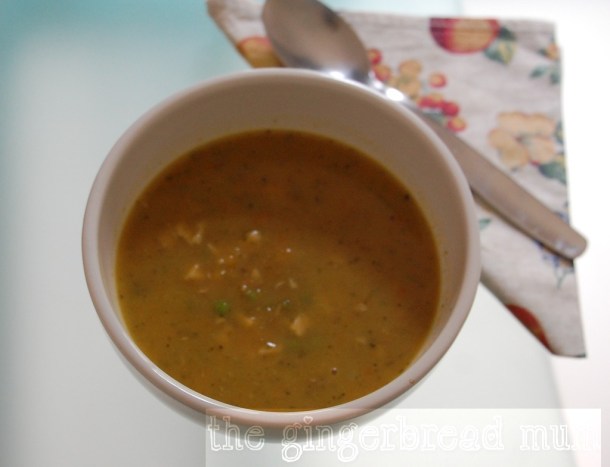
leftover chicken soup

If serving to a baby, don’t season after pureeing. You can either serve them just the pureed vegetable soup, or add some chicken and peas to their portion and puree again.

Nicholas likes searching for the chicken and peas in this soup, and I’ll often add some cooked pasta just to his for him to discover. Adding pasta is also a way to make the soup last for a couple of meals.

If you have a toddler who’s fussy about eating vegetables, puree the vegetables they’re less keen on and keep the ones they do like whole. Or you can puree all of it to hide lots of vegetables!

LEFTOVER CHICKEN SOUP

Prep time: 15 mins
Cook time: 20-25 mins
Serves 4 adults
Freezable

1 tbsp olive oil
1 onion, roughly diced
2 large carrots, chopped
1 large courgette/zucchini, chopped
1 tbsp dried sage
1 litre chicken stock
200g leftover chicken, skin removed and diced
150g frozen peas
salt and pepper

Heat oil in a large pot over a med heat. Add the onions and cook for about 5 mins until they’re starting to soften.

Add the carrots, courgette, sage and stock. Bring to the boil then reduce the heat to low and cover. Simmer for 10-15 mins until the carrots are cooked.

Remove from the heat and puree the soup until smooth. Season to taste.

Put the soup back on the heat, and add the chicken and peas. Simmer for 5 mins and serve.

Variations:

  • add some cooked pasta to make the soup more filling and to go further
  • use leftover turkey instead of chicken
  • use other vegetables such as potato, leek, butternut squash, frozen corn, etc.

Mini pizzas (pizzettas)

Nicholas loves pizza. Does any child not love pizza? So I thought, let’s try making it together for our next cooking adventure. There’s lots of fun to be had rolling and shaping the dough, and then there’s the toppings.

I prepared the dough on my own, then involved Nicholas in making the mini pizza bases. He has a little plastic roller that was absolutely perfect for rolling out the dough, so perfect in fact we kind of fought over who used it! I’d already prepared some toppings in separate little plastic bowls ready for sprinkling over the bases, but the dough was much more interesting and Nicholas left the topping selection up to me. Perhaps he’ll be more interested next time.

mini pizzas

On the subject of pizza dough, hubby is always searching for the perfect recipe. The leftovers of his quest are lurking in the dark corners of our freezer. I’m not convinced he’ll find his pizza ‘grail’, but don’t tell him that otherwise I won’t get to eat his experiments.

Not being Italian, I’m not so fussy with my pizza dough. And I also have this theory that if you make your bases as thin as you can, you can be almost guaranteed your pizza will be yummy (I have to whisper this next bit: even without using the proper Italian flour).

If you’re making these with your munchkin, use toppings they like. And remember that children generally like their food very colourful, much more than us boring adults. We topped our pizzettas with a little tomato puree, grated courgette/zucchini, pieces of buffalo mozzarella and diced fresh tomatoes. Oh, and no matter what you put on top, a final drizzle of olive oil over the top makes them perfect.

MINI PIZZAS

Prep time: 1 hr 40 mins (for dough to rise twice)
Cook time: 5-10 mins
Makes about 30 mini pizzas or 2 medium pizzas
Uncooked dough can be frozen

7 g dried yeast
1/4 cup warm water
2 cups strong white bread flour such as “OO” flour
1/2 tsp salt
1 1/2 tbsp olive oil
1/2 cup cold water
A handful of semolina (optional)

Put the warm water in a small bowl and add the yeast. Leave for 15 mins for it to froth up.

In a large bowl, mix the flour, salt, olive oil and cold water. Add the yeast mixture and mix until it comes together in a ball.

Knead the dough on a floured work surface for about 5 mins. It should feel elastic and soft, and be a bit sticky.

Put the dough back into the bowl, cover and leave to prove for 20 mins.

Divide the dough into two, place the second piece in another bowl, cover both and leave to prove again for an hour (the dough should double in size).

Heat oven to 220C and leave the tray you’ll use (preferably a heavy-based one) inside to heat up (this helps cook the bottom of the pizzas).

Lightly flour your work bench and roll out one piece of the dough as thin as you can. Use a round cookie or scone cutter to cut out your shapes and try to tease each circle a little more with your fingers to make it even thinner.

Lightly cover a cutting board with semolina, place your pizza bases on top and then add your toppings. Finish with a drizzle of olive oil. Open the oven and bring the hot tray out enough so you can  sprinkle on some more semolina and slide the pizzas from the cutting board on to the tray (the semolina helps the pizzas move more easily).

The time it takes to cook your pizza depends on the thickness of your dough and the amount of toppings you’ve put on. As a guide, check after 5 mins. They’re done when the dough is golden brown on the edges, and the cheese is bubbling and just starting to turn golden.

Finish with some torn pieces of fresh basil.

mini pizzas

Cantonese-style steamed fish (family recipe)

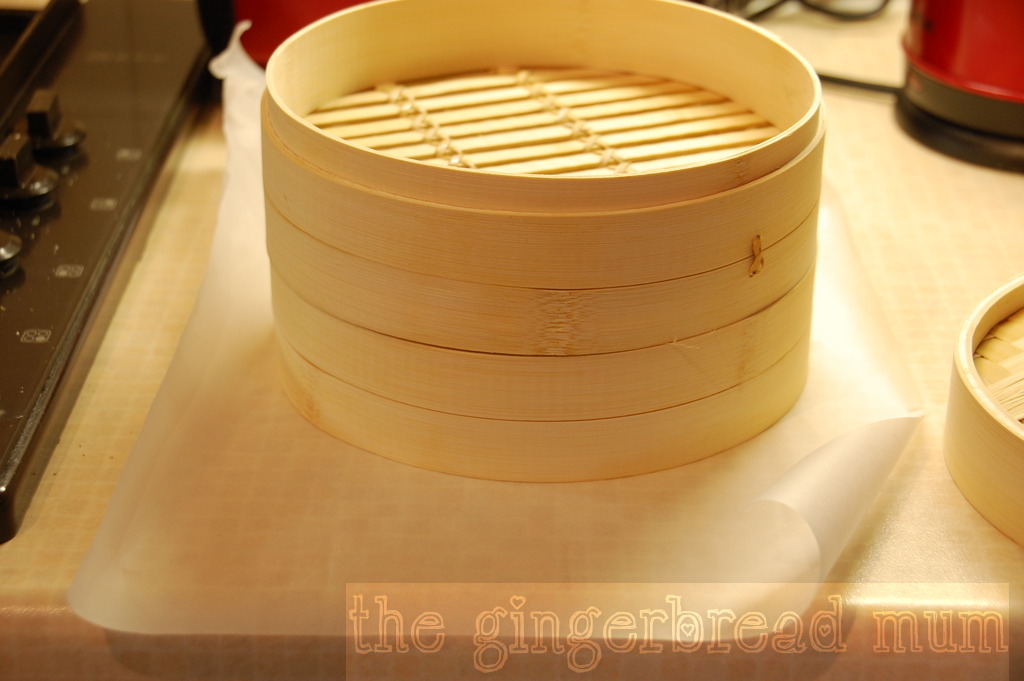
This is a Ken Hom recipe that’s quick, easy and very tasty. If you have a bamboo steamer it’s even easier, but it’s not that difficult to improvise a steamer using a metal rack over a wok or deep pan.

I like to sit my bamboo steamer on top of a saucepan with the bottom rim of the steamer resting over the top of the saucepan. Whichever steaming method you use, make sure the steamer bottom is above the boiling water. Also check the water while the fish is cooking to make sure it doesn’t boil dry.

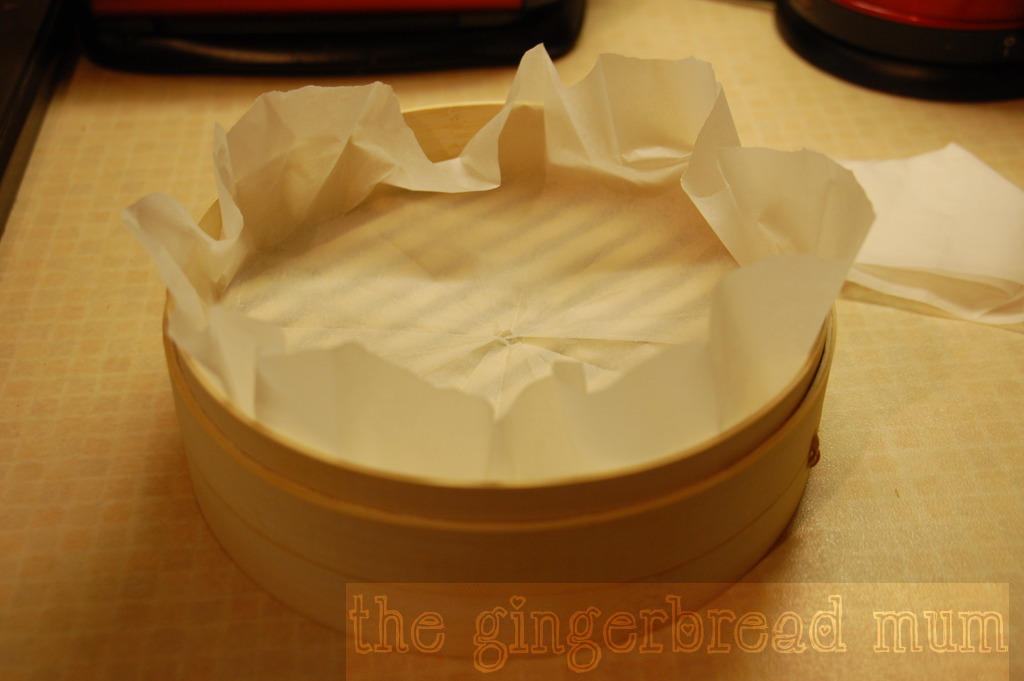
I also prefer to use baking paper inside my steamer rather than sitting the fish on a plate, but you do need to make sure you don’t press the baking paper too firmly into the bottom of the steamer (the steam from the boiling water needs some space to come up and do its job).

Tear off a piece of baking paper just slightly bigger than your steamer…

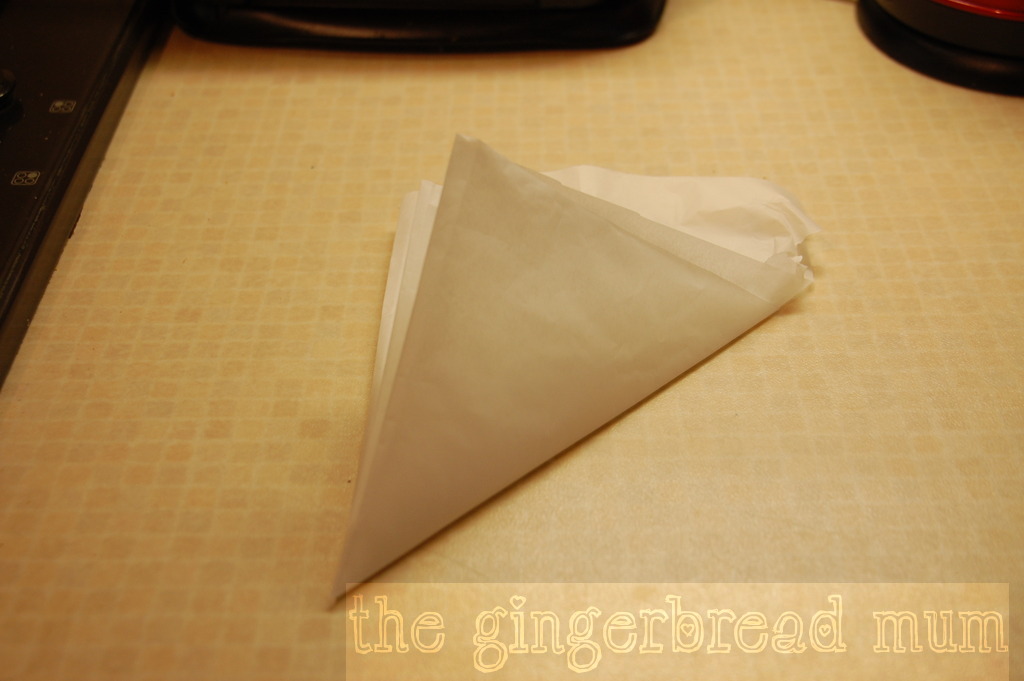
fold it in half & in half again, then bring the right bottom corner up to the top left corner…

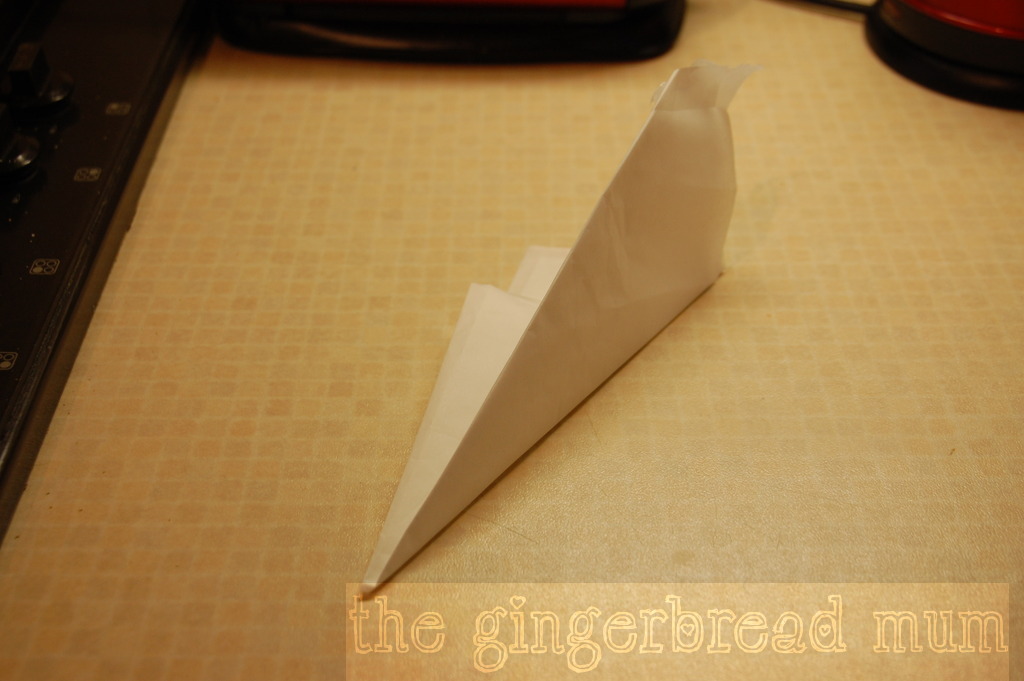
and finally fold the right side over again to form a slimmer triangular shape.

Place the folded point in the centre of the steamer to measure where you can tear off any excess paper.

Unfold and lightly press into the steamer.

In the original recipe, Ken Hom salts the fish fillets beforehand to firm up the flesh. Of the many times I’ve made this, I think I’ve only done this once (I either forget about it until there’s no time before dinner to do it, or I just can’t be bothered doing the extra step – yes, call me lazy!). The idea is if you rub the fillets all over with salt, leaving for 30 mins, the salt draws out the excess moisture leaving you with firmer flesh. You then need to rinse off the salt and pat dry with kitchen towel. You can also use this recipe with cleaned whole fish (increase the steaming time to 12-15 mins in total).
If you’re making this to also serve to a baby, leave the seasoning off an end of the fish and don’t sprinkle the ginger over this part. After the fish is cooked, mash the baby’s piece or puree to the desired consistency, double-checking for any bones. Add a tiny drizzle of olive oil before serving if you wish (adding a drop or two of olive oil to cooked baby food is very common in Italy, and is seen as a healthy way to add a little bit of needed fat to a baby’s diet). I’ll leave it to your good judgment if you’re serving the fish to a toddler.

Serve the steamed fish with plain rice or a simple fried rice.

CANTONESE-STYLE STEAMED FISH

Prep time: 15 mins
Cook time: 5-10 mins
Serves 2 adults and 1 toddler or baby

2 large fillets of firm white fish (cod, sole, haddock, etc)
salt and freshly ground black pepper
3cm piece of ginger, finely shredded or finely diced
1 spring onion, finely shredded
1/2 tbsp light soy sauce
1 tsp dark soy sauce
1/2 tbsp groundnut or vegetable oil
1 tsp sesame oil
coriander sprigs to serve

Pat the fillets dry with kitchen towel. Season with salt and pepper.

Set up a bamboo steamer, or put a rack into a wok or deep pan, and fill with  about 5cm of water. Bring to the boil.

Place fish on a heatproof plate and scatter the shredded ginger evenly over. Place in the steamer, cover tightly and gently steam until just cooked through (flat fish fillets: 5 mins; thicker fillets 7-10 mins). Keep covered until ready to serve.

Just before serving, heat the groundnut and sesame oils together in a small saucepan over a med-low heat until it just starts to smoke.

To serve the fish, sprinkle over the spring onions and soy sauces, then pour over the hot oil. Garnish with coriander sprigs.

Butternut squash soup

I got this recipe a few years ago from the Irish mum of a dear friend and it’s become the soup I make the most often. It’s lovely and thick, and perfect for warming you up on cold nights. It’s also easy to make (chop, simmer, puree and eat!).

If making this for the younger munchkins in your family, use a low-sodium stock. I usually use a stock I’ve made using a leftover roast chicken carcass as I can decide how much salt to add to it, if at all, but a low-sodium stock cube works just as well.

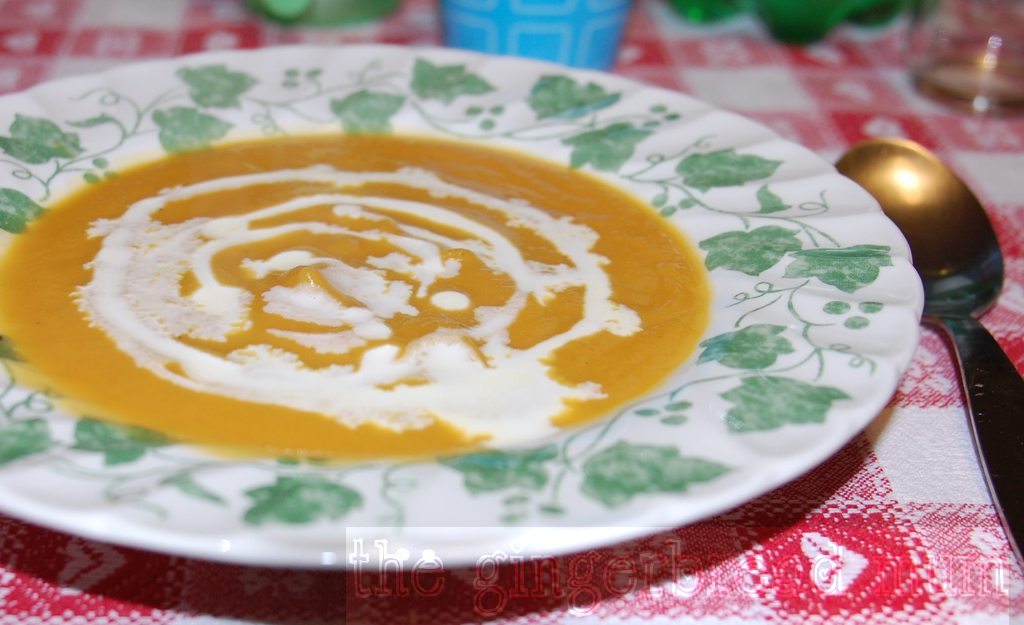
Add a swirl of cream or yogurt to each bowl just before serving. Please excuse my ‘artistic’ swirls in the photo. I was trying to be too clever and it didn’t work at all (you should have seen the efforts I didn’t photograph!).

Nicholas is mostly enjoying having a vegetable soup starter before dinner. I’m definitely finding it the best way at the moment to get more vegetables into him, even though he’s going through a period of fussiness which means he’s sometimes eating very little for dinner. I spent a lot of time last week searching  for advice for fussy eaters and asking people for tips, then trying them out. There’s definitely a post on tips for fussy eaters in the pipeline.

In the meantime, enjoy the soup.

BUTTERNUT SQUASH SOUP

Prep time: 10-15 mins
Cook time: 30 mins
Makes 6 adult servings

1 large butternut squash, peeled and roughly diced
1 medium onion, diced
1 large carrot, peeled and chopped
1 sweet potato, peeled and roughly diced
1 litre chicken stock
1 tbsp olive oil
1 tbsp butter
Salt and pepper

Melt the olive oil and butter in a large pot over a medium heat. Add the vegetables and saute for about 5 mins.

Add the stock, bring to the boil and then simmer over a low heat until the vegetables are soft.

Remove from the heat and puree until smooth. Check for seasoning, and add salt and pepper if needed.

Serve with a drizzle of cream or yogurt.


Does your family have a favourite soup?

Stuffed butternut squash (family recipe)

I love butternut squash (or butternut pumpkin as it’s called in Australia). It’s amazingly versatile for a vegetable and has a lovely rich sweet taste. Roasted, mashed, made into a soup, added to risotto, shaped into patties or even baked in a cake, you can pretty much do anything with butternut squash.

As as puree, butternut squash is often a favourite with babies. Have it on its own or add some extra natural sweetness with some cooked unsweetened apple. Once you want to start introducing some other flavours to your baby, warm spices like cinnamon and coriander, or herbs like sage and thyme work well with butternut squash.

If you’re making my stuffed butternut squash for the whole family, buy a squash that has a long neck. Part of the neck will be roasted and pureed for a baby, and another part of the neck will be roasted and stuffed for a toddler, while the adults are left with the main body of the squash and a bit of neck.

I stuffed my squash with veal, but you can use any minced meat or a combination of meats (pork, beef, turkey, etc.). You can also quite easily make this dish vegetarian by mixing the roasted mashed squash with some fresh breadcrumbs or cooked rice or couscous, or even some other roasted vegetables like courgette; top with some toasted pinenuts or fried sage for a different texture.

STUFFED BUTTERNUT SQUASH

Prep time: 10 mins
Cook time: 1 hr
Serves 2 adults, 1 toddler and 1 baby

1 butternut squash with a long neck (approx. 1 kg)
1/2 tsp ground cinnamon
200g veal mince
1/2 onion, finely diced
about 2 tbsp of olive oil
salt and pepper
1 1/2 tbsp breadcrumbs
a handful of grated cheese (for example, cheddar or parmesan)

Preheat the oven to 190C. Line a baking tray or roasting pan with some foil or baking paper to minimise cleaning.

Wash the outside of the butternut squash and pat dry. Halve it lengthwise and scoop out the seeds. Cut off two pieces from the neck. Place the squash on the roasting tray, cut side up, and drizzle each piece with a little olive oil. Sprinkle over the cinnamon. Season the main body pieces for the adults with some salt and pepper.

Roast for 35-45 mins until the flesh is soft (the two smaller pieces will take less time to cook). Remove from the oven to cool but leave the oven switched on.

While the butternut squash is cooking, heat 1 tbsp of olive oil in a frying pan over a med heat. Cook the onion until soft (about 3-4 mins). Turn up the heat a little, add the veal and fry until just cooked through (about 5 mins). Season and remove from the heat.

For baby:
Remove the peel from baby’s piece of roasted squash and mash or puree the flesh to the desired consistency. Add an extra pinch of cinnamon or ground coriander if you wish.

For toddler and adults:
Scoop out most of the flesh from the remaining pieces of roasted squash, leaving a thin border of flesh around the edge. Mash the flesh and stir in the veal mixture. Spoon back into the pumpkin pieces and place back on the roasting tray. Sprinkle with the breadcrumbs and cheese. Cook for another 5-10 mins in the oven until the top is golden brown.

Tip: rinse off the discarded seeds, pat dry and then roast in a dry frying pan. Sprinkle over the butternut squash to serve or eat them as a snack another day.

Mini vegetable pakoras

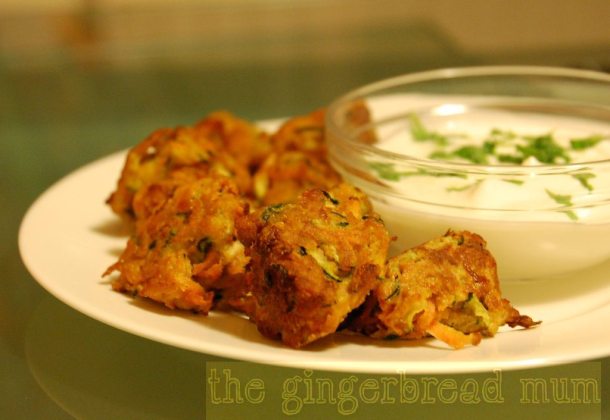
Pakoras were my inspiration for these golden vegetable nuggets. You can use almost any vegetable you like and make them as mild or as spicy as you like. See if you or your little ones can resist them!

My recipe is over at Mindful Mum.

Minty pea soup

Nicholas is going through another of his phases where he can be fussy about eating vegetables. If I serve him protein and vegetables on the same plate, he’ll devour the meat or fish first and then just pick at the vegetables. We’ve been known to resort to bribing him with meat, along the lines of ‘If you eat another two spoonfuls of broccoli, you can have some meat.’ It works, but I don’t like doing it.

I was starting to rethink his meals, thinking about getting him to start with vegetables first before having protein, but without having to dish up the various components separately. A vegetable soup starter was looking like a good option. Then I read Helene’s post over at French Food Baby explaining the typical four-course French meal and I was sold.

What Helene does is have a vegetable starter before the main course, the logic being that you fill up on the vegetables when you’re at your hungriest, most likely eating a smaller portion of protein for the main. This doesn’t just sound good for little ones!

Helene suggests having a vegetable soup or vegetable finger food (cooked or raw) for the first course. I like the idea of offering a vegetable tasting plate to give your child a feeling of independence as they decide what to eat, and, as Helene does, you can have a couple of days’ worth of vegetables prepared in the fridge ready to go. Now I just need to get my act together and do this!

Soup, on the other hand, I’ve tried and so far it’s worked. A small bowl of soup as a starter at dinner and then I don’t worry so much about how many other vegetables Nicholas is eating off his main course plate (and meal times are less stressful). And you can find lots of soup recipes that don’t take much time at all to prepare (in fact you don’t want to be cooking the vegetables very long that their nutrients boil away). Keep it in the fridge for a couple of days and then freeze any leftovers for days when you don’t have much time (or desire) to cook.

I’ve been mainly doing root vegetable and lentil combinations, like carrot and lentil, but then saw this soup recipe on the BBC Good Food site and could immediately taste the sweetness of the peas and the freshness of the mint. I made a simpler version using frozen peas, omitted the garlic, sugar, lemon juice and buttermilk, reduced the mint slightly and used shallots instead of spring onions. I liked the taste of the soup without adding any dairy to it (I think it would lose some of its freshness), but I did add some small dollops of yogurt for colour on top.

This soup would make a great starter for adults at a dinner party or other occasion when you’re having a few courses as it’s not heavy on your stomach. It would also work as a cold soup.

You can , of course, use stock made from a stock cube (use the low-salt kind if making it for little ones), but because of the limited ingredients, it will taste much better if you use a good quality stock.

MINTY PEA SOUP

Prep time: 10 mins
Cook time: 20 mins
Makes 4 adult servings
Freezable (without adding the yogurt)

3 shallots, roughly chopped
1 medium potato, peeled and diced
850ml chicken or vegetable stock
250g frozen peas
3 tbsp chopped fresh mint
Salt and pepper
Yogurt to serve

Put the shallots, potato and stock into a large pot and bring to the boil. Turn down the heat to low and simmer for 10-15 mins until the potato is cooked.

Add the frozen peas and simmer for another 5 mins.

Take off the heat and add the mint. Blend with a hand blender or in a food processor until smooth. Taste, and add salt and pepper if necessary.

Serve hot or cold with a dollop of yogurt.

Variations:

  • use onion or spring onions instead of the shallots

What other ways do you use to get your munchkins to eat more vegetables?