RSS Feed

Tag Archives: dinner

Fish pie with sweet potato

I always make white sauce on the stove in a saucepan. Apart from stirring it fairly constantly, it’s easy. I use a whisk instead of a wooden spoon to avoid lumps and it works a treat.

But… it’s much easier to make a large amount of white sauce. Making toddler meals you tend to only need about a tablespoon of sauce. Up until now I’ve tried to make a small amount, used less than half and thrown the rest away (and that makes me feel VERY wasteful!).

I stumbled across a recipe that made white sauce in the microwave. While I’ve embraced my microwave more since feeding Nicholas, I was more than just a little bit sceptical of using it to make a sauce. Surely there will be lumps? Focusing on the fact that I could make a small amount hopefully without wastage, I tried it. It worked.

FISH PIE WITH SWEET POTATO

Prep time: 5 mins
Cook time: 15 mins
Makes two toddler servings

40-50g white fish, deboned and cut into chunks
1/2 cup milk
4 raw prawns, peeled and deveined
2 tbsp peas
1 small sweet potato
1 tsp butter
1 tbsp plain flour
Small handful of cheddar cheese, grated
Pinch of salt and pepper (optional)

Use the point of a knife or a skewer to prick the sweet potato in a few places all over. Cook on high in the microwave for 3-4 minutes until it feels soft inside. Leave to cool then pull off the peel and mash in a small bowl. Add a teaspoon or two of the milk and mix. Season if you wish.

Put the fish and prawns into a small microwave-safe bowl with about 3 tbsp of the milk (enough to just cover the fish and prawns). Cover and cook on medium 1-2 minutes until just cooked. Drain but keep the milk.

Flake the fish checking for bones and cut the prawns into small pieces. Divide the fish and prawns between two small oven-proof dishes (souffle or creme caramel ramekins are perfect). Scatter over the peas.

Melt the butter in a medium-sized bowl in the microwave. Mix in the flour well making sure there aren’t any lumps. Add a pinch of salt and pepper if you wish then add the milk (including the milk you cooked the fish in). Whisk until the mixture is smooth. Cook on medium in the microwave for 3 minutes, stopping every minute to whisk it. Your finished sauce should be quite thick.
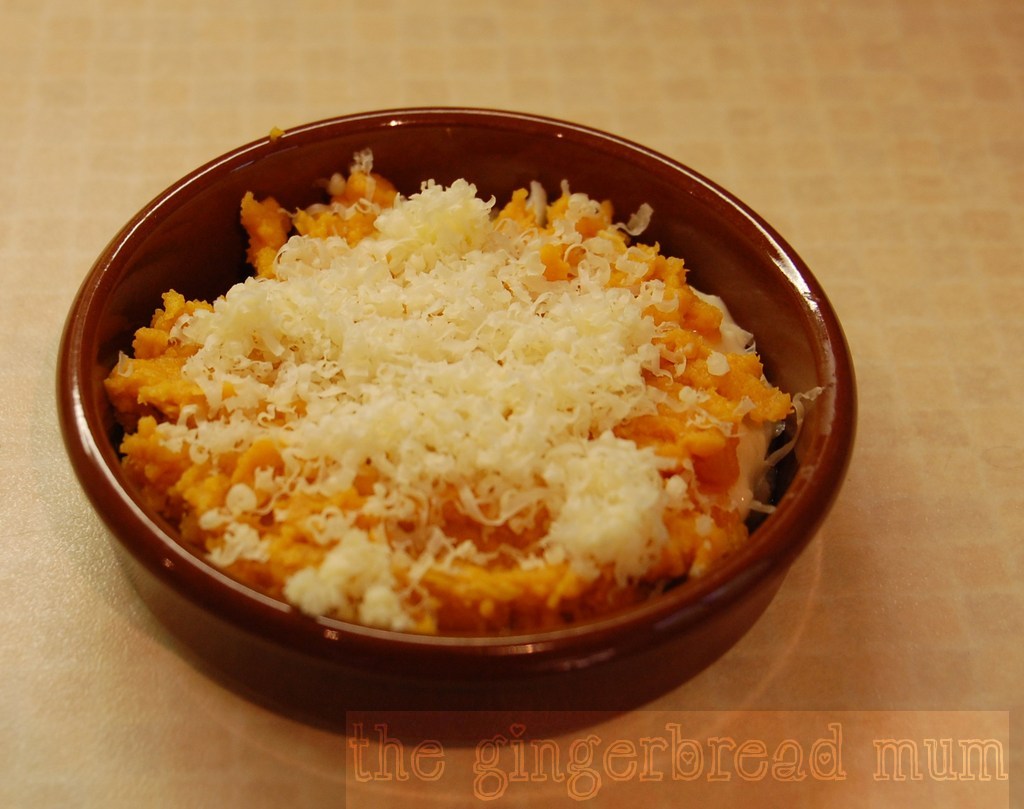
Pour the white sauce over the fish mixture. Dollop on the sweet potato and the grated cheese. Put under a hot grill for a couple of minutes until the cheese is melted and golden.

Variations:

  • Add a little bit of smoked fish to the fish mixture
  • Use normal mashed potato instead of sweet potato mash
  • Add some fresh herbs to the white sauce (chives, parsley)

Apologies for not having a photo of the finished dish. My very hungry toddler wasn’t interested in waiting any longer for his dinner!

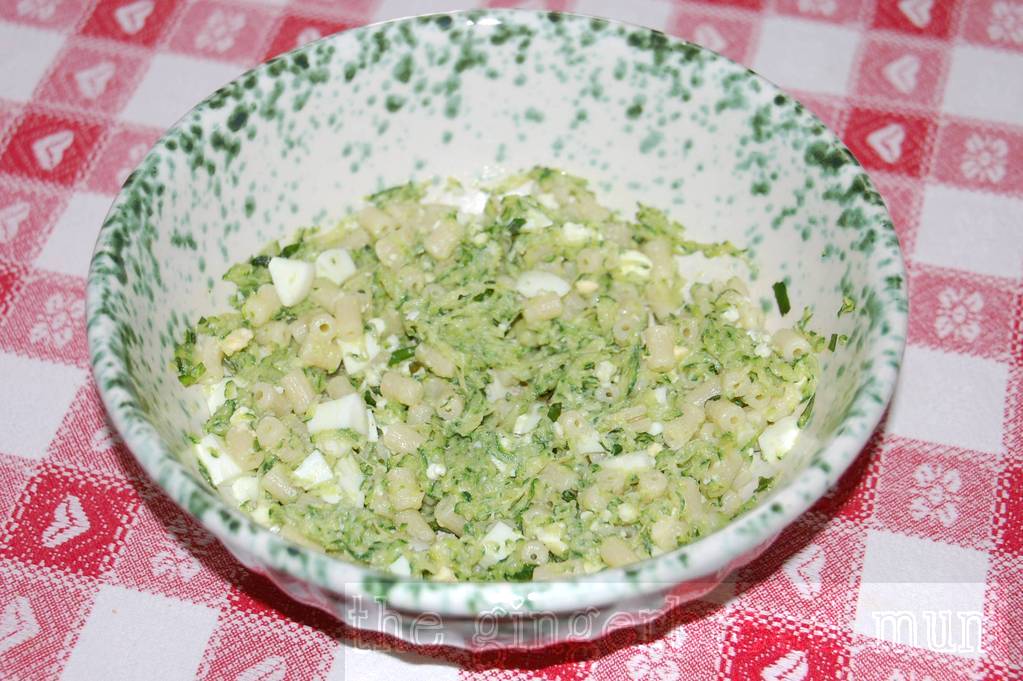
Herby courgette pasta salad with feta and egg

I don’t want to overly bombard you with my apple sauce experiments, so it’s back to good old trusty pasta today.

I love the Sainsbury’s Little One’s site when they do recipes three-ways: for babies, for toddlers and for adults. For example for their creamy spinach and leek pancake bake (must try this) the filling is pureed for a baby, a toddler eats the recipe as is,  and adults get a surprise of smoky ham inside. These recipes give me a renewed enthusiasm for cooking for Nicholas when my enthusiasm is lagging. They encourage me to experiment with my tried and tested recipes, working out more toddler-friendly versions of them. While I love making dishes everyone can eat, I really do love making meals just for Nicholas.

One of my ‘go to’ summer recipes is a cold pasta recipe I came across in The Times probably more than ten years ago. It’s an Ann and Franco Taruschio invention and I believe it’s in their 100 Great Pasta Dishes book (but don’t quote me on that). It’s a wonderfully fresh and filling dish, perfect to make the day before, perfect to take to work for lunch, and perfect to take on picnics or to have as a vegetarian option at a barbecue. I’ve made it a couple of times for my Italian in-laws and they love it (always a good sign!). I’ll write up that recipe tomorrow, but for now, here’s my toddler-friendly version of it.

I grated the courgette/zucchini to cut down the preperation time. However, next time I’ll dice it, as grated it sticks to itself and is difficult to separate, and Nicholas tends to pull large pieces of it from his mouth.

The original recipe uses penne and it really does need a short tube-shaped pasta. I used tubetti rigati which are like mini penne. You could also use macaroni or cut penne into shorter tubes after it’s cooked.

You can cook the egg and pasta in the same water, you just need to make a calculation based on the cooking time needed for the pasta you’re using. My tubetti rigati take 11 minutes to cook, so one minute after I put them into the boiling water I added the egg, cooking them together for 10 minutes before draining everything.

HERBY COURGETTE PASTA SALAD WITH FETA AND EGG

Prep time: 5 mins
Cook time: 15 mins
Makes 2 large toddler servings
Keeps for a day in the fridge

100g courgette / zucchini, finely grated
2 medium basil leaves, finely shredded
2 medium mint leaves, finely shredded
1 egg
50g tubetti rigati (or other small tubed pasta)
100g feta cheese
Drizzle of olive oil
Pinch of salt (optional)

Bring a small saucepan of water to the boil and gently lower the egg into it. Boil for 10 minutes. Plunge into cold water, peel and cut into 6 wedges. Cut each wedge in half.

Cook the pasta as directed on the packet. Drain and add a drizzle of olive oil to stop the pasta from sticking to itself. Put in a medium-sized bowl and cool in the fridge.

Squeeze the excess moisture from the grated courgette. In a small non-stick frying pan, cook the courgette for a couple of minutes over a medium heat. Take off the heat and stir in the basil and mint.

Add the herby courgette to the pasta. Mix in the feta and egg. Serve cold.

Variations:

  • chop the courgette into small cubes rather than grate it
  • add a splash of balsamic vinegar at the end

Apricot chicken

When we started weaning Nicholas we tried a combination of baby-lead weaning and the more traditional purees. Looking back I was probably unnecessarily overly concerned about two things: feeding him more vegetables than fruits so he didn’t develop a sweet tooth, and wanting him to easily eat lumpy food as quickly as possible. I wouldn’t be so concerned if I could go back in time.

Breast milk is naturally sweet and formula milk replicates this. Why suddenly shake up your little one’s tastebuds when they’re also dealing with solids for the first time? There are vegetables that are naturally sweet in flavour just as there are fruits which aren’t very sweet. I realise now that gradually introducing a wide range of different fruit and vegetables is the best way to develop your munchkin’s palette.

While not initially pureeing everything to a smooth paste saved me time (I’d mash food up with a fork or finely grate it), I shouldn’t have worried so much about getting Nicholas over that first (for a new mum very high) hurdle of his food journey. He would have got there in his own time. And what’s wrong with smooth food? I hate lumps in my mashed potato and love thick pureed soups. Smooth is just one of the many different textures of food and it’s these different textures that make food interesting.

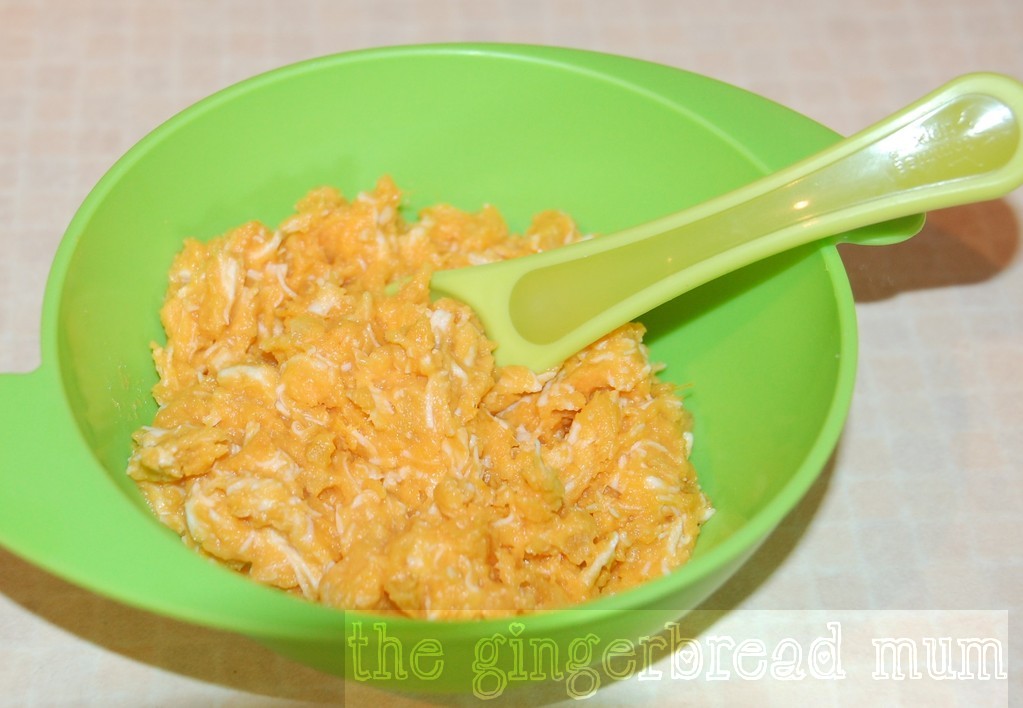
This recipe works really well as a puree and also in a chunkier form. The original recipe by Belinda Graham is a baby puree. I’ve adapted how it’s cooked to make it a bit quicker for you to make, as well as keep as many nutrients as possible from boiling away.

APRICOT CHICKEN

Prep time: 5 mins
Cook time: 10 mins
Makes 2 toddler servings
Freezable

1 chicken breast or thigh
1 medium sweet potato
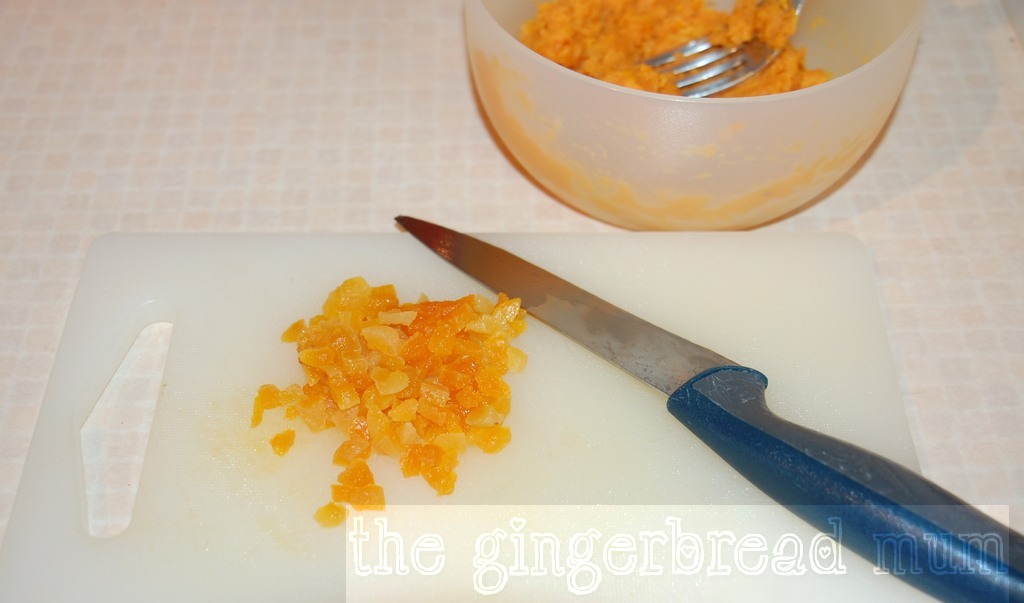
3 soft dried apricots, finely diced
3/4 cup milk
Drizzle of olive oil (optional)
Pinch of salt (optional)

Prick the sweet potato with a knife or skewer in a few places all over. Cook on high in the microwave for 4-5 minutes until it feels soft inside. Leave to cool.

Bring milk almost to the boil in a small saucepan. Turn down heat to low.

Chop chicken into small pieces and add to the milk. Simmer for a few minutes until the chicken is just cooked through. Take out the chicken but keep the milk.

Cut the sweet potato in half and pull of the peel. Mash the flesh in a small bowl. Add apricots, and salt and oil if desired.

Break up the cooked chicken into the bowl. Add 1-2 tbsp of the poaching milk and mix to combine.

Puree the mix for a baby.

Super quick avocado pasta sauce

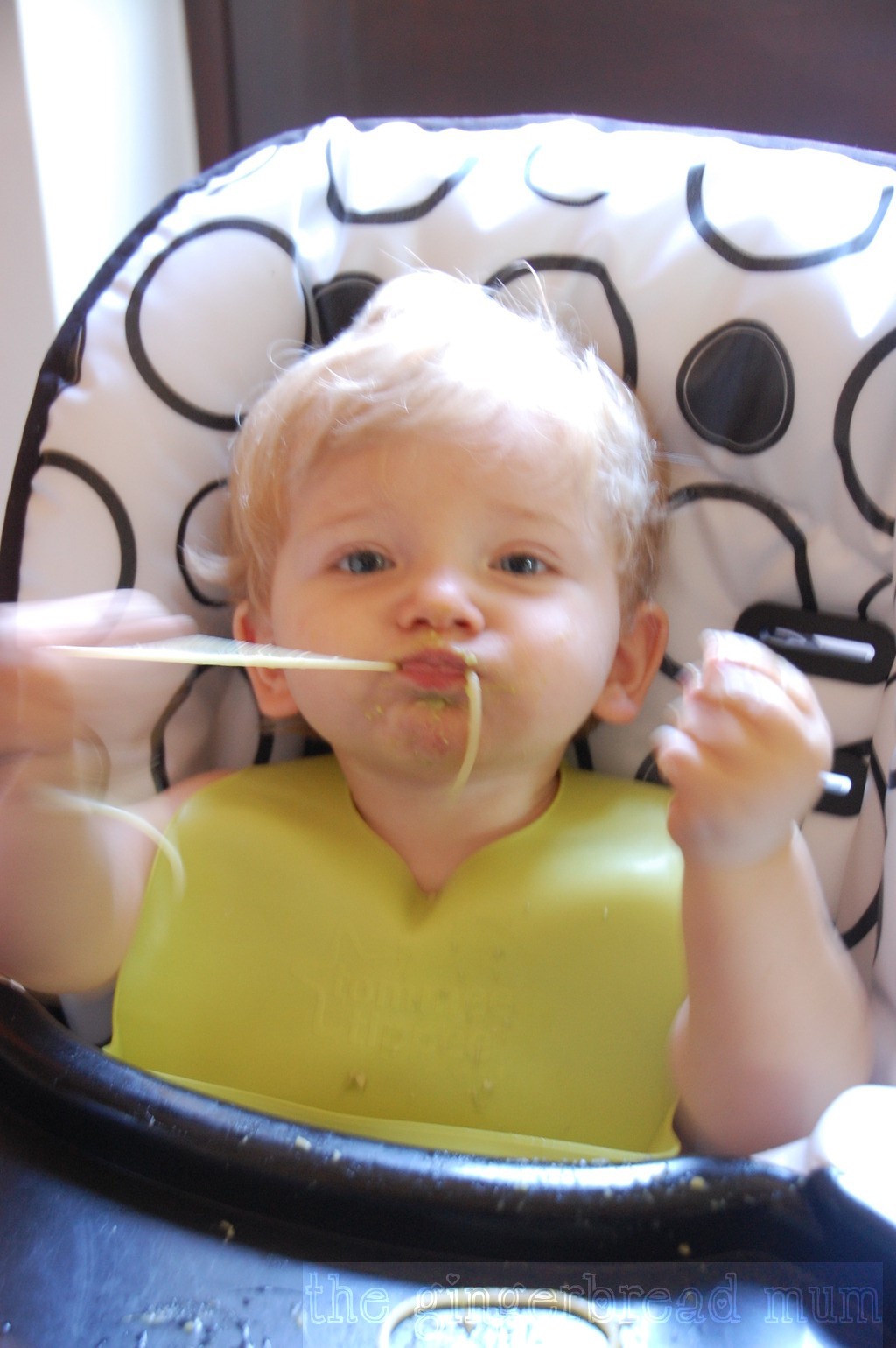
Another fast pasta sauce you can whip up really quickly for your little one. The creamy texture of avocado lends itself perfectly to coat pasta, and not just for babies. Add some more seasoning and a dash of chilli sauce and it’s a yummy dish for you.

I use a mini food processor to blend the avocado, simply to get a bit more creaminess by making it super smooth. However, whizzing up such a small amount can be a bit annoying (you have to keep scraping down the sides of the bowl to get the mixture back under the blades). You can mash the avocado up by hand and either use a bit of muscle to mash it up to a paste or leave the sauce a bit chunkier. The chunks anyway will be soft enough even for babies to easily munch through.

We incorporated some sensory play into our meal. Long cooked pasta like spaghetti isn’t just yummy, but also so much fun to play with!

SUPER QUICK AVOCADO PASTA SAUCE

Prep time: 5-10 mins
Cook time: 0 mins 🙂
Makes 1 toddler serving

1/2 avocado
1 large (or 2 medium) basil leaf, roughly chopped
Squeeze of lime (or lemon)

Scoop the flesh of the avocado into a mini food processor. Add the basil and lime. Blend until smooth.

Spoon over cooked pasta and mix to evenly coat.


Variations:

  • to make it even faster, omit the basil and lime
  • use coriander instead of basil
  • for adults add more seasoning and a dash of chilli sauce

Other uses:

  • spread on toast
  • use as a crepe filling
  • spoon over cooked chicken


Creamy lentils

Lentils are a great food. Full of protein and fibre, cheap and easy to cook. Puree them for your baby, keep them whole for your toddler, feed them to your whole family. They’re also low in calories so a great meal to fill a mummy up if she’s trying to lose her baby weight.

Red lentils break down more than other types when they cook, so they’re perfect for our little ones. They’re great too if you want to make a thick soup. The following recipe would also work really well as a soup. If after pureeing it’s too thick, add a little stock. And it’s easy to add some chopped vegetables like carrots, leeks, celery, etc.

A little while ago I came across a mummy blogger who freezes cooked lentils. Her favourite thing to do is add the frozen lentils to cooking rice. I haven’t tried this, but it’s a good way to add some extra protein to a meal.

My creamy lentils uses the tomato pasta sauce I often make for Nicholas and always have in the freezer. You could use some chopped tomatoes or some tomato puree instead. Add chopped tomato (chopped as small as you can) after you’ve drained the cooked lentils and cook them over a low heat for a couple of minutes to break the tomatoes down.

CREAMY LENTILS

Prep time: 5 mins
Cook time: 15-20 mins
Makes about 4 toddler servings
Freezable

1/2 cup red lentils, rinsed
1 shallot, finely diced
7 tbsp homemade tomato sauce
1/4 tsp dried oregano
Drizzle of olive oil (optional)

Put the lentils in a small saucepan and cover with water. Bring to the boil and then drop the heat to low and simmer for 15-20 minutes until the lentils are soft. Drain off the excess liquid.

While the lentils are cooking, put the shallot in a small microwave-safe bowl, add 1 tablespoon of water and cook on medium in the microwave for 2 minutes. Drain.

When the lentils are cooked and drained, add the shallot, tomato sauce and oregano and mix well.

If serving to a baby or as soup, puree the mixture until smooth.

Serve with a drizzle of olive oil over the top if desired.

Variations:

  • use onion intead of shallot
  • add a little garlic
  • add chopped vegetables to cook with the lentils (such as carrots, leeks, celery)
  • use tomato puree or chopped tomatoes instead of the homemade tomato sauce

Other uses:

  • add to other soups or stews
  • add to cooked rice
  • serve as a side dish to meat or fish

Tuna and corn frittata

Frittatas are great because you can usually whip them up with what you already have in the kitchen. Cut them up into strips and your toddler will love feeding himself/herself. And served with a salad, they’re a great meal for you too. Why not eat the rest that your munchkin doesn’t eat yourself?

There are so many flavour combinations that work well in a frittata. Use leftover cooked chicken and add mushrooms, leftover roasted vegetables like pumpkin and add feta, or pieces of asparagus with feta and thyme works wonderfully too.

Writing down this recipe, I realised I have NO idea what you call the individual stems of chives. For those of you who know what my job was before I had Nicholas, I’m sure you can imagine my frustration! You have sprigs of rosemary, parsley, mint and thyme, but do you have a sprig of chives? I have no idea. If someone knows, please tell me!

I cooked my frittata completely on the stove, flipping it to cook the other side. The more conventional way is not to flip but to put the frying pan under the grill to cook the top. If you prefer to finish cooking it under the grill, make sure you use a frying pan that is safe to go in the oven (in other words, one that doesn’t have a handle that will melt). I’ve had many disasters in the kitchen but have so far never melted a handle. I have, however, managed to melt a thermometer…

TUNA AND CORN FRITTATA

Prep time: 5 mins
Cook time: 10 mins
Makes 3-4 toddler servings or 2 adult servings
Freezable

1/2 185g can tuna, drained and flaked
3 tbsp corn (frozen or tinned and drained)
5g butter
3 chive stems
2 eggs, lightly beaten
Pinch of salt (optional)

Melt butter in a small non-stick frying pan (mine is about 20cm in diameter) over a med-low heat. Add tuna and corn and use scissors to snip chives over the pan. Stir and cook for a couple of minutes.

Season the beaten egg if you wish and pour into the pan. Swirl the pan around to make sure the egg is evenly spread. Turn heat up to medium and cook for 2-3 minutes until edges are cooked and starting to turn up, and underneath is lightly golden brown.

Use a spatula to slightly life around the edges. Being careful not to burn yourself, place a dinner plate upside down over the pan and flip everything over. Carefully slide the frittata off the plate and back into the pan. Cook the other side for 2-3 minutes. Take off the heat and leave to cool a little.

Variations:

  • use finely sliced spring onions instead of the chives
  • add crumbled feta
  • before you turn it, grate over some cheddar cheese

What other flavour combinations do you think would be yummy in a frittata?

Zucchini bites

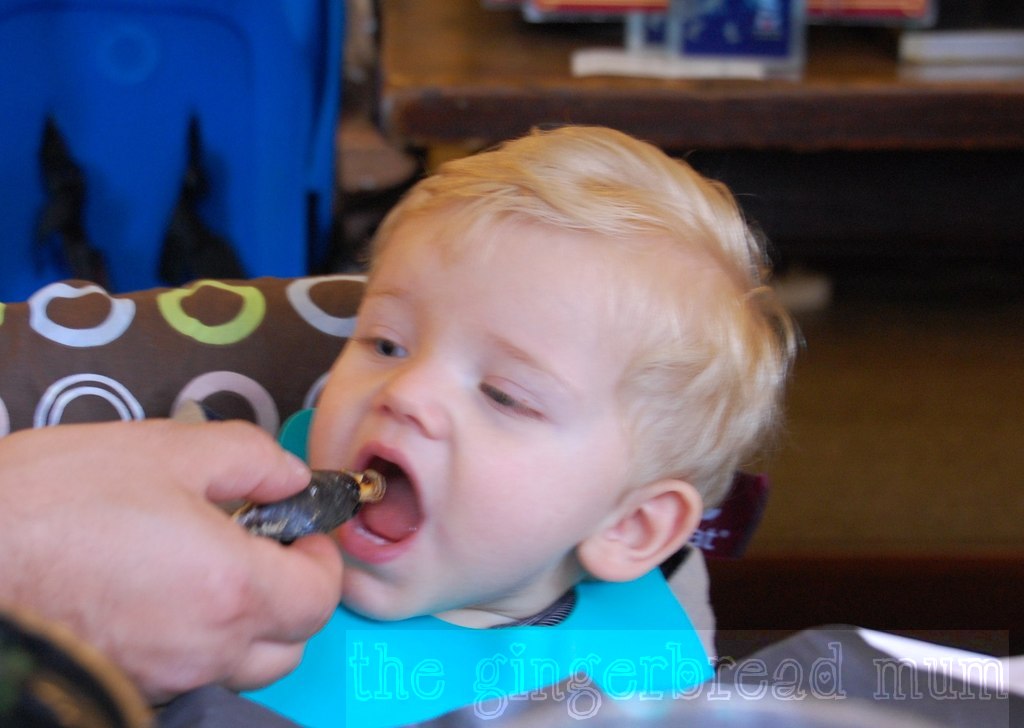
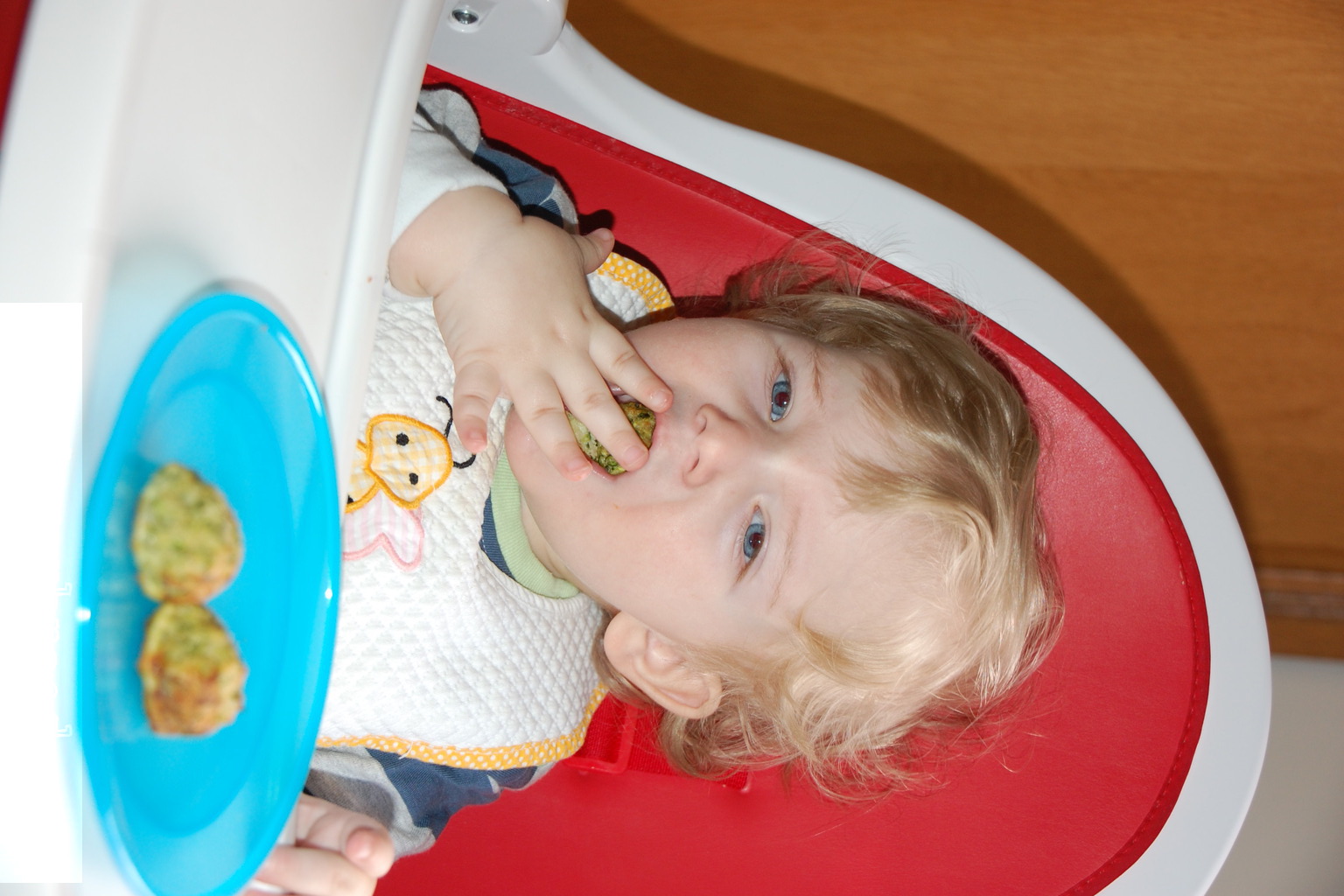
We had a fabulous four-day weekend in Bruges, and Nicholas had a great time toddling around practising his walking and his balance on the cobbled streets. There’s nothing like a mini family break to recharge the batteries. We ate lots of scrumptious things (and tried lots of Belgian beer!). Nicholas had his first taste of mussels and frog legs, and loved them both (oh and his first lollypop, given to him by a waiter). How proud am I that he seems to be turning into a mini-foodie?!?

So back home and back into the kitchen, but with some more enthusiasm for cooking. And today, one of our very tried and tested, and very much loved recipes made from a fabulous vegetable – zucchini or courgette (depending on where you’re from). You can do so much with this vegetable. You can grate them raw into a salad, slice and grill them, chopped into sticks and steamed they’re great with dips, stuff and bake them, or roast them in chunks. One of my favourite ways to have them is grated and very quickly fried with a little bit of lemon juice and caraway seeds; it’s the perfect accompaniment to fish (I’ll write up the recipe soon!).

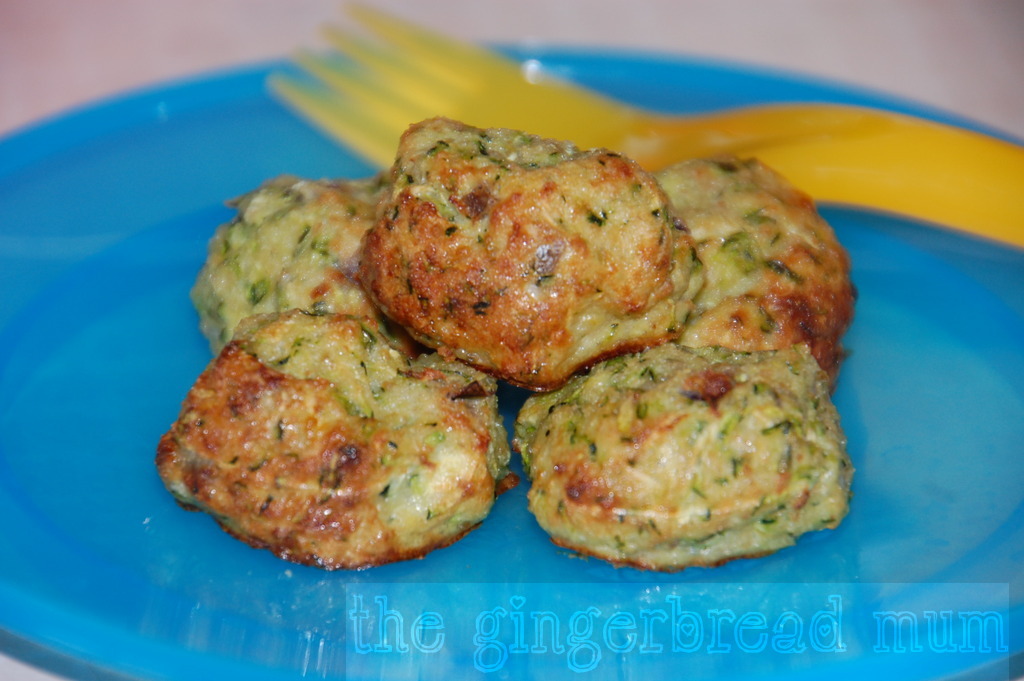
I often add zucchini to recipes I make for Nicholas. It has a very mild flavour and so goes with a lot of things – diced finely into a minestrone, grated and ‘hidden’ in burgers, chopped and added to casseroles, or simply steamed and dipped into yogurt. I came across this recipe for zucchini tots and immediately thought they would be perfect finger food. And I absolutely love a recipe I can easily make a few servings of and put in the freezer for another day. I made some slight changes, rolling the mixture into smaller bites and baking them on a tray rather than using a mini muffin tin (which I don’t have!) and using cheddar cheese instead of parmesan to cut down the salt content.

You can easily make bigger ones for adults for a low calorie lunch (because of the high water content zucchini is super low in calories), and they’d be perfect to take on picnics.

It’s important to squeeze the zucchini after you grate it to get rid of the excess liquid (and it has a lot of liquid). The simplest way is to squeeze a handful of it over the sink. You can also put it into a clean tea towel and squeeze it. You really don’t need to measure the grated zucchini (the quantities don’t have to be exact); one good-sized zucchini should be fine.

ZUCCHINI BITES

Prep time: 10 mins
Cook time: 15-18 mins
Makes about 15 bites
Freezable

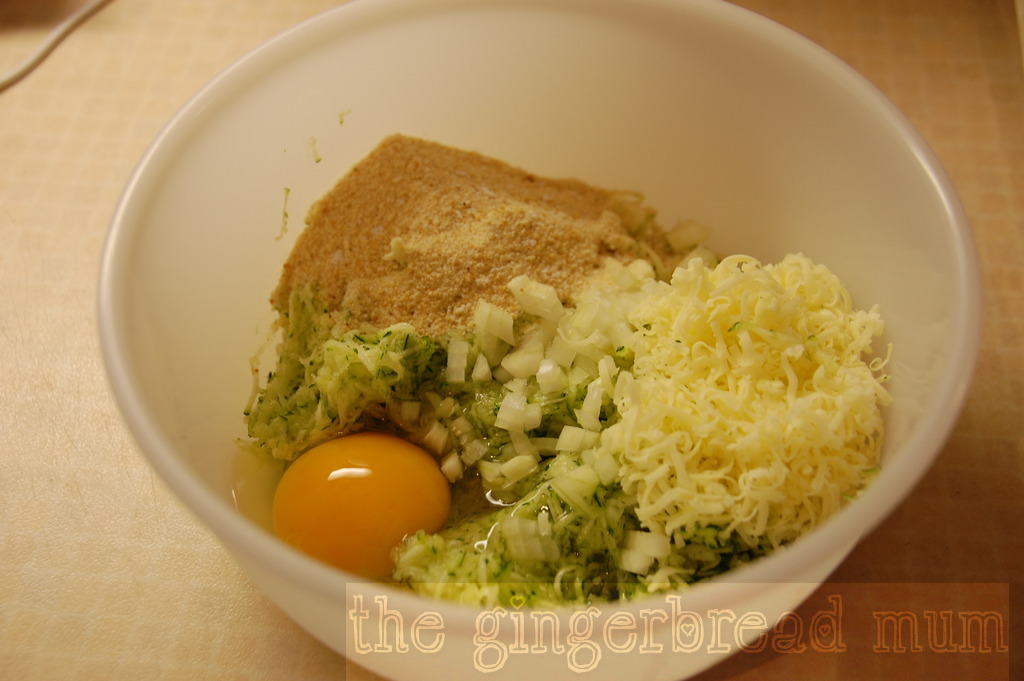
1 cup finely grated and squeezed zucchini (about 1 large zucchini)
1 egg
1/4 medium onion, finely diced
1/4 cup finely grated cheddar cheese
1/4 cup dry breadcrumbs
Pinch of salt (optional)

Heat oven to 200C and line a baking tray with baking paper.

Put all the ingredients into a medium-sized bowl and mix until combined. Shape into small balls and place on the lined baking tray.

Cook for 15-18 minutes until golden brown.


Variations:

  • add chopped herbs (chives, mint or parsley would all work well)
  • add crumbled feta

Tips:

  • Don’t use aluminium foil on the baking tray as the bites will stick to it and will be difficult to take off.
  • To make your own dry breadcrumbs, keep leftover bread uncovered for a couple of days until it’s hard. Break into chunks and chop in a food processer or blender until it’s fine crumbs. The breadcrumbs can be stored in an airtight container or ziplock bag for several months.