RSS Feed

Tag Archives: family

Minty courgette pasta sauce

It’s well and truly time for another pasta sauce recipe, and I love one that you can make in about the same time as the pasta takes to cook!

The flavours for this sauce were inspired by my herby courgette pasta salad. There’s something very fresh about mint and courgette, and the basil gives a deeper flavour so the mint isn’t too sweet. And the yogurt brings it all together, ready to be mixed through some lovely pasta.

It’s perfect for every member of your family. Babies can have the sauce and pasta pureed together, or have the sauce over baby pasta. Adults will probably want a bit more seasoning than toddlers. Here’s to cooking one meal for everyone!

MINTY COURGETTE PASTA SAUCE

Prep time: 5 mins
Cook time: 5 mins
Makes 1 toddler and 1 adult portion

1 medium courgette (zucchini), grated and the excess water squeezed out
1 tsp unsalted butter
1 tsp olive oil
7 fresh mint leaves, finely sliced
2 large fresh basil leaves, finely sliced
2 tbsp plain Greek yogurt
Salt and pepper (optional)

In a medium-sized frying pan, heat the oil and butter over a medium-low heat. Once the butter has melted, add the grated courgette (seasoning if using) and cook for 2-3 minutes, stirring continuously.

Add the mint and basil, and cook for another 2 minutes.

Take the courgette mix off the heat and stir through the yogurt.

Serve over cooked pasta.

For babies, purée the sauce and pasta together until smooth, or serve the sauce over baby pasta.

Variations:

  • For toddlers and adults, add some garlic as you’re cooking the courgette (1/2 clove of crushed garlic or a sprinkle of garlic granules)
  • Finely dice the courgette rather than grate it for a chunkier sauce
  • Use double (thickened) cream instead of yogurt
  • Add a sprinkle of toasted pine nuts just before serving

Tip: if you want to freeze this sauce, don’t add the yogurt. After defrosting the sauce, add fresh yogurt once you’ve heated it.

Do you have any recipes that are perfect for the whole family?

World Porridge Day

World Porridge Day was actually yesterday and while we ate porridge, I didn’t get around to posting about it. However, as cupcakes and chocolate get a whole week in the UK, I figured the humble and nutritious porridge’s day needs to be extended, especially thinking about the reason behind it.

World Porridge Day was started to raise awareness of and money for Mary’s Meals, a Scottish charity feeding starving children in Africa. Mary’s Meals provides daily servings of likuni phala, a nutritious, vitamin-enriched maize porridge to more than half a million children in 16 of the poorest countries in the world. But they don’t just give them nourishment. The porridge is served in schools, encouraging children to go and learn. Each child also has the responsibility of looking after their plastic mug which is filled with porridge. By serving one simple meal, Mary’s Meals is doing a lot more than just filling bellies.

Mary’s Meals are also an amazingly efficient charity. How much do you think it costs to feed a child porridge for a whole year? How much do you think you spend on your family breakfasts over a year?

It costs just £6.15 (about €7.20 or $10) to feed a child for a year.
Less than £7 for a whole year!

I’ll let you absorb that fact while I move on to some porridge flavours and variations your munchkins (and you) might like. I’ll leave you to cook your porridge the way you prefer (I like the microwave to avoid having pots to clean) as I’m certainly not a porridge-cooking expert!

PORRIDGE FLAVOURS AND VARIATIONS

While traditionally porridge is made from oats, water and salt, I always use milk for its calcium content and some kind of sweetener, usually fruit or a little bit of honey (for when babies are more than a year old).

Babies:

To make a smoother porridge, more palatable for babies, either grind up the oats before cooking, or blend your finished porridge until it’s smooth enough.

Another way of softening the oats is to soak them in some of the cooking liquid overnight.

Start with adding one simple flavour your baby is already used to, like banana. Once you think your munchkin is ready for some more complex flavours, add some warm spice like cinnamon or a dash of vanilla for extra sweetness or start combining flavours.

Flavour combinations:
The easiest and healthiest flavour to add to porridge for little ones is fruit, and then there’s no reason to add any sugar. Add it fresh or frozen. Mixing through frozen fruit has the advantage of cooling the porridge down (very important when your toddler is being impatient!). Here are some of our favourites.

  • Banana and cinnamon
    Mash some banana through cooked porridge and add a dash of cinnamon (which helps stimulate your metabolism)
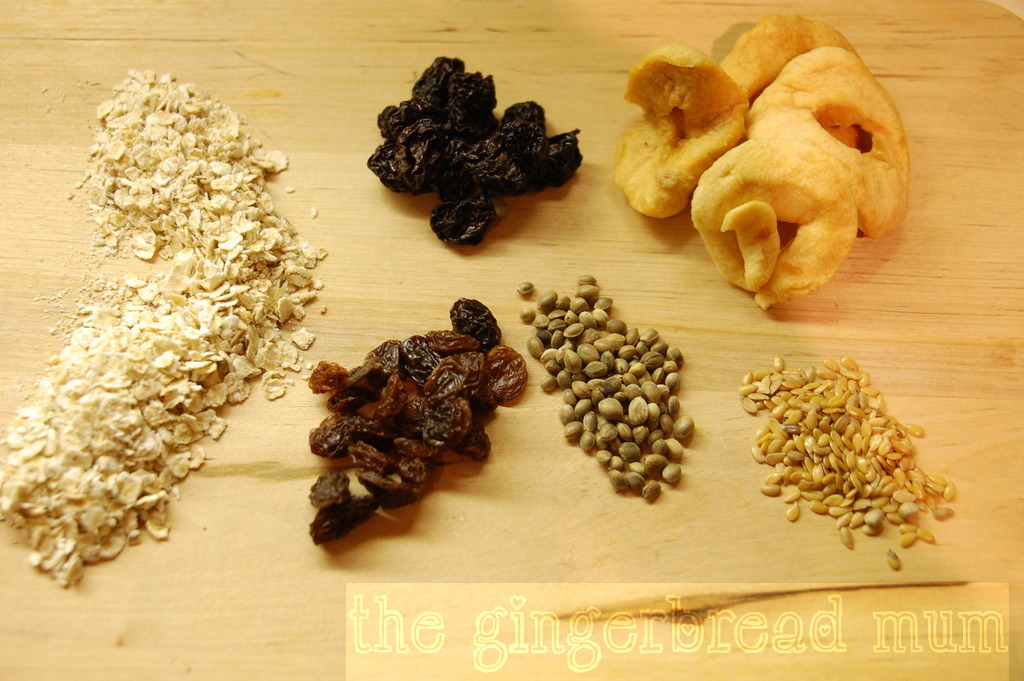
  • Apple, raisin and nutmeg
    You can use raw apple (finely grated) or cooked apple (apple puree or unsweetened applesauce/stewed apple). Add raisins (soak them overnight if you want them to be plumper and less chewy) and a small pinch of nutmeg. You could also add some chopped dried apple.
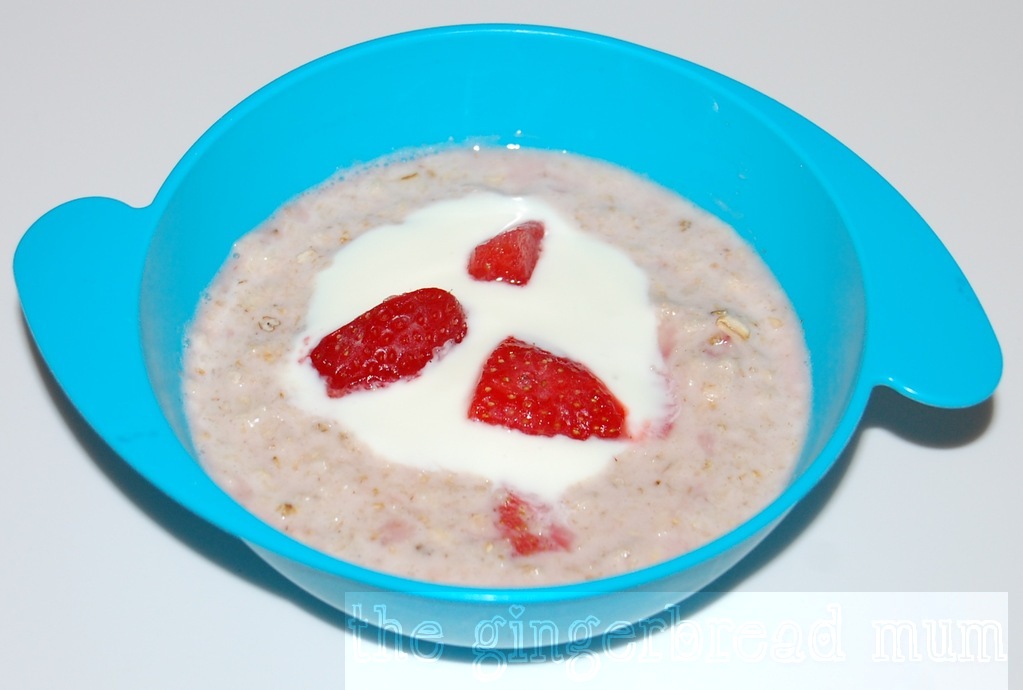
  • Strawberry and vanilla
    Mix chopped strawberries (fresh or frozen) through cooked porridge and add a dash of vanilla.
  • Stewed fruit
    Any cooked fruit works great swirled through cooked porridge (peaches, plums, apricots, strawberries). I don’t add sugar while stewing the fruit, but check the taste of the porridge adding some vanilla for sweetness or honey. A small pinch of ground ginger also works well.
  • Pears and vanilla
    A lovely ripe uncooked pear mashes very easily into cooked porridge. Add a dash of vanilla.

Porridge in a hurry:

For mornings when you need to get ready fast, what takes even less time than mashing some fruit into cooked yogurt?

  • Fruit yogurt
    Stirring through some fruit yogurt also cools the porridge down (saves you blowing time!).
  • Fruit puree
    Any packaged fruit purees or purees you’ve made yourself mix through quickly.

Adult flavour combinations (or not so healthy additions):
Some mornings you just need a little indulgence to start the day happily.

  • Grated chocolate
    Any chocolate you have on hand grated over cooked porridge.
  • Chocolate spread
    Add some mashed banana as well to feel healthier.
  • Golden syrup and cream
    Maple syrup works just as well.
  • Jam and cream
    Who needs scones.
  • Chocolate-covered Katie’s Coffee Frappuccino Oatmeal
    Haven’t tried it, but it’s your morning coffee and breakfast all-in-one!

Toppings:
Once you’ve added your flavourings, why not also sprinkle or dollop something on top?

  • Seeds
    Pumpkin, sesame, flax/linseed, sunflower seeds, etc. For toddlers, grind up larger seeds and/or soak them overnight.
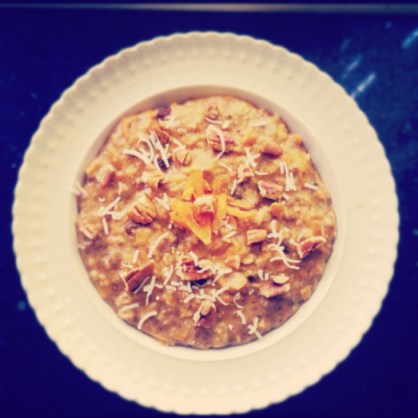
  • Coconut
    Shredded or desiccated.
  • Yogurt
    Fruit or plain.
  • Dried fruit
    Sultanas, raisins, cherries, apples, pineapple, mango, etc. Chop larger pieces up. Soak overnight for softer fruit.
  • Fresh fruit
    Slices of banana, strawberries, pear or whole blueberries are yummy.

Variations:

You can use other liquids to soak and/or cook your oats.

  • Juice
    Fresh apple and orange juice add another level of flavour to your porridge.
  • Coconut milk
    Feel like you’re in the tropics!

If you’re sick of the same old flavours, why not add something daring to your oats?

What do you like to add to your or your munchkin’s porridge? What do you do if you have porridge leftovers?

I hope I’ve given you some ideas to vary your bowls of porridge. But also remember how porridge is changing the lives of children in Africa thanks to Mary’s Meals, and how little you would need to donate to feed a child for a whole year.

Blueberry pancakes (sugar-free)

Hubby and I are following the Dukan diet to lose the spare tyres that have appeared over the years helped by us loving food and really not liking exercise. So far it’s working well and hasn’t been too hard to follow (you have foods you can eat, and you can eat as much as you like of them, and foods you can’t eat). You also have to eat oatbran and it’s easier to eat this in the morning (it also keeps your tummy full until lunchtime). I make Dukan’s galettes which always smell divine because of the cinnamon and vanilla I put in, but they taste very similar to cardboard!

Nicholas sees us eating our galettes and, of course, wants some too. For the moment he doesn’t realise that his galettes are usually banana pikelets or apple pikelets. My stocks in the freezer of these were running low so I thought I’d try a new flavour – blueberry.

I’m calling these pancakes, probably mini pancakes are a better description, because I left the blueberries whole and therefore made them thicker to surround the berries. Whether you call them pancakes, mini pancakes, pikelets, drop scones or dropped scones, make them, they’re yummy!

BLUEBERRY PANCAKES

Prep time: 5-10 mins
Cook time: 10-15 mins
Makes about 10 mini pancakes
Freezable

1 1/2 cups self-raising flour
1/4 tsp bicarbonate of soda
1/2 tsp ground cinnamon
100g blueberries
1 tbsp honey
1 egg, beaten
1 cup milk
Small piece of butter, melted, to grease the pan

Sift the flour, bicarbonate of soda and cinnamon into a medium- sized bowl.

Add the honey and egg then gradually pour in the milk mixing until you have a fairly thick batter (you might not need to use all the milk).

Gently mix in the blueberries.

Heat a large frying pan over a medium heat and brush with melted butter. Use a tablespoon to drop spoonfuls of mixture into the pan. Cook in batches, turning when bubbles appear on the surface (1-2 mins). Cook the other side until golden brown (about 1 min). Lift out and cover with a clean tea towel to keep warm.

Variations:

  • Use nutmeg or ginger instead of cinnamon
  • Add vanilla essence for more sweetness

Tip: Wipe your pan clean with a piece of paper towel after each batch and then brush with some more melted butter.

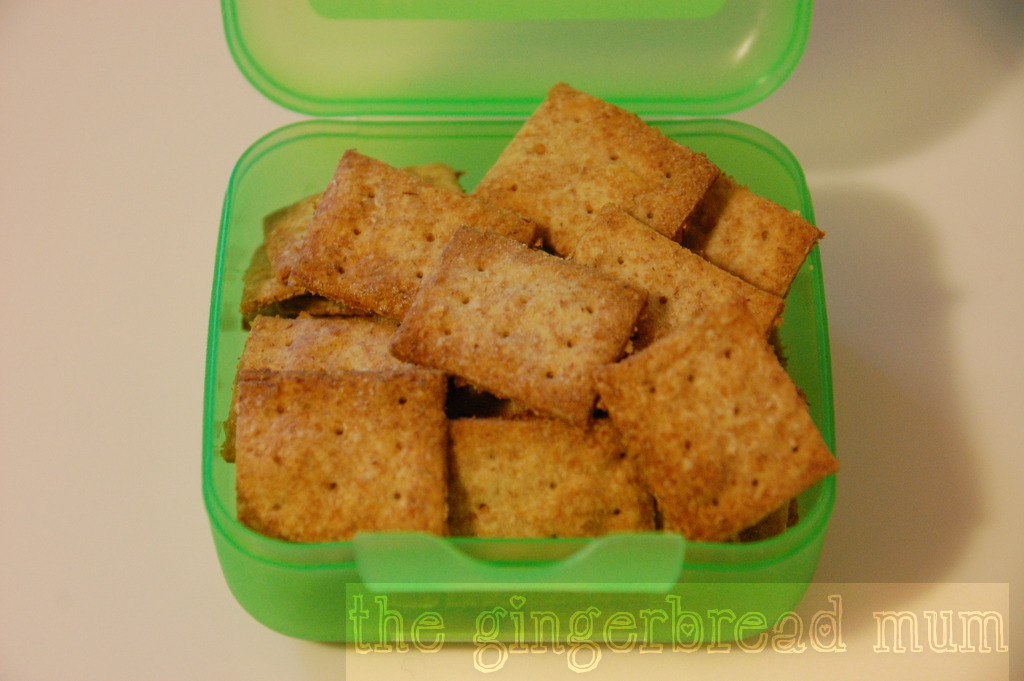
Wholemeal wheat thins

One of the food blogs I religiously read is Smitten Kitchen. I love Deb’s laid-back approach to family cooking and the wonderful creations that come out of her small New York kitchen. I particularly love her homemade versions of snacks you might secretly buy at the supermarket checkout.

Her whole wheat goldfish crackers have been on my list of recipes to try for a while, but when her homemade wheat thins popped into my inbox I was running to the kitchen immediately!

With a food processor you can make these mini crackers super fast (if you don’t have one, follow Deb’s instructions to mix the dough by hand). Most of your preparation time will be rolling and cutting. If you’re a bit short of time, only roll out half of the mixture and keep the rest of the dough in the fridge to make the next day (or even freeze the remaining dough). You don’t need to make the dotted pattern on each cracker, but it does look cute!

I adapted Deb’s recipe slightly. I replaced the sugar with honey. I know, I have this thing against sugar when making things for Nicholas. Actually there’s very little sugar in the original recipe, but I still prefer substituting something a bit more natural and less refined. Honey’s also sweeter so you can use less, and after using it for a while now, I actually prefer its richer more mellow flavour to the harsher stronger taste of refined sugar. Anyway, enough of my honey rant!

As Deb says, you can use white flour and the result will be a lighter texture. I also can’t wait to try these again adding some onion or garlic powder, or some dried herbs. You could also make them cheesy.

I cut my thins smaller, mainly for Nicholas’ tiny hands but also so I wouldn’t feel guilty if a couple of them just happened to find their way into my mouth 😉

WHOLEMEAL WHEAT THINS

Prep time: 15-20 mins
Cook time: 10 mins
Makes about 130
Keep in an airtight container for a week
Freezable (both the cooked thins and the uncooked dough)

1 1/4 cups (155 grams) wholemeal plain flour
1  tbsp honey
1/2 tsp salt
Additional salt for topping (optional)
1/4 tsp paprika
4 tbsp (55 grams) unsalted butter, cut into small cubes
1/4 cup (60ml) cold water

Heat the oven to 200C and line an oven tray with baking paper.

Put the flour, honey, 1/2 tsp salt, paprika and butter into a food processor. Blend the mixture until it’s combined and the butter is evenly disbursed.

With the motor running, slowly pour in the cold water and blend until the mixture comes together into a  ball.

Take the dough out of the processor and divide it in half. Roll out one half of the dough as thin as you can (rolling the dough out over a piece of cling film makes sure it doesn’t stick to your bench and be generous with the flour on your rolling pin). The thinner you can roll it, the crisper your thins will be.

Cut rectangles about 2.5cm by 2cm using a knife, a pastry wheel or even a pizza cutter. Place them close together on your prepared tray and use a skewer or toothpick to poke some dots into each one (I poked three dots from top to bottom on both sides and two dots in the middle). Sprinkle with extra salt, if using.

Bake for 7 – 10 mins until golden brown and crisp (keep a close eye on them as they cook quickly).

Variations:

  • add onion or garlic powder to the mixture
  • add some dried herbs (thyme, sage, rosemary, etc.) to the mixture
  • add some grated cheddar or parmesan to the mixture
  • use white plain flour for a lighter texture

Tip: if your thins start getting soft, pop them back into the oven to crisp up for a couple of minutes.

Lemon meringue cupcakes

We’re in the middle of National Cupcake Week and I haven’t eaten nearly enough cupcakes!

When I was thinking about some different cupcakes to experiment with for this week, I kept thinking about the desserts I like and whether I could make a cupcake version of them. Lemon meringue pie was one of those at the top of my list. Doing some quick online research (I try not to do this very much when I’m experimenting to avoid being influenced too much rather than going with my own ideas), people were making lemon flavoured cupcakes with some kind of meringue on top, or spreading lemon curd on top of a cupcake. I was thinking something different.

My cupcakes have a surprise – a gooey centre of lemon curd under the fluffy meringue. In an ideal world (where I can spend as much time as I like experimenting in the kitchen while someone else does the day-to-day cooking) I would make my own lemon curd. But living in the real world, I used ready-made lemon curd from the supermarket.

My meringue topping is a fluffy airy meringue rather than a stiffer marshmallow texture as I prefer my cupcake toppings to melt in your mouth. I also like seeing other people with my food all around their mouths! And anyway, cupcake eating should be messy. Did you ever see Carrie Bradshaw in ‘Sex and the City’ eat a cupcake without getting the icing all over her fingers and sometimes also on her chin?!

The vanilla cupcakes are the same recipe I used to make my lamington cupcakes. There’s no need to reinvent the wheel.

I’ve used an Italian style meringue (using a sugar syrup rather than mixing sugar directly into the egg whites) because it holds its shape much more easily. I’ve erred on the side of being very generous for the amount of meringue topping. I would hate to think of anyone running out or a twelfth cupcake being left with a meagre amount, and you can always use any leftovers to bake mini meringues.

LEMON MERINGUE CUPCAKES

Prep time: 25-30 mins
Cook time: 20 mins
Makes 12 cupcakes
Unfilled cupcakes without the topping can be frozen for up to a month

Vanilla cupcakes with lemon curd filling

125g self-raising flour
1/2 tsp baking powder
125g butter, softened
125g caster sugar
2 tsp vanilla essence
2 eggs
2 tbsp milk
150g lemon curd

Preheat the oven to 200C (180C fan).

Sift the flour and baking powder together.

Beat the butter and sugar with a handheld mixer, or in a food processor, until creamy and a paler colour.

At a slower speed, add the vanilla, eggs (one at a time) and milk.

Put the creamy mixture into a bowl and carefully fold in the flour mixture, being careful not to overmix it.

Divide the mixture between 12 cupcake cases (the mixture should fill the cases about two thirds full).

Bake for 12-15 mins until cooked through when tested with a skewer. Cool on a wire rack.

Once cool, with a sharp knife cut a small circle in the centre of each cupcake. Use a teaspoon to take it out, keeping the extra piece of cake (no, you can’t eat it).

Dollop one teaspoon of lemon curd into each hollowed out cupcake. Cut off the bottom of the extra piece and place it back on top to close the cupcake up. (If your top no longer completely covers the hole, you can crumble the extra piece you cut off and lightly press the crumbs in.)

Meringue topping

3 egg whites, at room temperature
150g caster sugar
75ml water

In a small saucepan, dissolve the sugar and water over a low heat.

Whisk the egg whites until they’ve doubled in volume and have soft peaks (2-3 mins).

Very slowly pour in the sugar syrup while you keep whisking, avoiding pouring the syrup over the beaters. Keep whisking until the mixture has turned glossy and thick and has firm peaks (about 5 mins).

Using a large metal spoon, dollop the meringue mixture on top of the cupcakes (you can use a piping bag if you want it to be less free-form).

Place the cupcakes under a grill until the meringue has just started to turn brown (keep a close eye on them) or use a blow torch to lightly brown the meringue.

Spinach lasagne

Nicholas is a big meat eater (not surprising if you know his parents!). He usually happily shares his food when asked, but if it happens to be some meat he’s particularly enjoying, then he’s more likely to shovel everything into his mouth as quickly as possible then gesture with his hands it’s all gone (what a shame!).

During our holidays it was easy to feed him meat, but less easy to get him to eat a good amount of vegetables. And with the nice weather at the weekend, we had two days of barbecues at friends’ with Nicholas happily devouring hamburgers and chorizo sausages. Vegetables? Not interested mummy, more MEAT.

So my objective for this week was to get as many vegies in him as possible!

My vegetarian lasagne is just a simplified lasagne that’s not too time-consuming to prepare or cook. Looking for a dish small enough to fit just one sheet of lasagna, I had the brainwave of using a loaf tin and mine was the perfect size. Any ovenproof dish would be fine though.

I used spinach, yellow pepper (capsicum), mushrooms and onion in my vegetable layer to pack in lots of nutrients (and don’t you just love the bright yellow and green colours?). You can use pretty much whatever vegetables you like or have on hand.

I remember my first attempts as a uni student making lasagne… not great. I didn’t understand the concept of the dry pasta sheets needing moisture to soften and cook. I thought the edges I didn’t cover with sauce would get nice and crunchy. Well they did, but they were also raw! It’s not rocket science, just make sure when you’re spooning the sauce over the pasta that the sheet is completely covered.

SPINACH LASAGNA

Prep time: 30-35 mins
Cook time: 20-25 mins
Makes 4 toddler servings (or 2 toddler servings & 1 adult serving)
Freezable

1/2 onion, diced
100g mushrooms, chopped
1 small yellow pepper (capsicum), diced
75g fresh spinach, roughly chopped
1 tsp olive oil
50g butter
2 tbsp plain flour
2 cups milk
A pinch of salt (optional)
A pinch of nutmeg
3 uncooked lasagna sheets
100g mozzarella di bufala (or any fresh mozzarella)
A handful of grated parmesan

Heat your oven to 220C.

In a medium frying pan, heat the olive oil over a medium heat. Add the onion and cook for 2-3 mins.

Add the mushrooms and pepper. Cover the pan and turn the heat down a little to med-low. Cook until the onion is transparent and the vegetables are soft, stirring occasionally.

Add the spinach and stir until it just starts to wilt. Take the pan off the heat.

Melt the butter in a small saucepan over a med-low heat. Add the flour and stir with a wooden spoon for 1 minute (this cooks the flour to avoid having a raw flour taste in your sauce).

Add about 1/4 cup of the milk to the flour paste and use a whisk to stir to get rid of any lumps immediately. Turn the heat up to medium and gradually whisk in the rest of the milk. Keep whisking until the sauce thickens to a runny custard consistency (not too thick), making sure it doesn’t boil.

Take the white sauce off the heat and add a pinch of salt (if using) and a good pinch of nutmeg. Mix and taste, adding more salt and/or nutmeg if necessary.

In a loaf tin, big enough to hold one lasagna sheet, spoon a few tablespoons of sauce into the bottom (just enough to cover it). Place a sheet of lasagna on top. Cover with half of the vegetable ‘sauce’ and then about one third of the remaining white sauce (making sure the pasta sheet is completely covered). Pull apart one third of the mozzarella into chunks with your fingers and sprinkle it over.

Add another layer of pasta, vegetables, white sauce and mozzarella.

Finish with the third sheet of pasta, top with the last of the white sauce, the remaining mozzarella and sprinkle over the parmesan.

Cook for 20-25 mins until the top is lovely and golden and the pasta is cooked (a knife or skewer will easily pierce through from the top to the bottom). If the top is getting too golden, cover with foil and continue cooking.

Variations:

  • use any combination of vegetables in the vegetable sauce
  • add long slices of lightly fried courgette (zucchini) or aubergine (egg plant) under your vegetable sauce
  • use dollops of ricotta instead of the mozzarella

Spicy salmon parcels (adult recipe)

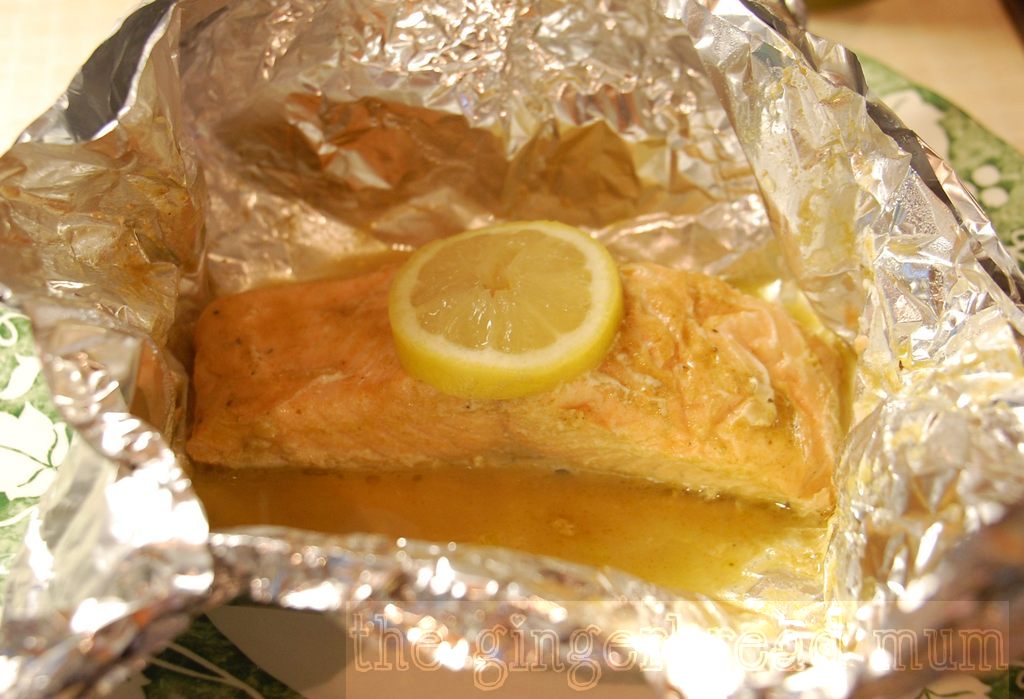
Ever since I discovered cooking salmon in foil parcels, I’ve pretty much never cooked it any other way. I love minimising clearing up and washing up, and there’s something about opening a ‘present’ (even if I wrapped it myself!) at the dinner table that puts me in a good mood.

Hubby came across this recipe a number of years ago on an Italian cooking site and I haven’t managed to find it again. You’re supposed to cook the parcels in the oven (at 180C for 10-15 mins) but I always cook them over a grill pan; you could also cook them on a barbecue. It’s one of my ‘go to’ recipes we eat regularly. Maybe it will become one of yours?

SPICY SALMON PARCELS

Prep time: 10 mins
Cook time: 10 mins
Serves 4 adults

4 salmon fillets, with or without skin
1 tsp ground cumin
1 pinch chilli powder
1 tsp garlic salt
1 pinch paprika
1 tsp ground coriander
Extra virgin olive oil
1/2 cup white wine
salt and freshly ground black pepper
4 slices lemon

Heat the grill pan over a high heat.

In a small bowl mix all the spices (cumin, chilli, garlic salt, paprika and coriander) together with a good pinch of salt and pepper. Add the white wine and mix well.

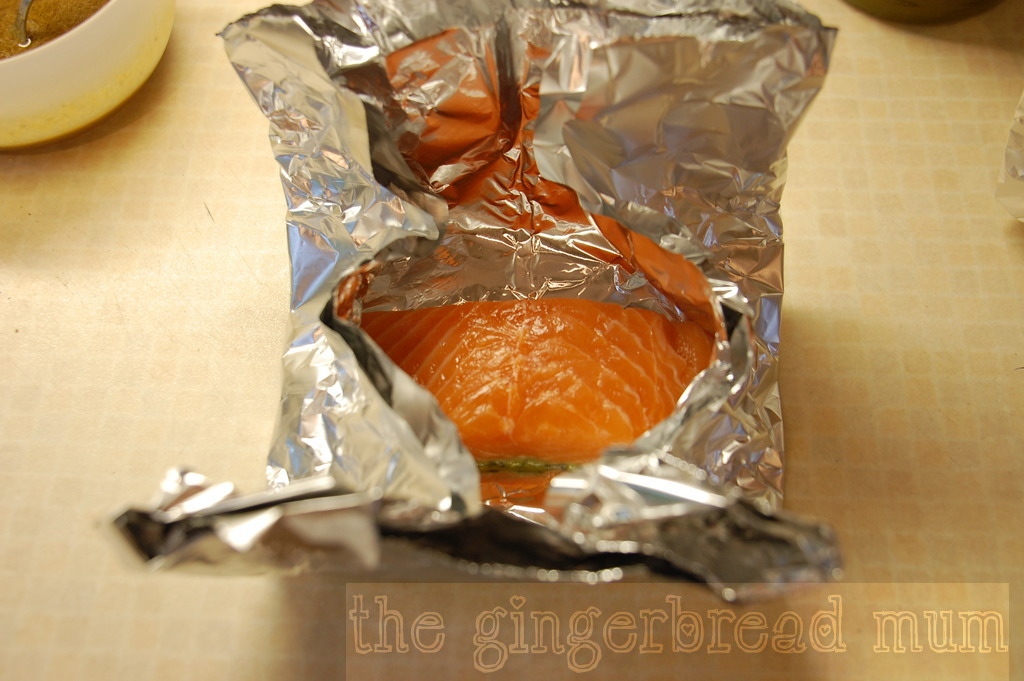
Cut 4 pieces of foil and drizzle olive oil in the middle of each. Place a piece of salmon on top of the oil (skin-side down if it has skin).

Fold in the sides of the foil and fold up the front and back of the foil. Ease out the sides of the foil a little to create a ‘box’.


Evenly spoon the spice mix over the four pieces of salmon and place a slice of lemon on top. Drizzle with olive oil again.

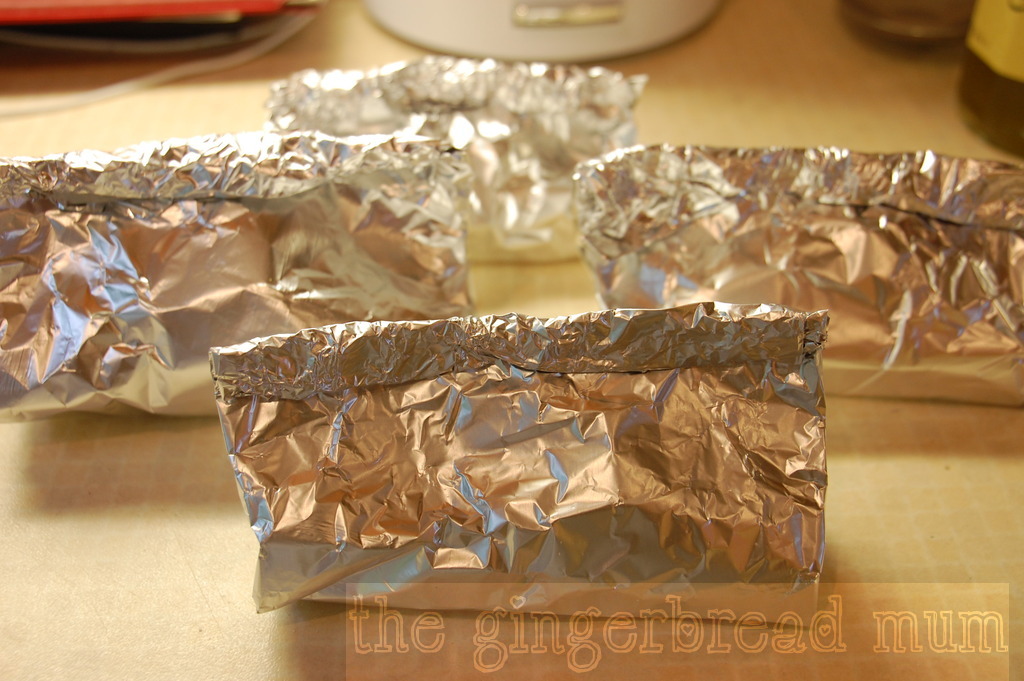
Bring the front and back of the foil ‘box’ together and fold them over a few times to create a parcel.

Place the parcels on the hot grill pan and reduce the heat to med-high. Cook for 8-10 minutes until just cooked through. Serve in the foil parcels.

Tip: use extra strong foil or use two pieces of foil on top of each other for each parcel, to avoid leaks and therefore save you from cleaning the grill pan 🙂