RSS Feed

Category Archives: recipe

Mini cheese and carrot scones

I’ve been trying to avoid turning on the oven during our amazing continued warm weather here in the UK (this is how summer should be!), but when the idea of savoury scones popped into my head I knew it wouldn’t go until I’d made some. The good thing is, scones are quick to prepare and quick to cook, so staying in the heated kitchen is kept to a minimum.

My first attempt at making scones when I was in my twenties was a disaster. What came out of the oven were rock cakes. I guess I overmixed and/or overkneaded the dough. You can find plenty of tips online to ensure your sweet or savoury scones are as light as possible (I’ve added some at the end of the recipe). I ignored one tip never to use any kind of wholemeal flour (I used half white self-raising and half wholemeal self-raising flour) and I think they turned out pretty good anyway! If you’re not feeling confident about scone-making, use all white self-raising flour.

mini cheese and carrot scones

I made mini scones for mini fingers, but you can make any size or shape you like. I used a 4-centimetre round cutter and also cut out a few small butterfly shapes for Nicholas. (Mummy: ‘What sound does a butterfly make?’ Nicholas: ‘Flap flap’.)

Scones are definitely the yummiest straight from the oven with melting butter on top, but these are also lovely to have for lunch filled with some ham and cheese.

These scones freeze very well and are also something different to pop into lunchboxes. You can also add some chopped ham or cooked bacon to the mix as well as experiment with other grated vegetables. I’d love to hear your variations.

MINI CHEESE AND CARROT SCONES

Prep time: 15 mins
Cook time: 10-15 mins
Makes about 20 mini scones
Freezable

1 cup wholemeal self-raising flour
1 cup plain self-raising flour
1/4 tsp salt
50g butter, cold
1/2 cup finely grated carrot
1/2 cup grated cheddar cheese
3/4 cup milk
1 tbsp milk extra for glazing

Preheat the oven to 200C and line an oven tray with baking paper.

In a medium-sized mixing bowl, add the two flours and salt.

Quickly dice the butter and add to the bowl. Using your fingertips, quickly rub the butter into the flour for a minute or two until it’s fairly evenly distributed (the consistency should be like coarse breadcrumbs). Don’t rub the mixture too much or the butter will melt.

Using a knife instead of a spoon, quickly mix through the grated carrot and cheese then add the milk, stirring until it’s just loosely combined.

Tip the dough out onto a floured work surface and knead it just enough to form a ball. Use your hands to flatten the dough until it’s about 2cm thick.

Cut out your desired shapes and place them on your prepared oven tray close together. Form another ball from the leftover dough and repeat.

Brush the tops of the scones with the extra milk and bake for 10-15 mins until golden.

Variations:

  • For a cheesy top, a couple of minutes before the scones are cooked, sprinkle over some extra grated cheese and pop back into the oven.
  • Add some chopped cooked ham or bacon to the dough.
  • Substitute the grated carrot with a different grated vegetable such as parsnip, courgette/zucchini or beetroot.

Tips:

  • Always use butter that’s straight from the fridge to avoid it melting when it’s rubbed into the flour (which leads to heavy scones); some cooks suggest putting the butter into the freezer for a few minutes after weighing it out, grating it into the flour and then quickly mixing it through rather than rubbing it.
  • When cutting out your scones, don’t twist the cutter after pushing it into the dough; this seals the edges and makes it more difficult for the scone to rise.
  • Putting your scones close together, even touching, on the oven tray helps them rise (a good example of teamwork?!?).
Dairy-free lime cupcakes

At the weekend I became a godmother! And I couldn’t be prouder of my gorgeous (and incredibly cheeky) godson, Lorenzo.

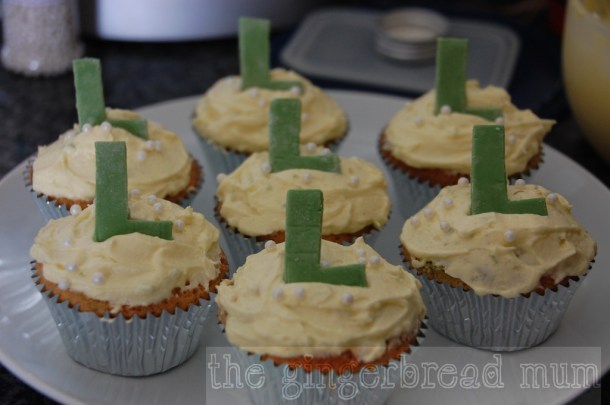
Before he was born, Lorenzo’s parents decided on a colour for his nursery, his pram, etc – lovely lime green. His mum even later incorporated the colour into her wedding dress (which was stunning, by the way). So when I was deciding what I could make for his christening party, I knew I had to include his colour somehow. Voila – lime cupcakes!

dairy-free lime cupcakes

Lorenzo’s papa is lactose-intolerant so I made them completely dairy-free. Even the frosting is dairy-free, topped with some green ‘Ls’ I cut out of ready to roll icing (you need to make these in advance so they can dry and harden).

I was aiming for a lovely marbled green and cream effect as you bit into each cupcake, but in my haste to make them, the green hue was more like a splodge in the centre! I’m sure you can have more success than me swirling the coloured batter through. Or let your kids have fun with different colours.

dairy-free lime cupcakes

This recipe is an adaption of my dairy-free chocolate cupcakes, which I’d adapted from Nigella Lawson’s chocolate olive oil cake. Using healthier olive oil is a great way to eliminate dairy from cakes, and the unanimous decision from the people who’ve tried my chocolate and lime dairy-free cupcakes is that they taste just like ‘normal’ cupcakes!

I used this recipe as the basis for my dairy-free icing, but it’s basically dairy-free spread beaten up with icing sugar to which you then add your choice of flavouring (and colouring if you want). The quantities below make a large amount of icing which is perfect if you want lovely big mountains of piped icing on top. If you just want to spread it on like me (I must learn how to properly pipe!), reduce the quantities. Using a dairy-free spread instead of butter also means the icing will be quite runny after you’ve beaten it; pop it into the fridge for a while to cool before icing your cupcakes.

DAIRY-FREE LIME CUPCAKES

Prep time: 20 mins
Cook time: 15-20 mins
Makes 12 cupcakes
Uniced cupcakes can be frozen

200g caster sugar
150ml olive oil (not extra virgin olive oil)
3 eggs
2 limes, zested and juiced
1 tsp vanilla extract
140g self-raising flour

For the icing:
2/3 cup dairy-free spread
2 1/2 cups icing sugar
2 limes, zested and juiced
green food colouring (optional)

Preheat the oven to 170C and line your cupcake tray with paper cases.

Cream the sugar, olive oil and eggs quite vigorously (about 3 minutes) until you have a pale creamy texture. Turn the speed of your beater or mixer down a little. Add the vanilla extract, lime zest and juice, beating until combined.

Slowly add the flour and gently mix until combined.

Put about 1/4 cup of the mixture into a small bowl and mix through a little food colouring.

Divide the rest of your uncoloured mixture evenly between the paper cases. Add a spoonful of your green mixture to each and swirl through using a skewer. Bake for 15-20 minutes until lightly golden and a skewer comes out clean.

Leave the cupcakes to cool on a wire rack while you make the icing. Briefly cream the dairy-free spread using a hand-held beater or mixer then slowly add the icing sugar a bit at a time, beating until light and fluffy. Add in half of the zest and juice, and taste. Keep adding a little more zest and juice, tasting as you go, until you’re happy with the flavour. Mix through the food colouring if using.

Have fun decorating your cakes.

Variations:

  • for dairy-free lemon cupcakes, replace the zest and juice of the 2 limes with the zest and juice of 1 lemon;
  • for an indulgent gluten-free squidgy dessert, substitute the flour with the same amount of ground almonds and instead of the icing, drizzle with a lime sugar syrup.

Quick Chicken Nuggets

This is another recipe from Annabel Karmel’s new book, ‘Quick and Easy Recipes for Toddlers’, which I recently reviewed. These are a much quicker and easier version of the Chicken Nuggets which feature in her ‘Top 100 Finger Foods’ book. This time she uses store-bought red pesto sauce and smashed up cornflakes.

Annabel Karmel quick chicken nuggetsWhat children don’t like chicken nuggets? Well I’m sure there must be some, but put a plate of nuggets with some tomato sauce for dipping in front of fussy eaters and you’re most likely going to have a stress-free meal. Now if only we could get some veg in there too…

To be honest, I wasn’t sure about the use of ready-made red pesto, which is a pesto made from sun-dried tomatoes rather than the traditional green basil pesto (it can also be made from roasted red peppers/capsicum). But I’ve made these nuggets a few times now and this recipe’s speed is definitely a winner! It’s also easy enough for your little ones to help you make them. They can have lots of fun bashing up the cornflakes and it’s also fairly mess-free.

If you have a bit more time or if you’d prefer not to feed your little one ready-made sauce, red pesto is quite easy to whip up, basically throwing the ingredients into a blender and whizzing them to a paste. Marthe at The Baking Bluefinger has a very easy recipe. The pesto will keep in the fridge for about a week, but it also freezes very well (freeze it in ice cube trays so you only need to defrost a small portion when you need it).

The original Annabel Karmel recipe adds seasoning to the chicken pieces before covering them in the pesto, but for me there’s well and truly enough seasoning in the pesto itself without adding more, even if you’re serving these to older family members. I’ve also added the preparation time as unfortunately this is lacking for all of the recipes in Annabel Karmel’s new book (that’s a super important piece of information to know for busy mums and dads!.

The nuggets are best eaten immediately as the coating loses some of its crunchiness as they cool down. However, they’re still yummy cold and leftovers can be popped into the next day’s lunch box.

I’m still thinking about how to get some vegetables into a chicken nugget. I’m eyeing up some pea puree left over from a scallop and chorizo starter I made hubby and wondering if it would work instead of pesto. Hmmm… I’ll get back to you!

QUICK CHICKEN NUGGETS

Prep time: 10 mins
Cook time: 10 mins
Makes about 25 nuggets

2 boneless, skinless chicken breasts
2 tbsp red pesto
50g cornflakes
15g Parmesan, finely grated

Preheat the oven to 200C/180C Fan and line an oven tray with baking paper.

Slice the chicken breasts into small cubes (you should get 10-12 pieces from each breast). Put the chicken into a bowl and mix in the pesto to coat the chicken.

Put the cornflakes into a plastic food bag and bash them with a rolling pin to make fine crumbs. Add the cheese and half of the chicken to the bag. Shake the bag to coat the nuggets, then transfer them to a plate. Add the remaining chicken to the bag of crumbs and repeat.

Lay the nuggets on a baking sheet and cook in the oven for 10 minutes.

What foods do your fussy eaters always eat?

Ham, Cheese and Veggie Muffins

I was very happy to discover this new blog (The Diary of a Fussy Eater). Amy’s a working mum of a fussy eater who’s taking a stand to get her boy to eat more healthily. If, like me, you’re struggling with your own fussy eater, I’d definitely recommend checking out Amy’s recipes and techniques.

ham, cheese and veggie muffins

Amy’s Ham and Cheese Mini Muffins are super easy and quick to make. I made them with Nicholas pretty much immediately after seeing the recipe and my fussy eater scoffed three of them as soon as they were cool enough to eat for his afternoon snack. Win!

I made a couple of little changes to her wonderful recipe. I used wholemeal self-raising flour (she uses plain flour with the addition of a couple of tablespoons of wheat bran) and I added some veg (I just couldn’t help myself!). I think you can easily get away with adding some grated vegetables as the overall flavour is still ham and cheese which kids usually love.

Like me, Amy isn’t a fan of hiding vegetables as it doesn’t help little ones learn to enjoy eating their veg. BUT that certainly doesn’t mean I don’t do it. I think the important thing is to keep offering them an assortment of vegetables, cooked in different ways to keep trying to pique their interest.

I make these muffins with Nicholas and point out all the ingredients as we add them, so I don’t think the veg can be called hidden! Our favourite grated vegetable to add is carrot, but courgette (zucchini) has gone down well and also parsnip.

This recipe is also great in that it’s very ‘forgiving’. The amounts don’t have to be exact and we’ve also made them successfully tipping everything into the bowl together (egg unbeaten), mixing until combined, so perfect for getting your munchkins involved (which is also a good way to encourage them to eat).

The muffins freeze very well and are also great in lunchboxes. And I’ve scoffed quite a few myself!

Thank you Amy for helping me get more vegetables into my own fussy eater 🙂

ham, cheese and veggie muffins

HAM, CHEESE AND VEGGIE MUFFINS

Prep time: 15 mins
Cook time: 10-15 mins
Makes 12 small muffins
Freezable

1 cup of wholemeal (or plain) self-raising flour
1/2 cup grated cheddar cheese
100g cooked ham, sliced
1/2 cup milk
60g butter, melted and cooled
1 egg, lightly beaten
1/3 cup finely grated vegetables such as carrot, zucchini or parsnip
Salt and pepper (optional)

Preheat your oven to 200C. Lightly spray or grease a 12-hole muffin tin.

In a medium-sized mixing bowl, combine the flour, cheese and ham.

In a jug or small bowl, whisk together the milk, butter and egg then stir through the grated vegetable. Season with salt and pepper if desired.

Pour the wet mixture into the dry ingredients and mix until just combined (mixing too much can make your muffins dense and chewy).

Divide the mixture evenly between the muffin tin holes. Bake for 10-15 mins until golden and cooked through when tested with a skewer.

Orange and Soy Sole

As promised, here is one of the recipes I tried from Annabel Karmel’s new book, ‘Quick and Easy Toddler Recipes’, which I reviewed in a previous post and which is out today.

I’ll definitely be making this again. It’s very quick (under 10 minutes!), very tasty and perfect to make for the whole family. Even if your little one isn’t a huge fish fan, give this a try as the sweetness of the orange juice might change their minds. You could cut the fish into more manageable ‘fingers’, before dusting with flour, for little hands to feed themselves.

orange and soy sole

Serve with a side salad for adults and some raw vegetable sticks for toddlers (prepare a stash of these to keep in the fridge for a few days to save you some time).

Annabel’s recipe says two lemon sole fillets makes 1-2 portions which is confusing to me as the serving sizes throughout the book seem to be a toddler portion. For me, allow at least one fillet (one half of the fish) for each adult and 1/2-1 fillet for each child.

You don’t just need to use lemon sole with this orange and soy sauce; any white fish (cod, plaice, haddock, etc) would go well with the sauce. Next time I’m going to try it with salmon chunks for Nicholas.

ORANGE AND SOY SOLE

Prep time: 5 mins
Cook time: 3 mins
Feeds 1 adult and 1 toddler

2 lemon sole fillets, skinned
Salt and pepper
Plain flour, for dusting
A knob of butter, for frying
1 tbsp orange juice
1 tsp soy sauce

Season the fish fillets and coat them on both sides with the flour, shaking off any excess.

Melt the butter in a frying pan until foaming, add the fish and fry for 1 and 1/2 minutes. Turn them over and fry for 1 minute more.

Mix the orange juice and soy sauce together, pour it over the fish and let the sauce bubble away for 30 seconds.

Serve immediately.

Review: Annabel Karmel’s Quick and Easy Toddler Recipes

Annabel Karmel, the saviour of many parents when it comes to feeding little ones, has a new recipe book coming out this week, and I’ve been very lucky to be able to try out her new recipes over the past month.

I know many mums (me included) who found Annabel’s ‘Complete Baby and Toddler Meal Planner’ a godsend during those initially challenging weaning months. So no surprise then that since it’s publication in 1991, it’s remained the number-one bestselling book on food for children. Her new recipe book, ‘Quick and Easy Toddler Recipes’, is a great follow-on from it.

Annabel Karmel's Quick & Easy Toddler Recipes

‘Quick and Easy Toddler Recipes’ has the same look as Annabel’s other books with lots of lovely photographs of the recipes and also some cute drawings scattered throughout. It’s a lovely book to look at with an excellent index and useful chapters (Breakfasts and Snacks, Pasta, Fish, Poultry, Meat, Vegetables, and Fruit).

The recipes all have easy-to-follow instructions with ingredients either already in your cupboard or easily bought. The number of portions each recipe makes can be seen at a glance, although as the book’s aim is feeding the whole family with one recipe, adult serving sizes would be useful too.

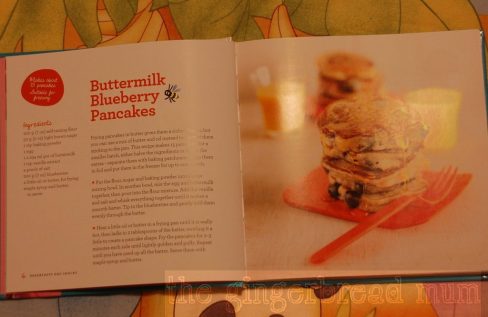
‘Breakfasts and Snacks’ include buttermilk blueberry pancakes, scrambled eggs with tomato salsa, ideas for sandwich fillings and quick snack ideas (although the inclusion of popcorn as a toddler snack is a worry – see why here).

Annabel Karmel's buttermilk bluleberry pancakes

All the ‘Pasta’ recipes would be suitable for the whole family plus there are some quick sauce ideas. The recipes also include pasta bakes and pasta salads.

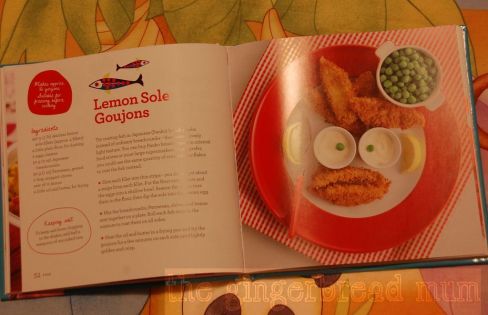
The ‘Fish’ chapter includes some pasta recipes as well as the tasty-sounding orange and soy sole, teriyaki salmon kebabs and lemon sole goujons.

Annabel Karmel's lemon sole goujons

‘Poultry’ recipes, the biggest chapter of the book, also has some pasta dishes, as welll as ideas for wrap fillings, soups and meatballs.

It’s great to see a veal recipe (schnitzel) in the ‘Meat’ chapter. There’s also sticky lamb chops, pork fillet stir-fry, and sweet and sour pork, just to name a few.

There are a couple of soup recipes in the ‘Vegetables’ section along with some risotto recipes, pasta recipes, fritters and a frittata recipe.

The most disappointing section for me is ‘Fruit’ and this is where I have to admit I have an issue with Annabel Karmel’s recipes. The one issue I have across all the recipes of hers I’ve tried and perused (and not just in her new book) is the lack of sugar-free sweet recipes. Every single recipe in the ‘Fruit’ chapter, as well as her fresh fruit salad in the opening ‘Breakfast’ chapter, has sugar. Every single one. And this worries me.

Scattered throughout the book are time-saving tips for hassled parents which is a nice addition. Advice includes buying ready-grated cheese, using just boiled water from the kettle to cook pasta, putting dinner leftovers in your little ones’ lunchboxes the following day and buying frozen vegetables (although this last one isn’t reflected in the recipes with several asking for just a couple of spoonfuls of tinned corn!). The suggestion to reorganise your kitchen so you have easy access to the equipment you use the most is good advice, but how many of us would actually do it?

My biggest gripe about this book, especially when it’s being marketed at busy mums and dads who need quick and healthy meals, is the lack of timings. There aren’t any cooking or preparation timse given for any of the recipes. Being able to see at a glance how long each recipe takes would be really helpful for hassled parents.

It’s also a shame there aren’t more suggestions or advice for getting toddlers to help you cook, in fact I can only see one which encourages them to blitz fruit. While you can certainly have your munchkin make her or his own wraps (although do you need a recipe for that?), it would’ve been good to have some recipes that just involved measuring and mixing to fully engage a toddler. For instance, the apple and sultana muffin recipe needs the butter and sugar to be creamed rather than including a muffin recipe where the butter is melted and cooled then all the remaining ingredients just mixed in, which is very do-able for a toddler.

It states there are “tips and tricks to encourage fussy eaters” which I was very enthusiastic to read considering my recent confession to you, but I found no real advice for frustrated parents. Reading the book from cover to cover deciding which recipes I’d try out first, I dismissed many thinking Nicholas would just pick out the vegetables or just not want to try them because of the size of the chunks of vegetables. Yes, you can dice up vegetables so the pieces are tiny and keep your fingers and toes crossed as you serve it up, but I think exasperated parents would welcome even the simplest practical advice to be explained.

However, for the many mums and dads out there who are stressed, tired, often catering for the multiple culinary demands of their family, battling to get their little ones to eat, and in need of help, Annabel’s new book will definitely inspire. There are plenty of easy recipes that can be quickly whipped up (130 to be exact!), saving many of us tearing our hair out not knowing what to feed our family this evening.

Look out for some of Annabel’s new toddler recipes over the next few weeks as I share some of my ‘tests’ with you!

‘Quick and Easy Toddler Recipes’ will be published by Ebury Press on 20 June 2013 (RRP £9.99).

Disclosure: I was sent a copy of Annabel Karmel’s ‘Quick and Easy Toddler Recipes’ to review. My opinions are honest and my own.

A confession

I have a confesson to make.

I blog easy and healthy recipes for toddlers (and their busy parents). I love being in the kitchen and I especially love making things for my toddler Nicholas. I would happily spend all of my free time cooking for him.

But (deep breath)…

I have a fussy eater.

There, I’ve finally admitted it. My toddler often refuses to eat what I spend so much time preparing for him and which I then blog giving the impression that he scoffs everything (well at least I think that’s the impression I give).

Having a fussy eater wasn’t in my agenda. Hubby and I are foodies through and through, and food is a big part of our lives.

Nicholas eating tomato

We did baby-lead weaning immediately, got Nicholas smelling and touching and trying a vast arrange of foods very early on. He happily ate tomatoes and whole broccoli stems as well as other vegetables during his first stages of weaning. I tried to limit the amount of fruit in favour of more veg to encourage his tastebuds to explore not just sweet flavours.

Nicholas eating baby corn

Then he started becoming fussy. Just a little bit. I kept telling myself it’s a normal phrase; it will pass. But it didn’t. I’d hear other mums complain about their fussy toddlers and think ‘I’m glad that’s not us’. But it was.

He got fussier and fussier, and our ‘fussy phase’ goes on and on.

I long for the days when he happily tried pretty much everything he was offered rather than the ‘No! NO!’ and ‘Finished mummy’ (while handing back an untouched plate) I get now. His refusals mainly involve vegetables, even picking out the tiniest pieces from dishes, holding them aloft and declaring ‘No broccoli mummy!’, and not touching meat dishes (usually the only thing he never fusses over) when there’s hidden veg lurking (how does he know when he hasn’t even tasted it?!).

Nicholas eating spaghetti
I’ve had a post in my draft section for many many months. A post giving advice for fussy eaters (!). It’s a work in progress as I keep adding things I’ve researched or tips that have worked (although aren’t a ‘cure’). It may be a while before I feel ready to post it!

Now that my shoulders are a little lighter (it always feels better to get something off one’s chest), while I wistfully look at old photos of Nicholas loving food, if any of you lovely readers have some fussy eater advice, please share!