RSS Feed

Tag Archives: toddler

Olympic fruit platter

If you’re loving watching the Olympics and can tear yourself away from the television, why not make this easy fruit platter for your munchkin? I can imagine having fun with older kids, first finding fruit in the five different colours and then preparing it together. I’m sure you’ll be better than me at linking your rings (I just gave up!).

The five rings represent the five continents. The five colours of the rings (blue, black, red, yellow and green) plus the background colour of white, come from the colours of the flags of the countries which competed in the first modern games.

I used blueberries, blackberries, strawberries, bananas and kiwi, but of course there are lots of other possibilities. You could also try a mixed fruit and vegetable platter.

For a less healthy treat, you can try my Olympic biscuits using coloured sugar on Mindful Mum; a nice cooking activity to do together with older little ones.

Sugar-free clementine jelly

I’ve wanted to try making jelly for Nicholas for a while. I wanted to experiment using pure fruit juice without any sugar to see how sweet it could be without adding any sugar (or as little as possible).

The other day at the supermarket I saw some cute individual jelly moulds and they were also super cheap (six moulds for a pound!), so I bought them and decided to experiment immediately.

I used gelatine leaves rather than gelatine powder. Supposedly the leaves produce a smoother texture than the powder; they’re also easier, for some reason, to find in British supermarkets. Whether you use leaves or powder isn’t important. What is important is to check the directions on the back of the gelatine packet in order to work out how much gelatine you need to use for the amount of liquid you need to fill your jelly mould/s.

I wanted to make one small jelly. I filled my mould up with water and then measured the amount of water I needed to fill my mould (about 150ml). My gelatine packet said to use 4 leaves for 1 pint of liquid (that’s about 570ml) so I decided to use 1 leaf for the 150ml of liquid I needed.

I was very happy with the results – a soft wobbly jelly that was definitely sweet enough, and it dissolves in your mouth so it’s also perfect for babies. I was assuming hubby and I would get a spoonful each at the end. I was wrong. Nicholas devoured his dessert in a couple of minutes, not much more, licking his plate clean!

You can use any freshly squeezed juice (orange, apple, pineapple, etc.) or buy good quality unsweetened pure juices. Just make sure you get a taste of it before you give it to your munchkin!

SUGAR-FREE CLEMENTINE JELLY

Prep time: 15 min plus refrigeration overnight
Cook time: 0 mins 🙂
Makes 1 toddler serving

1 gelatine leaf (about 1.5g)
2 tbsp cold water
4 or 5 clementines, squeezed to produce about 150ml of juice

Cut up the gelatine leaf into small pieces (about 1cm) and put in a small heatproof bowl. Add 2 tbsp cold water and leave for 10 mins.

While you’re waiting, bring a small saucepan of water to the boil then drop the heat to low.

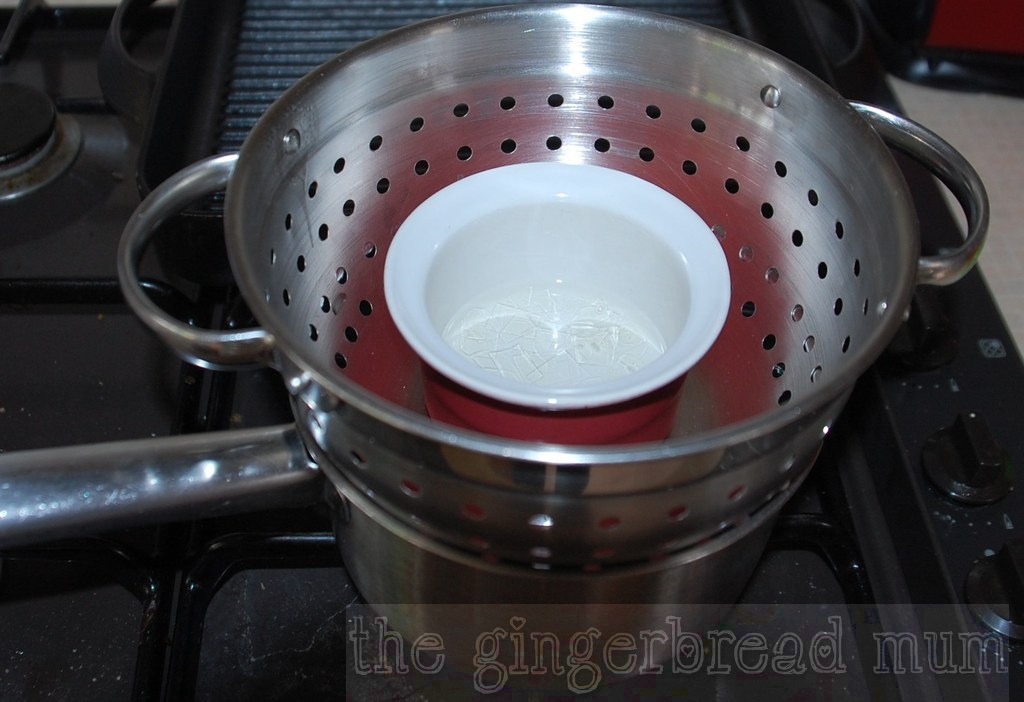
After 10 mins, melt the gelatine completely by putting the bowl over the saucepan of hot water (if your bowl is small, use a heatproof colander over the saucepan and place the bowl inside the colander). Stir until completely dissolved.

Remove from heat and pour into the clementine juice, stirring to mix. Pour into your jelly mould and refrigerate overnight.

Serve on its own or with some chopped pieces of fruit.


Variations:

  • use any unsweetened fruit juice or combination of juices
  • to add a minty flavour, soak 1 or 2 mint leaves in 2 tbsp of hot water and leave to cool, then use the water to dissolve the gelatine
  • for a toddler, add some small pieces of chopped fruit to set in the jelly

Quick salmon pasta sauce with crème fraiche and dill

This recipe is actually my hubby’s creation, which I’m stealing! While I’ve made something similar in the past, our approaches to cooking for Nicholas are rather different. I focus on speed of cooking and the fewer things to clean up afterwards the better. Hubby sticks to his Italian roots and does things ‘properly’!

My version of this cooks the salmon in milk in the microwave, then everything else goes in the same bowl as the salmon (why dirty another bowl?!). Hubby’s version is a bit different…

Quick salmon pasta sauce with crème fraiche and dill

Prep time: 5 mins
Cook time: 5 mins
Makes 1 toddler serving

30-40g fresh salmon fillet, with skin removed
Drizzle of olive oil
2 tbsp crème fraiche
A pinch of salt and pepper (optional)
1/2 sprig fresh dill, chopped

Chop the salmon into small cubes (about 5mm). Heat a drizzle of olive oil in a small frying pan over med-low heat. Add the salmon and cook for a minute or two until just cooked.

Take off the heat and stir in the crème fraiche. Season, if using. Add your cooked pasta and mix in the pan. Sprinkle over dill and serve.

Variations:
– Use fresh or tinned tuna instead of the salmon
– Replace the crème fraiche with yogurt or cream
– Use chives or parsley instead of the dill

Other uses:
– Use the sauce as a crepe filling
– Dollop the sauce over a baked potato

Banana chips

Bananas. What baby or toddler doesn’t love them? Well I’m sure there must be some who don’t, but on the whole they’re probably one of the favourite fruits of little ones. Firm enough to hold, yet easy to eat even without teeth. The only time bananas aren’t any good is if your munchkin is constipated (but they’re great if things need firming up!).
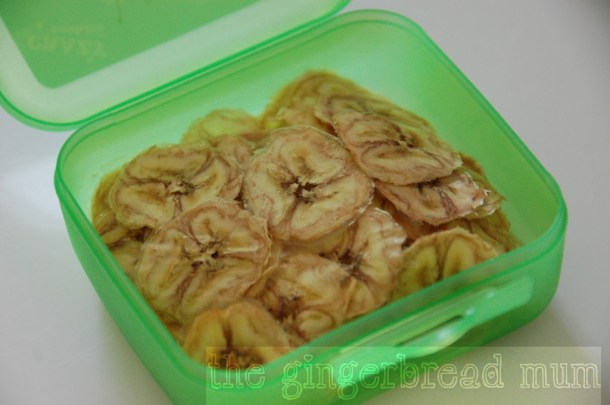
One of Nicholas’ favourite snacks are banana chips. I buy the ones that are as natural as possible, making sure they haven’t been coated in sugar or fried, but when I came across Sweet Road’s recipe, I knew I had to try making them!

This is yet another way to use up very ripe bananas (remember the riper they are, the sweeter they’ll be). And while the cooking time is long (you’re using your oven as a dehydrator), you can leave them to do their drying and go do something else.

The only issue with this recipe is that you really have to try it a few times to understand what temperature and timing your oven needs to produce your desired level of crispiness. Ovens unfortunately do differ from each other in terms of temperature. Nicholas prefers the chewy banana chips so I have been trying to achieve a nice balance of chewiness and crispness.

An important point to add: if you make your chips chewy rather than completely crisp, tear them up into pieces before giving them to your little one to avoid any possibility of choking.

The results of my first two tries:

1. Oven 80C, cooked for 1 hr 45 mins

  • I cut the banana too thin (about 3mm thick) so they were very difficult to take off the baking paper even when they were cool. I should have read Jaime’s original recipe more closely!
  • I lay the banana slices on baking paper on a baking tray.
  • The chips were too soft and sticky, the underside being softer than the top.

2. Oven 95C, cooked 1 hr 30 mins then turned each banana slice over and cooked for another 30mins

  • I cut the banana following the original recipe’s suggestion (about 5mm thick) and was much happier with the result.
  • I lay the banana slices on baking paper on a baking tray.
  • Turning them helped crisp both top and bottom, but they were still too soft for my liking, sticking too easily to each other when put in a container.

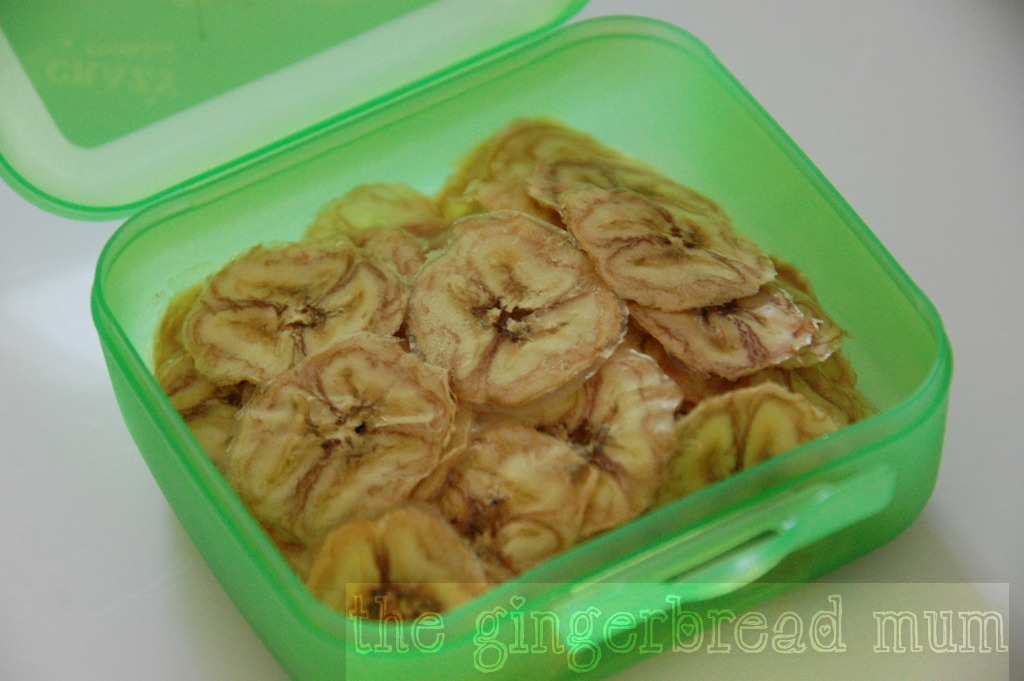
After my third try I was happy with the results, and I’ll be sticking to this method (below) from now on. A slightly higher temperature, but the main difference is that I don’t put the banana slices on a baking tray, but put the baking paper directly onto the oven’s wire shelf. The edges become crispy while the middle is chewy yet firm. The surface is drier than the previous tries and so they don’t stick to each other when stored. Looking at the last packet of chewy banana I bought at the supermarket, one of the ingredients is rice flour which I’m assuming isn’t used in the cooking stage but tossed through at the end to keep them from sticking – perhaps something else to try if they ever last that long in the container.

Perhaps I’ll experiment some more in the future using a lower temperature and a much longer cooking time, as probably my method is less dehydrating and more cooking the banana slices.

Anyway, the verdict from Nicholas? He liked all of them… a lot!

SLIGHTLY CHEWY BANANA CHIPS

Prep time: 10 mins
Cook time: 2 hrs (no need to check during this time)
Makes about 60 chips

2 ripe bananas
1/2 lemon, squeezed

Take out one of your oven’s wire shelves and lay a piece of baking paper over it. Preheat the oven to 100C.

Cut your bananas into slices about 5mm thick and lay them on the baking paper. Using a pastry brush, lightly brush the banana with the lemon juice (or you can just dip your fingers in the juice and rub the banana!).

Cook the banana for two hours (you don’t need to check or turn them or do anything else during this time).

Take them out of the oven and leave to cool on the baking paper. They’ll become firmer as they cool.

Store in an airtight container.

Spending so much time with banana slices (!) has made me appreciate their beauty. Look at their lovely pansy-like patterns!

Fish pie with sweet potato

I always make white sauce on the stove in a saucepan. Apart from stirring it fairly constantly, it’s easy. I use a whisk instead of a wooden spoon to avoid lumps and it works a treat.

But… it’s much easier to make a large amount of white sauce. Making toddler meals you tend to only need about a tablespoon of sauce. Up until now I’ve tried to make a small amount, used less than half and thrown the rest away (and that makes me feel VERY wasteful!).

I stumbled across a recipe that made white sauce in the microwave. While I’ve embraced my microwave more since feeding Nicholas, I was more than just a little bit sceptical of using it to make a sauce. Surely there will be lumps? Focusing on the fact that I could make a small amount hopefully without wastage, I tried it. It worked.

FISH PIE WITH SWEET POTATO

Prep time: 5 mins
Cook time: 15 mins
Makes two toddler servings

40-50g white fish, deboned and cut into chunks
1/2 cup milk
4 raw prawns, peeled and deveined
2 tbsp peas
1 small sweet potato
1 tsp butter
1 tbsp plain flour
Small handful of cheddar cheese, grated
Pinch of salt and pepper (optional)

Use the point of a knife or a skewer to prick the sweet potato in a few places all over. Cook on high in the microwave for 3-4 minutes until it feels soft inside. Leave to cool then pull off the peel and mash in a small bowl. Add a teaspoon or two of the milk and mix. Season if you wish.

Put the fish and prawns into a small microwave-safe bowl with about 3 tbsp of the milk (enough to just cover the fish and prawns). Cover and cook on medium 1-2 minutes until just cooked. Drain but keep the milk.

Flake the fish checking for bones and cut the prawns into small pieces. Divide the fish and prawns between two small oven-proof dishes (souffle or creme caramel ramekins are perfect). Scatter over the peas.

Melt the butter in a medium-sized bowl in the microwave. Mix in the flour well making sure there aren’t any lumps. Add a pinch of salt and pepper if you wish then add the milk (including the milk you cooked the fish in). Whisk until the mixture is smooth. Cook on medium in the microwave for 3 minutes, stopping every minute to whisk it. Your finished sauce should be quite thick.

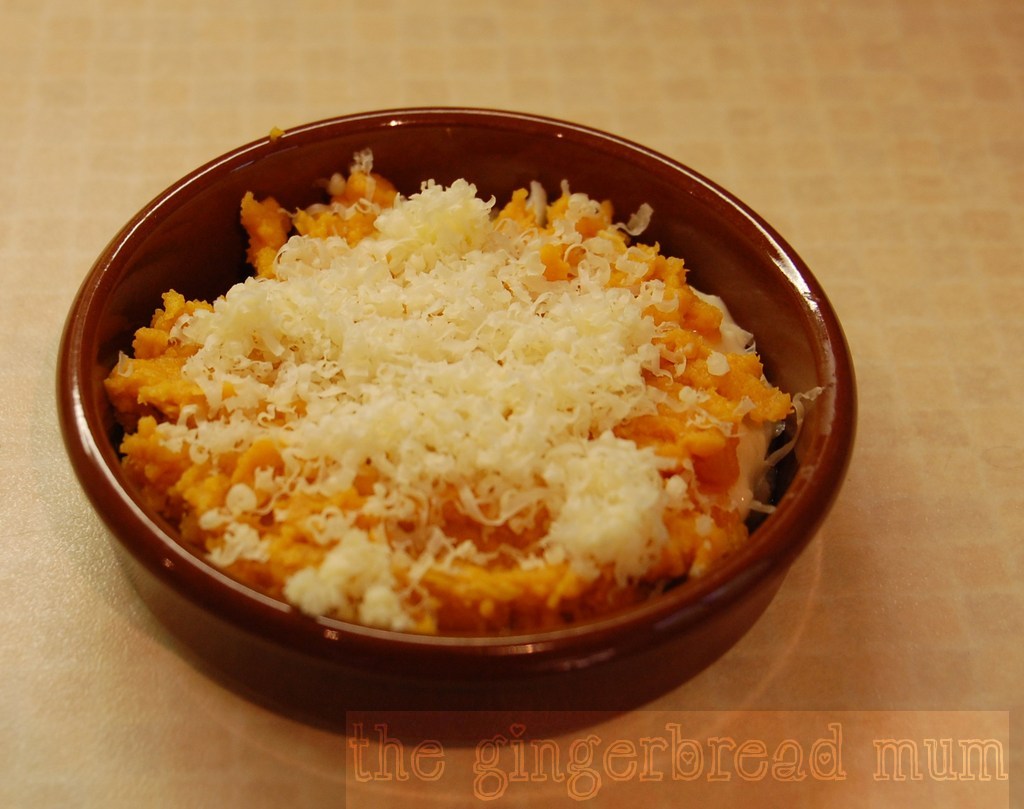
Pour the white sauce over the fish mixture. Dollop on the sweet potato and the grated cheese. Put under a hot grill for a couple of minutes until the cheese is melted and golden.

Variations:

  • Add a little bit of smoked fish to the fish mixture
  • Use normal mashed potato instead of sweet potato mash
  • Add some fresh herbs to the white sauce (chives, parsley)

Apologies for not having a photo of the finished dish. My very hungry toddler wasn’t interested in waiting any longer for his dinner!

Sugar-free carrot loaf

I don’t know about you, but when 4 o’clock comes around my tummy starts feeling empty. Nicholas is usually napping and I’m ready to sit down, have a coffee and not think of mummy things for a little while. Then my mind wanders to thinking about what chocolate we have in the house!  So looking for something healthier for me that could also be a healthier sweet snack or breakfast option for Nicholas, I thought I’d try adapting this Foodista recipe for breakfast carrot muffins.

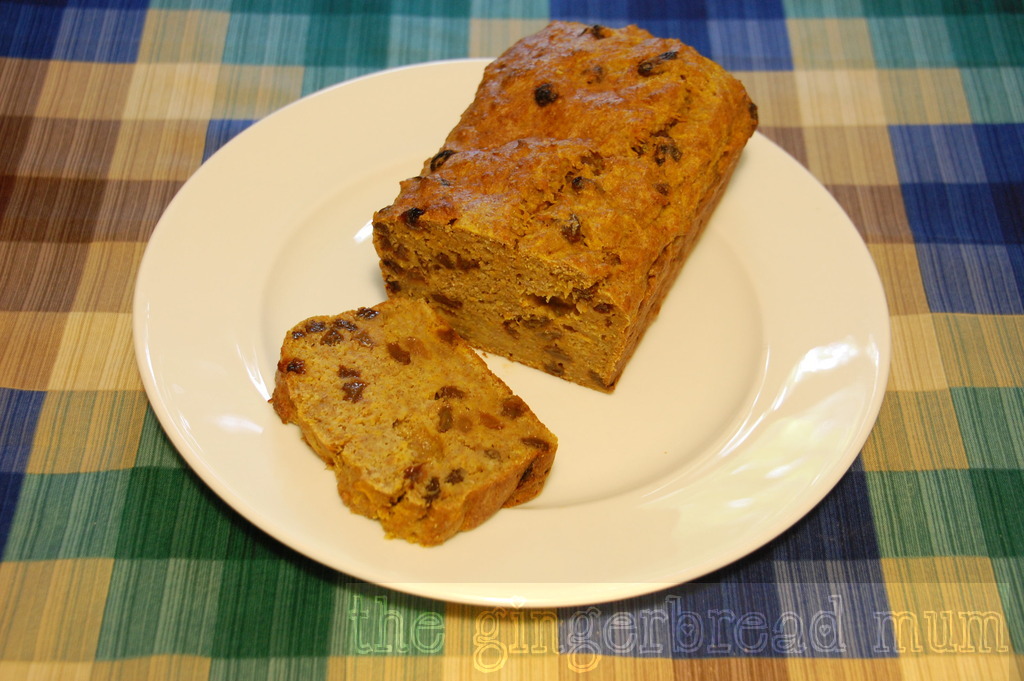
I used wholemeal flour and used my apple sauce instead of sugar to be healthier. I also substituted the butter with vegetable oil, upped the carrot, added some sultanas and vanilla for extra sweetness, and some spice (cinnamon and nutmeg). I was very happy with the result – a dense moist loaf. Next time I’ll try adding some walnut pieces for some crunch.

This recipe works well both as a loaf or as muffins. Spread with some butter to be indulgent!

SUGAR-FREE CARROT LOAF

Prep time: 15 mins
Cook time: 1 hr
Makes 1 loaf
Freezable

2 cups wholemeal flour
1 tsp baking powder
Pinch of salt
1 1/2 tsp cinnamon
1 tsp nutmeg
1 cup grated carrot (packed in as tight as you can!)
1 egg, beaten
1 cup milk
1/4 cup vegetable oil
1 tsp vanilla essence
1/4 cup raisins
1/4 cup sultanas


Preheat your oven to 180C. Line a loaf tin with baking paper.

Mix together all the dry ingredients (flour, baking powder, salt, cinnamon and nutmeg) in a medium-sized bowl.

To the grated carrot mix in the wet ingredients (apple sauce, beaten egg, milk, vegetable oil and vanilla).

Add the wet mixture to the dry and mix fairly quickly to combine. Stir through the raisins and sultanas.

Pour into the loaf tin and cook for 50-60 mins until golden on top and cooked when tested with a skewer.

Variations:

  • add some chopped walnuts
  • add some powdered ginger or cardamom for some extra warm spice
  • make as muffins

Tip: if you have a food processor, check if you have a grating attachment to make preparing the carrot faster and easier.

Sugar-free apple pikelets

I’ve now whipped up three batches of apple sauce (or applesauce as Americans seem to use). Like most things, the more times you do it the easier it gets and I now feel like I know what I’m doing!

I thought I’d try it out this time as a sweetener in my banana pikelet recipe, replacing the honey. I still have a few banana pikelets in the freezer so I made apple pikelets this time using grated apple. I also meant to add some sultanas to the batter, but my mind drifted onto other things and I forgot. Oh well, there’s always a next time!

Pikelets are small pancakes and are perfect for children to cook when they’re old enough to start doing supervised things in the kitchen. They’d also be a good way to get kids to experiment with different flavour combinations.

These pikelets, like my banana pikelets, aren’t super sweet. You could add some honey to the batter or serve them drizzled with honey or, if you’re not worried about them being sugar-free, add 1/4 cup of sugar to the batter. And don’t worry if you don’t have bicarbonate of soda, as they work just as well without.

Pop the leftovers in the freezer to have for breakfast or a snack another day.

SUGAR-FREE APPLE PIKELETS

Prep time: 10 mins
Cook time: 15 mins
Makes about 20
Freezable

1 1/2 cups self-raising flour
1/4 tsp bicarbonate of soda
1/2 tsp ground cinnamon
1 sweet apple, grated
1/2 cup unsweetened apple sauce
1 egg, beaten
1 cup milk
small piece of butter, melted, to grease the pan

Sift flour, bicarbonate and cinnamon into a medium-sized bowl. Add grated apple, apple sauce and egg, and mix to combine. Gradually add the milk until you get a fairly thick batter (you might not need to add all the milk).

Heat a large frying pan over a medium heat and brush with melted butter. Use a tablespoon to drop the mixture into the pan. Cook in batches, turning when bubbles appear on the surface (1-2 mins). Cook the other side until golden brown (about 1 min). Lift out and cover with a clean tea towel to keep warm.

Variations:

  • add sultanas or raisins to the batter
  • use other fruit instead of the grated apple (mashed banana, whole blueberries, mashed strawberries, etc.)

Tip: Wipe your pan clean with a piece of paper towel after each batch and then brush with some more melted butter.