RSS Feed

Tag Archives: vegetarian

Baby oat cakes

My regular readers will know by now that I always need inspiration for breakfast. So when I came across Laura’s microwave raspberry oat cakes, I woke up the next morning with a spring in my step, eager to try them.

I’m a big fan of porridge for little ones as there are so many variations you can do, and this is a brilliant different way to use porridge oats. It’s also super quick and open to variations.

These mini oat cakes would be perfect for baby-led weaning, ideal finger food for a toddler snack, and I even made another for my afternoon tea!

Laura makes hers with frozen raspberries. I first tried frozen strawberries and then some raisins I’d soaked in warm water (if giving to a baby, it’s important to first soak any dry fruit to avoid any possible choking hazard). Try to use a banana that’s as ripe as possible as it will be sweeter (actually this is another great recipe for using up overripe bananas).
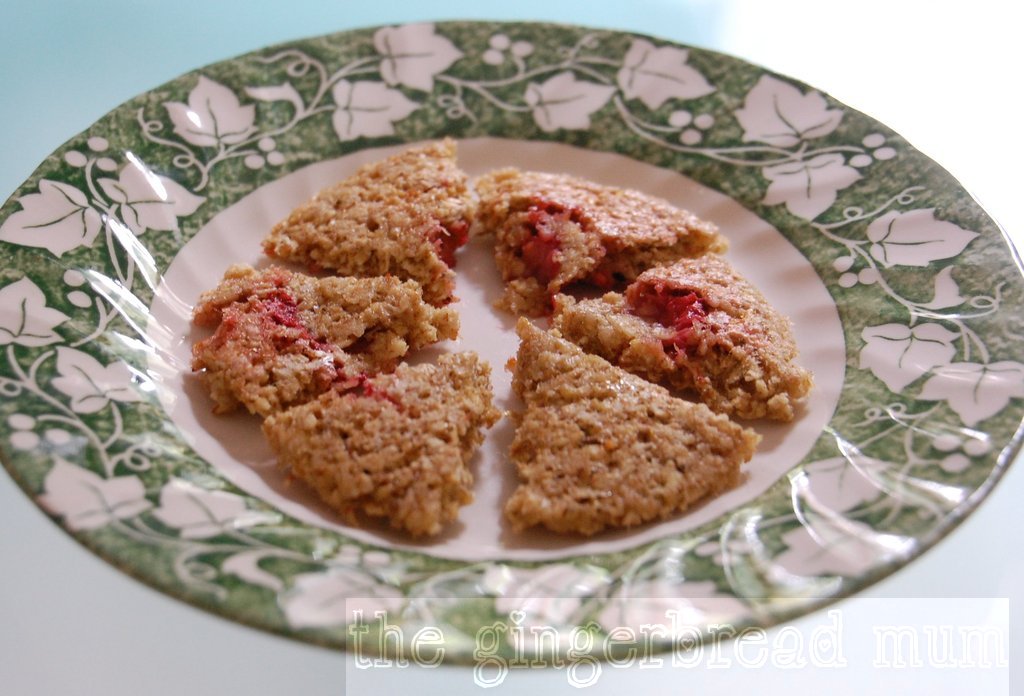
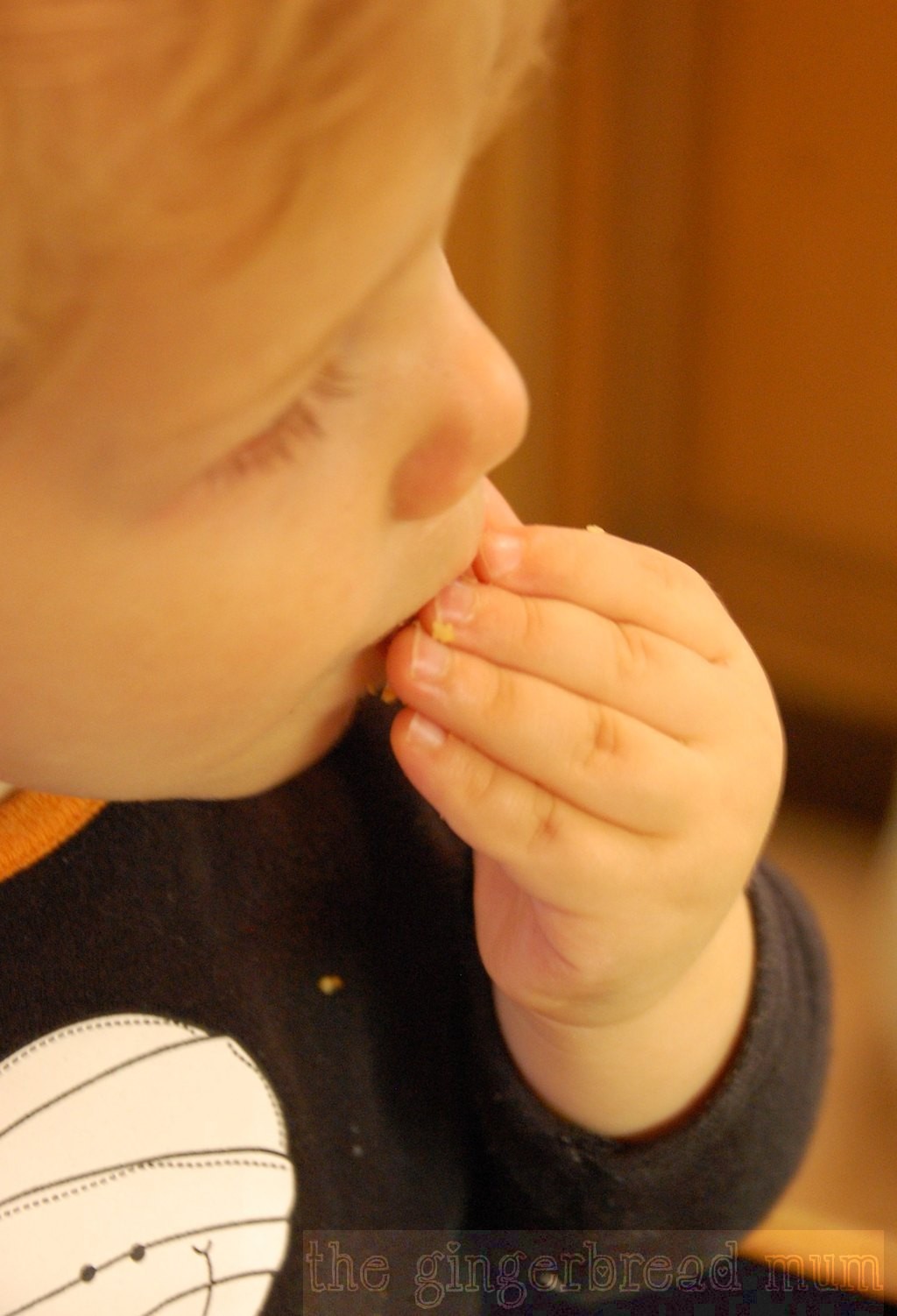
They were a great success with Nicholas who called them biscuits and dunked them in milk. He said ‘yum’ in English and Italian as well as signing it, interspersed with requests for ‘more!’. I couldn’t have been happier 🙂

Check out more of Laura’s budget-friendly family recipes on her blog Small Wallet Big Appetite.

BABY OAT CAKES

Prep time: 3 mins
Cook time: 4 mins
Makes 1 oat cake

1/2 medium banana
1/4 cup (20g) raw porridge oats
A pinch of cinnamon
4-5 pieces of chopped frozen strawberry

Mash the banana in a small microwave-safe bowl (I used one that was about 10cm across at the bottom).

Add the cinnamon and oats, mixing well so all the oats are covered in banana.

Gently mix through the frozen pieces of strawberry.

Press the mixture down firmly into the bottom of the bowl and cook in the microwave on high for 3-4 minutes until it turns into a firm little cake.

Tip the mini cake out. Once cooled, cut it into wedges.

Variations:

  • use other frozen berries instead of strawberries
  • use dried fruit (raisins, chopped apricots, etc) instead of strawberry, but soak them beforehand if giving to a baby
Mini vegetable pakoras

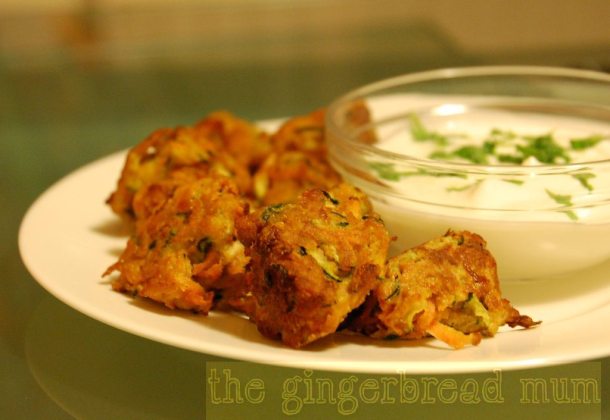
Pakoras were my inspiration for these golden vegetable nuggets. You can use almost any vegetable you like and make them as mild or as spicy as you like. See if you or your little ones can resist them!

My recipe is over at Mindful Mum.

Minty pea soup

Nicholas is going through another of his phases where he can be fussy about eating vegetables. If I serve him protein and vegetables on the same plate, he’ll devour the meat or fish first and then just pick at the vegetables. We’ve been known to resort to bribing him with meat, along the lines of ‘If you eat another two spoonfuls of broccoli, you can have some meat.’ It works, but I don’t like doing it.

I was starting to rethink his meals, thinking about getting him to start with vegetables first before having protein, but without having to dish up the various components separately. A vegetable soup starter was looking like a good option. Then I read Helene’s post over at French Food Baby explaining the typical four-course French meal and I was sold.

What Helene does is have a vegetable starter before the main course, the logic being that you fill up on the vegetables when you’re at your hungriest, most likely eating a smaller portion of protein for the main. This doesn’t just sound good for little ones!

Helene suggests having a vegetable soup or vegetable finger food (cooked or raw) for the first course. I like the idea of offering a vegetable tasting plate to give your child a feeling of independence as they decide what to eat, and, as Helene does, you can have a couple of days’ worth of vegetables prepared in the fridge ready to go. Now I just need to get my act together and do this!

Soup, on the other hand, I’ve tried and so far it’s worked. A small bowl of soup as a starter at dinner and then I don’t worry so much about how many other vegetables Nicholas is eating off his main course plate (and meal times are less stressful). And you can find lots of soup recipes that don’t take much time at all to prepare (in fact you don’t want to be cooking the vegetables very long that their nutrients boil away). Keep it in the fridge for a couple of days and then freeze any leftovers for days when you don’t have much time (or desire) to cook.

I’ve been mainly doing root vegetable and lentil combinations, like carrot and lentil, but then saw this soup recipe on the BBC Good Food site and could immediately taste the sweetness of the peas and the freshness of the mint. I made a simpler version using frozen peas, omitted the garlic, sugar, lemon juice and buttermilk, reduced the mint slightly and used shallots instead of spring onions. I liked the taste of the soup without adding any dairy to it (I think it would lose some of its freshness), but I did add some small dollops of yogurt for colour on top.

This soup would make a great starter for adults at a dinner party or other occasion when you’re having a few courses as it’s not heavy on your stomach. It would also work as a cold soup.

You can , of course, use stock made from a stock cube (use the low-salt kind if making it for little ones), but because of the limited ingredients, it will taste much better if you use a good quality stock.

MINTY PEA SOUP

Prep time: 10 mins
Cook time: 20 mins
Makes 4 adult servings
Freezable (without adding the yogurt)

3 shallots, roughly chopped
1 medium potato, peeled and diced
850ml chicken or vegetable stock
250g frozen peas
3 tbsp chopped fresh mint
Salt and pepper
Yogurt to serve

Put the shallots, potato and stock into a large pot and bring to the boil. Turn down the heat to low and simmer for 10-15 mins until the potato is cooked.

Add the frozen peas and simmer for another 5 mins.

Take off the heat and add the mint. Blend with a hand blender or in a food processor until smooth. Taste, and add salt and pepper if necessary.

Serve hot or cold with a dollop of yogurt.

Variations:

  • use onion or spring onions instead of the shallots

What other ways do you use to get your munchkins to eat more vegetables?

Chewy oaty biscuits

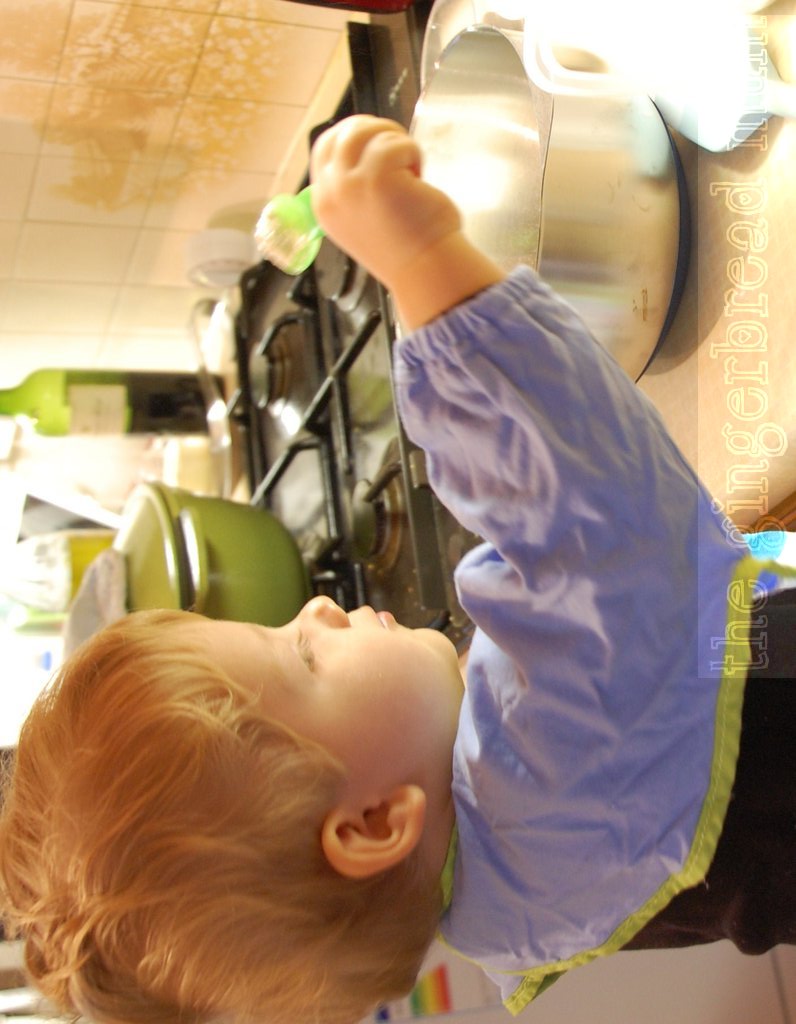
So Nicholas’ first go at cooking went really well. He particularly enjoyed spooning the ingredients into the various bowls. I had laid out a number of different sized spoons and he tried all of them, preferring the smaller ones (it makes sense when his chubby hands are so small).

I found Michelle’s advice over at What’s Cooking With Kids really useful. She suggests using a large bowl with a non-skid bottom, putting the mixing bowl inside a larger bowl to avoid spills, and setting up everything ahead of time so your little one doesn’t get bored waiting for you to prepare. One of her readers also recommends using a funnel which I think would work really well. Nicholas definitely enjoyed using a jug, especially while we were waiting for the biscuits to cook.

It’s important to choose something that’s easy to cook. A recipe that involves mainly pouring ingredients into a bowl and mixing them is perfect. Biscuits or slices that have melted butter are great; you can melt the butter beforehand and let it cool so little hands are safe when mixing. Also try to make something that doesn’t take very long to cook so you can both sample your munchkin’s efforts as soon as possible.

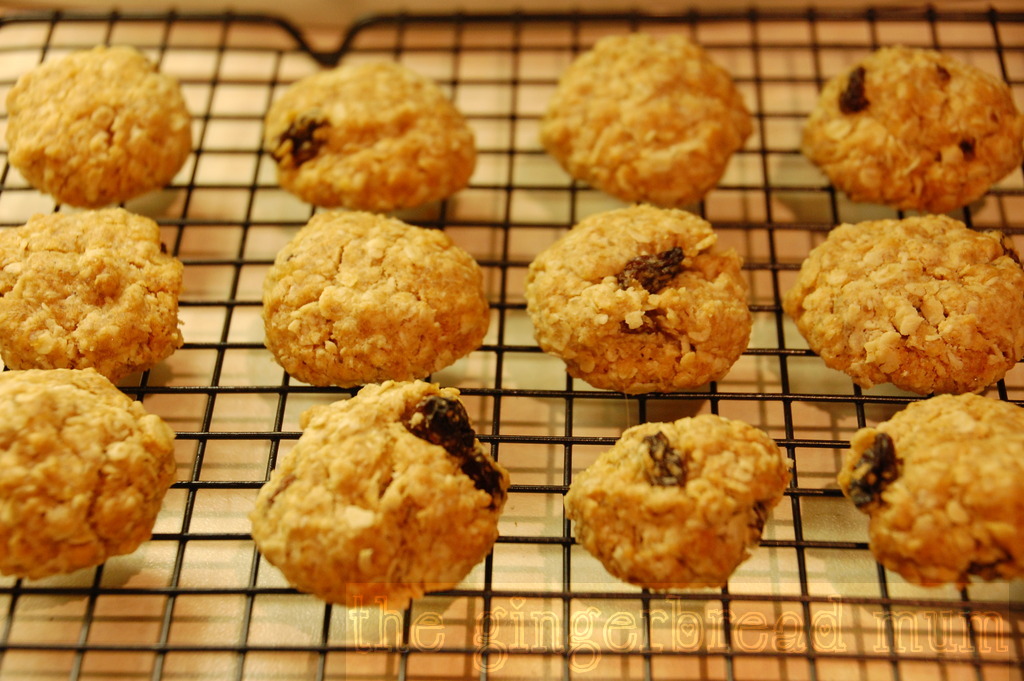
These chewy oaty biscuits are a simple recipe you can find all over the place with the same basic ingredients. They’re simple, perfect for kids to make and easy to vary. I used this recipe from NetMums and added some raisins, but the possible variations are almost limitless.

The texture is similar to flapjacks (firm on the outside with a chewy centre), in fact you could press the mixture into a square tin and then cut into pieces rather than rolling it into biscuits.

We didn’t get any where near the 24 biscuits the original recipe says and our biscuits were small. Even with some mixture going on the floor and into a little mouth, it was closer to 18 small biscuits

CHEWY OATY BISCUITS

Prep time: 10 mins
Cook time: 10-15 mins
Makes about 18 small biscuits or 12 medium-sized biscuits
They keep well for several days in an airtight container

75g butter
1 tbsp golden syrup
75g plain flour
1/2 tsp bicarbonate of soda
75g demerara sugar
75g porridge oats
25g raisins

Preheat the oven to 170C. Grease or line an oven tray with baking paper.

Gently melt the butter and golden syrup either in the microwave or in a small saucepan. Leave to cool.

Sift the flour and bicarbonate of soda into a mixing bowl.

Add the sugar, oats and raisins and stir together.

Pour in the cooled melted butter and golden syrup and mix until combined.

Roll the mixture into small balls and place well apart on the prepared tray. Press down with the back of an oiled spoon to make flatter biscuits or leave for more rounded biscuits.

Bake for 10-15 minutes until golden brown.

Variations:

  • Use a dairy-free margarine instead of the butter to make dairy-free biscuits
  • Use honey instead of golden syrup
  • Add other dried fruit such as chopped dried apricot, dried apple or dried strawberries
  • Add chocolate chips
  • Drizzle with melted chocolate or dip half of each biscuit into melted chocolate
  • Add some spice such as cinnamon or ground ginger
  • Add flaked almonds
  • Add desiccated coconut

Have you tried cooking with your kids? What advice would you give to make it as stress free as possible?

Minty courgette pasta sauce

It’s well and truly time for another pasta sauce recipe, and I love one that you can make in about the same time as the pasta takes to cook!

The flavours for this sauce were inspired by my herby courgette pasta salad. There’s something very fresh about mint and courgette, and the basil gives a deeper flavour so the mint isn’t too sweet. And the yogurt brings it all together, ready to be mixed through some lovely pasta.

It’s perfect for every member of your family. Babies can have the sauce and pasta pureed together, or have the sauce over baby pasta. Adults will probably want a bit more seasoning than toddlers. Here’s to cooking one meal for everyone!

MINTY COURGETTE PASTA SAUCE

Prep time: 5 mins
Cook time: 5 mins
Makes 1 toddler and 1 adult portion

1 medium courgette (zucchini), grated and the excess water squeezed out
1 tsp unsalted butter
1 tsp olive oil
7 fresh mint leaves, finely sliced
2 large fresh basil leaves, finely sliced
2 tbsp plain Greek yogurt
Salt and pepper (optional)

In a medium-sized frying pan, heat the oil and butter over a medium-low heat. Once the butter has melted, add the grated courgette (seasoning if using) and cook for 2-3 minutes, stirring continuously.

Add the mint and basil, and cook for another 2 minutes.

Take the courgette mix off the heat and stir through the yogurt.

Serve over cooked pasta.

For babies, purée the sauce and pasta together until smooth, or serve the sauce over baby pasta.

Variations:

  • For toddlers and adults, add some garlic as you’re cooking the courgette (1/2 clove of crushed garlic or a sprinkle of garlic granules)
  • Finely dice the courgette rather than grate it for a chunkier sauce
  • Use double (thickened) cream instead of yogurt
  • Add a sprinkle of toasted pine nuts just before serving

Tip: if you want to freeze this sauce, don’t add the yogurt. After defrosting the sauce, add fresh yogurt once you’ve heated it.

Do you have any recipes that are perfect for the whole family?

Cornmeal muffins

I was debating whether to call these cornbread muffins as the taste and texture is similar to cornbread, and then I thought perhaps spicy cornmeal or cornbread muffins. To avoid any confusion, as the recipe isn’t an authentic cornbread recipe nor are they very spicy, I’m going with the (perhaps boring but simple) cornmeal muffins.

If you don’t want to make muffins, you can pour the mixture into a square baking tin and then cut them into squares after they’re cooked. Or you could make a loaf and cut off slices.

The level of spice is very mild, so perfect for toddlers (the predominant flavour is cheese). But you can easily add more spice by increasing the cumin and coriander, and/or add some crushed dried chilli.

Eat them on their own as a snack or as an accompaniment to a main dish, they’re perfect for little and big fingers alike.

CORNMEAL MUFFINS

Prep time: 10 mins
Cook time: 20 mins
Makes 12 small muffins

140g fine cornmeal
1/2 tsp bicarbonate of soda
1 tsp salt
1/2 tsp ground cumin
1/2 tsp ground coriander
1 cup grated cheddar cheese (about 75g)
1 egg, lightly beaten
2 tbsp vegetable oil
225ml Greek yogurt

Preheat the  oven to 200C and grease your muffin tin with a little oil or cooking spray (or line your tin with paper cases to avoid washing the tin).

Mix the cornmeal, bicarbonate of soda, salt, cumin and coriander in a bowl. Add the grated cheese and mix well so the ingredients are combined evenly.

In another bowl or jug, mix the beaten egg, vegetable oil and yogurt together.

Mix the yogurt mixture into the dry ingredients and stir quickly until just combined.

Pour into the prepared muffin tin and bake for 15 – 20mins until golden on top and cooked through when tested with a skewer.

Variations:

  • Add fresh chives or coriander to the batter
  • Add some crumbled cooked bacon to the batter


World Porridge Day

World Porridge Day was actually yesterday and while we ate porridge, I didn’t get around to posting about it. However, as cupcakes and chocolate get a whole week in the UK, I figured the humble and nutritious porridge’s day needs to be extended, especially thinking about the reason behind it.

World Porridge Day was started to raise awareness of and money for Mary’s Meals, a Scottish charity feeding starving children in Africa. Mary’s Meals provides daily servings of likuni phala, a nutritious, vitamin-enriched maize porridge to more than half a million children in 16 of the poorest countries in the world. But they don’t just give them nourishment. The porridge is served in schools, encouraging children to go and learn. Each child also has the responsibility of looking after their plastic mug which is filled with porridge. By serving one simple meal, Mary’s Meals is doing a lot more than just filling bellies.

Mary’s Meals are also an amazingly efficient charity. How much do you think it costs to feed a child porridge for a whole year? How much do you think you spend on your family breakfasts over a year?

It costs just £6.15 (about €7.20 or $10) to feed a child for a year.
Less than £7 for a whole year!

I’ll let you absorb that fact while I move on to some porridge flavours and variations your munchkins (and you) might like. I’ll leave you to cook your porridge the way you prefer (I like the microwave to avoid having pots to clean) as I’m certainly not a porridge-cooking expert!

PORRIDGE FLAVOURS AND VARIATIONS

While traditionally porridge is made from oats, water and salt, I always use milk for its calcium content and some kind of sweetener, usually fruit or a little bit of honey (for when babies are more than a year old).

Babies:

To make a smoother porridge, more palatable for babies, either grind up the oats before cooking, or blend your finished porridge until it’s smooth enough.

Another way of softening the oats is to soak them in some of the cooking liquid overnight.

Start with adding one simple flavour your baby is already used to, like banana. Once you think your munchkin is ready for some more complex flavours, add some warm spice like cinnamon or a dash of vanilla for extra sweetness or start combining flavours.

Flavour combinations:
The easiest and healthiest flavour to add to porridge for little ones is fruit, and then there’s no reason to add any sugar. Add it fresh or frozen. Mixing through frozen fruit has the advantage of cooling the porridge down (very important when your toddler is being impatient!). Here are some of our favourites.

  • Banana and cinnamon
    Mash some banana through cooked porridge and add a dash of cinnamon (which helps stimulate your metabolism)
  • Apple, raisin and nutmeg
    You can use raw apple (finely grated) or cooked apple (apple puree or unsweetened applesauce/stewed apple). Add raisins (soak them overnight if you want them to be plumper and less chewy) and a small pinch of nutmeg. You could also add some chopped dried apple.
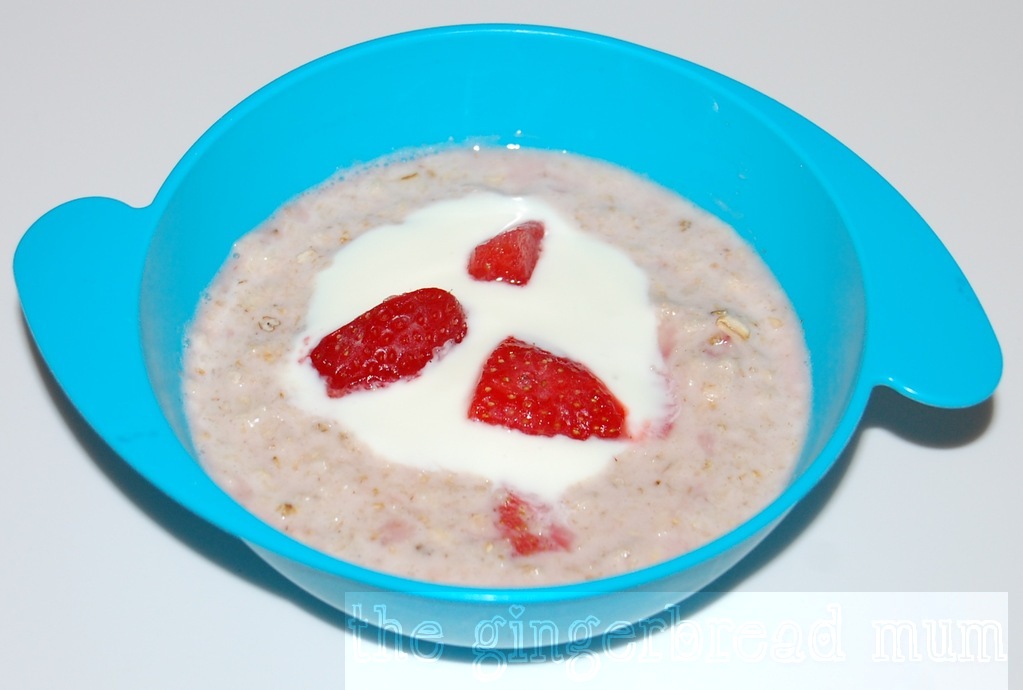
  • Strawberry and vanilla
    Mix chopped strawberries (fresh or frozen) through cooked porridge and add a dash of vanilla.
  • Stewed fruit
    Any cooked fruit works great swirled through cooked porridge (peaches, plums, apricots, strawberries). I don’t add sugar while stewing the fruit, but check the taste of the porridge adding some vanilla for sweetness or honey. A small pinch of ground ginger also works well.
  • Pears and vanilla
    A lovely ripe uncooked pear mashes very easily into cooked porridge. Add a dash of vanilla.

Porridge in a hurry:

For mornings when you need to get ready fast, what takes even less time than mashing some fruit into cooked yogurt?

  • Fruit yogurt
    Stirring through some fruit yogurt also cools the porridge down (saves you blowing time!).
  • Fruit puree
    Any packaged fruit purees or purees you’ve made yourself mix through quickly.

Adult flavour combinations (or not so healthy additions):
Some mornings you just need a little indulgence to start the day happily.

  • Grated chocolate
    Any chocolate you have on hand grated over cooked porridge.
  • Chocolate spread
    Add some mashed banana as well to feel healthier.
  • Golden syrup and cream
    Maple syrup works just as well.
  • Jam and cream
    Who needs scones.
  • Chocolate-covered Katie’s Coffee Frappuccino Oatmeal
    Haven’t tried it, but it’s your morning coffee and breakfast all-in-one!

Toppings:
Once you’ve added your flavourings, why not also sprinkle or dollop something on top?

  • Seeds
    Pumpkin, sesame, flax/linseed, sunflower seeds, etc. For toddlers, grind up larger seeds and/or soak them overnight.
  • Coconut
    Shredded or desiccated.
  • Yogurt
    Fruit or plain.
  • Dried fruit
    Sultanas, raisins, cherries, apples, pineapple, mango, etc. Chop larger pieces up. Soak overnight for softer fruit.
  • Fresh fruit
    Slices of banana, strawberries, pear or whole blueberries are yummy.

Variations:

You can use other liquids to soak and/or cook your oats.

  • Juice
    Fresh apple and orange juice add another level of flavour to your porridge.
  • Coconut milk
    Feel like you’re in the tropics!

If you’re sick of the same old flavours, why not add something daring to your oats?

What do you like to add to your or your munchkin’s porridge? What do you do if you have porridge leftovers?

I hope I’ve given you some ideas to vary your bowls of porridge. But also remember how porridge is changing the lives of children in Africa thanks to Mary’s Meals, and how little you would need to donate to feed a child for a whole year.