RSS Feed

Category Archives: baby

Vegetable Korma

I’ve talked before about not being very adventurous with spice in Nicholas’ food, but I’ve been trying to extend his tastebuds by adding different spicy flavours. Last week we went to our local pub for dinner and chose a mild chicken curry off their good children’s menu. When I tasted it I was surprised by the level of spiciness (closer to medium than mild), so was very curious to see Nicholas’ reaction. He loved it! Here’s to more spice then.

You can find some interesting and easy Indian-inspired baby and toddler recipes on the Homemade Baby Food Recipes site. My vegetable korma is a very slight adaptation of one they say you can give babies from 7 or 8 months (please use your discretion and your expert knowledge of your baby to decide when to introduce some aromatic spices to their food, and it’s always best to only introduce one new spice or food at a time).

This has a mild level of spiciness, more warming than hot, so perfect for even young tastebuds. Next time I’ll double the quantities of spice (so 1/4 tsp of each) and add some chopped or crushed garlic at the start for some more oomph.

You can really use any vegetables you have on hand for this korma. Sweet potato, green beans, bell peppers (capsicum), mushrooms and broccoli would all work well. Don’t worry too much about measuring exact quantities; trust your instinct to add more or less of each vegetable. It takes a bit more time, but cutting the vegetables into quite small pieces means they cook quicker and keep more of their nutrients.

Toddlers can eat the korma as is with some rice. For babies, blend the vegetables after it’s cooked or, if your munchkin is fine with some lumps, roughly mash it with a fork or potato masher.

VEGETABLE KORMA

Prep time: 10-15 mins
Cook time: 25 mins
Makes 3-4 toddler portions
Freezable

1 tbsp olive oil
1 small onion, finely diced
1 medium carrot, peeled and diced
1/2 cup cauliflower, chopped into small pieces
1/2 cup peas
1 medium potato, peeled and diced
1 tbsp unsweetened dessicated coconut
1 tbsp tomato puree
1 cup water
1/8 tsp (or a large pinch) ground ginger
1/8 tsp (or a large pinch) cumin
1/8 tsp (or a large pinch) turmeric
1/8 tsp (or a large pinch) ground coriander
Salt to taste (optional)

Heat the oil in a medium saucepan over a medium-low heat. Add the onion and carrot and cook for a few minutes until the onion is translucent and the carrot is starting to become softer.

Add the tomato puree and spices. Cook for 2 minutes, stirring continuously.

Add the remaining vegetables, coconut and water (and salt, if using). Stir, turn up the heat to medium-high and bring it to the boil.

Reduce the heat to low, cover and simmer for about 20 minutes until all the vegetables are cooked.

If serving to a baby, either blend the mixture until a smooth puree, or roughly mash with a fork or potato masher for a lumpier puree.

For a toddler, serve with cooked rice.

Variations:

  • Use different vegetables such as sweet potato, broccoli, bell peppers (capsicum), green beans or mushrooms.
  • Add chopped or crushed garlic to the onion and carrot.
  • Add grated fresh ginger to the onion and carrot.
  • Add a spoonful of coconut cream at the end.

Have you introduced spice to your little one’s food? Do they like it?

Banana teething biscuits (take two and sugar-free)

Exactly two months ago I made my first attempt at teething biscuits from a recipe I found on Kids Spot. I’m a bit ashamed now to look at the photos of my very crisp (some would say burnt) biscuits! I’ve been playing around with the recipe since then and am finally happy. I’ve also made them sugar-free!

You’re really making a banana loaf, slicing it and then cooking it again. I’m sure there are lots of other flavours you could try this technique with; a carrot loaf immediately springs to mind… hmmm, I don’t think my experimenting with teething biscuits has finished! Also because you’re making a loaf or cake, you can substitute the sugar with applesauce/apple puree, which you can’t do if you’re baking traditional biscuits (they won’t crisp up).

Look at my original post if my instructions aren’t clear in terms of cutting the loaf to make the biscuits or you aren’t sure how to line the tin, as I included more photos there.

These biscuits aren’t super sweet, but certainly sweet enough for most babies and toddlers. My discerning client is very happy with them 😉

SUGAR-FREE BANANA TEETHING BISCUITS

Prep time: 10 mins
Cook time: 1hr 30 mins
Makes about 20
Freezable

2 tbsp applesauce/apple puree
1/4 cup vegetable oil
1 egg
1/2 cup mashed banana (about 1 1/2 bananas)
1 cup wholemeal flour
1 tsp baking powder
1/4 tsp bicarbonate of soda

Preheat oven to 180C and line a slice tin with baking paper.

Mix all of the ingredients in a medium-sized bowl until well combined.

Pour into prepared tin and bake for 50-60 minutes, until golden brown on top and cooked through when tested with a skewer.

Take the banana loaf out of the oven, remove from the tin and let cool a little. Leave the oven door open to cool and drop the temperature to 150C.

Once cool enough to handle, cut the loaf into slices about 1 cm in width (using a bread knife is easier). Lay the slices on a baking tray lined with baking paper. Bake for another 20-30 minutes.

Leave the biscuits to cool on a wire rack and they will harden as they cool.

Tip: if your biscuits start to soften being kept in an airtight container, pop them into the oven at 150C and bake them again (10-15 mins should be enough).

French toast soldiers (sugar-free)

Breakfast. I’m never that creative with my own so I guess it’s logical that I struggle to be creative with Nicholas’. Mashed banana and yogurt has been our staple since his early days of weaning. He still eats it about three times a week, it never fails (he starts chanting ‘nana!, nana!’ as soon as I pick up a banana), and I can prepare it while still half asleep. But regardless of whether or not he gets bored of it, I get bored preparing it and also feel guilty that I should be giving him more of a variety of food to start the day.

In the early months of weaning I did grated apple, grated pear, grated apple and pear (!), and baby porridge. I don’t know why I never thought of French toast then. Slightly crispy on the outside, and lovely and soft inside, it’s certainly something a baby can tackle with their super strong gums, and a great baby-led weaning food. It’s also a nice way to introduce baby to other flavours like cinnamon, nutmeg and vanilla.

Thanks to Once a Month Mom, I discovered you can freeze French toast after you make it (saves you throwing away the unused egg mixture), make it into kabobs, and, more surprisingly, you can hide vegetables in it (she adds butternut squash puree!). I haven’t tried adding vegetables, but I have tried adding some mashed banana and also applesauce to the mixture before dunking the bread and these additions both work well.

You can dunk your soldiers in applesauce or a warm berry compote, drizzle with golden syrup or maple syrup, or serve them with fruit on the side (raw or stewed). Nicholas seems to like them as I do – plain with a drizzle of honey.

FRENCH TOAST SOLDIERS (SUGAR-FREE)

Prep time: 5 mins
Cook time: 5 mins
Makes 1 toddler serving
Freezable

1 slice of bread, cut into 4 or 5 ‘soldiers’
1 egg
1 tbsp milk
a pinch of cinnamon or nutmeg
1 tsp honey (optional)
a couple of drops of vanilla essence (optional)
1 tsp butter

In a bowl large enough for your ‘soldiers’ to lie down in, lightly beat the egg, milk, and cinnamon or nutmeg (and honey and vanilla, if using).

Lay your ‘soldiers’ in the eggy mixture and let them soak on both sides while you heat the butter in a small frying pan over a med-low heat.

Fry the bread for a couple of minutes on each side until golden brown.

Variations:

  • add mashed banana or applesauce (or even pureed butternut squash or sweet potato!) to the mixture before dunking
  • use cute cookie cutters to make different shapes of ‘soldiers’ to surprise your little one

Sugar-free berry bread pudding

I’m very lucky not to have a fussy eater. Nicholas not wanting to eat is usually a sign he’s not feeling well. However he has a mixed response to berries. Strawberries were amongst the first fruit he ate and he loved them (I read after that the recommendation is to introduce them to babies later), but after a few months he started spitting them out even when I mixed them in other things. I now mush them up as much as I can and put them in yogurt and he’s ok. He likes blueberries and loves squeezing blackberries. Is it just a boy-thing wanting to squeeze stuff? He grits his teeth and strains with the effort of testing his strength. Food is the most fun to squeeze because all the juice comes out down your hand and arm and papa’ says ‘Why are you making all that mess?! Don’t do that!’ It’s so much fun! 😉

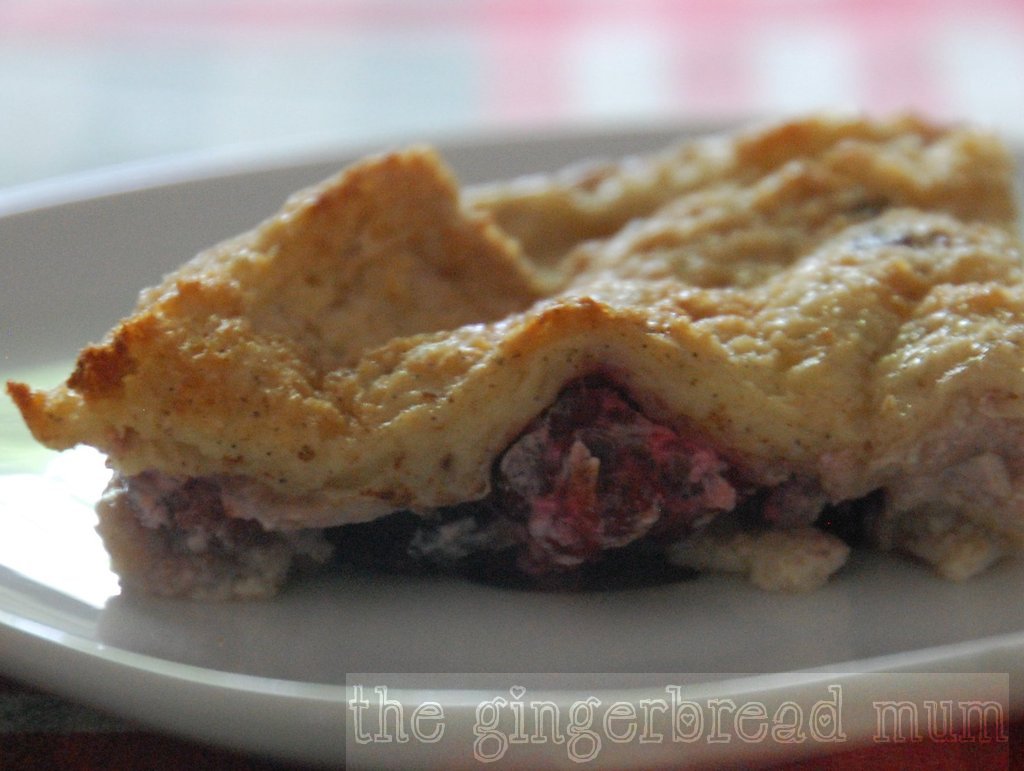
Anyway, back to eating berries. I wanted to make Nicholas something with berries for dessert apart from just mushing them up into yogurt. I thought why not add them to a simple bread pudding; their sweetness plus some honey would mean I could leave out the sugar. And the great thing about bread pudding is that it can also be served cold, cut into fingers for a snack or even for breakfast. It also freezes well and it’s a great way to use up stale bread.

This really is a dessert for the whole family and you can use pretty much any fruit you have on hand. For babies, use fruit they’ve already been introduced to. Mashed banana or grated apple would work well. A grated sweet apple or some applesauce/apple puree adds more sweetness if you think the fruit you’re using isn’t sweet enough. Sultanas and raisins are also a great addition, but they need to be softened for babies (soak them in warm water for about half an hour before adding them).

I used a small casserole dish and cut my bread in half diagonally to spread it over the bottom of the dish a bit more. You could also make individual puddings in ovenproof ramekins. You need the bread to soak in the custard mixture to get all soft and gooey so choose a dish not much bigger than your bread slices.

SUGAR-FREE BERRY BREAD PUDDING

Prep time: 10 mins plus soaking time (30 mins or overnight)
Cook time: 30-40 mins
Makes 4 toddler servings (or 1 toddler and 2 adult servings)
Freezable

2 slices of bread, crusts removed
3/4 cup mixed berries, roughly chopped
1/2 tsp ground cinnamon
1 egg
1 cup milk
1/2 tsp vanilla essence
1 tbsp honey
Small piece of butter

Butter a small ovenproof dish and lay one slice of bread in the bottom. Sprinkle the berries over the bread and then sprinkle over the cinnamon. Top with the second slice of bread.

Lightly beat the egg, milk, vanilla and honey together. Slowly pour over the bread soaking it all over. Leave to rest for about 30 mins for the bread to soak up the liquid (or overnight).

Cook at 170C for 30-40 mins until the egg mixture has set (you’ll still have some liquid from the berries) and the top is a light golden brown.

Variations:

  • try different fruit such as mashed or sliced banana, grated or sliced apple, cubes of pear, etc.
  • add a grated sweet apple or some applesauce/apple puree for extra sweetness
  • add sultanas or raisins
  • try different types of bread (white, wholemeal, raisin bread, brioche etc.)
  • add a pinch of ground ginger or nutmeg
  • add some chopped chocolate to be more indulgent (and not sugar-free!)

Other uses:

  • cut into fingers and have cold for breakfast

Tip: use the leftover bread crusts for French toast skinny fingers or toast them to dip into hummus as a snack. If you’re not going to use the crusts immediately, just pop them in a bag and freeze them for later.

Sugar-free clementine jelly

I’ve wanted to try making jelly for Nicholas for a while. I wanted to experiment using pure fruit juice without any sugar to see how sweet it could be without adding any sugar (or as little as possible).

The other day at the supermarket I saw some cute individual jelly moulds and they were also super cheap (six moulds for a pound!), so I bought them and decided to experiment immediately.

I used gelatine leaves rather than gelatine powder. Supposedly the leaves produce a smoother texture than the powder; they’re also easier, for some reason, to find in British supermarkets. Whether you use leaves or powder isn’t important. What is important is to check the directions on the back of the gelatine packet in order to work out how much gelatine you need to use for the amount of liquid you need to fill your jelly mould/s.

I wanted to make one small jelly. I filled my mould up with water and then measured the amount of water I needed to fill my mould (about 150ml). My gelatine packet said to use 4 leaves for 1 pint of liquid (that’s about 570ml) so I decided to use 1 leaf for the 150ml of liquid I needed.

I was very happy with the results – a soft wobbly jelly that was definitely sweet enough, and it dissolves in your mouth so it’s also perfect for babies. I was assuming hubby and I would get a spoonful each at the end. I was wrong. Nicholas devoured his dessert in a couple of minutes, not much more, licking his plate clean!

You can use any freshly squeezed juice (orange, apple, pineapple, etc.) or buy good quality unsweetened pure juices. Just make sure you get a taste of it before you give it to your munchkin!

SUGAR-FREE CLEMENTINE JELLY

Prep time: 15 min plus refrigeration overnight
Cook time: 0 mins 🙂
Makes 1 toddler serving

1 gelatine leaf (about 1.5g)
2 tbsp cold water
4 or 5 clementines, squeezed to produce about 150ml of juice

Cut up the gelatine leaf into small pieces (about 1cm) and put in a small heatproof bowl. Add 2 tbsp cold water and leave for 10 mins.

While you’re waiting, bring a small saucepan of water to the boil then drop the heat to low.

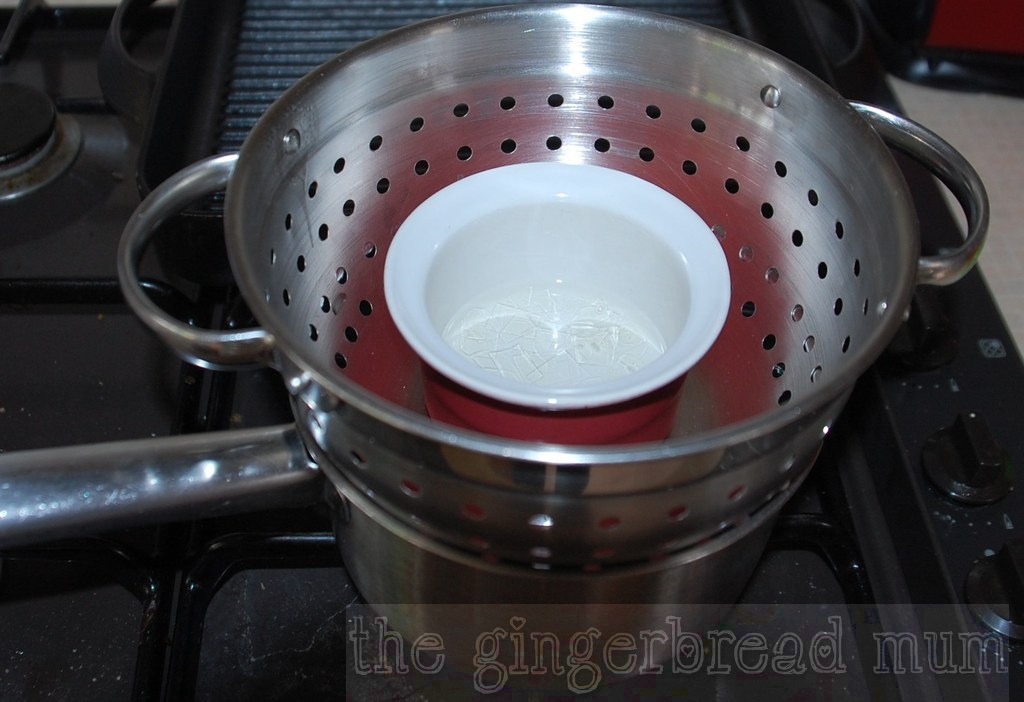
After 10 mins, melt the gelatine completely by putting the bowl over the saucepan of hot water (if your bowl is small, use a heatproof colander over the saucepan and place the bowl inside the colander). Stir until completely dissolved.

Remove from heat and pour into the clementine juice, stirring to mix. Pour into your jelly mould and refrigerate overnight.

Serve on its own or with some chopped pieces of fruit.


Variations:

  • use any unsweetened fruit juice or combination of juices
  • to add a minty flavour, soak 1 or 2 mint leaves in 2 tbsp of hot water and leave to cool, then use the water to dissolve the gelatine
  • for a toddler, add some small pieces of chopped fruit to set in the jelly

Apple sauce

I’ve made apple sauce before on many occasions but only as an accompaniment to pork. In fact I think that’s the only way I’d ever eaten apple sauce. Trawling the internet for baby-friendly recipes I kept coming across apple sauce used as a sweetener then discovered its use as a sugar substitute. So I searched for some recipes just to be sure it didn’t have any ‘secret’ ingredients.

I was surprised to discover that the majority of recipes had sugar in them (maybe my searching skills aren’t as good as I think they are!). Hmmm, why put sugar in something you’re using as a sugar substitute? Ok, you’re still reducing the amount of sugar in the recipe and yes, some apples need some sweetening up, but why not just use sweet apples? Armed with some sweet Gala apples I was ready to experiment.

One of the things I dislike most in the kitchen is peeling fruit and vegetables. One of the reasons is that I’m super clumsy and easily distracted so no matter how much I try to concentrate I always manage to either peel some of my finger or slice through a nail. And besides wounding myself, peeling can take up a lot of time.

I decided not to peel the apples and see how the sauce turned out. Not only did it save me loads of time, but there’s lots of goodness in the peel. If, like me, you don’t have one of those wonderful gadgets that cores and chops your apples into wedges in one go, just chop the four sides off each apple, chopping the large pieces in half. I also added some slices of lemon to the pot to stop the apple from browning as it cooked.

Some recipes add ground cinnamon after pureeing. I wanted to keep my apple sauce plain as you can always add cinnamon at the point when you’re adding it to a recipe. Some people also add some butter as well as sugar to the finished sauce. I’ll leave that up to you to decide.

So how did my experiment of leaving the peel on work out? Well the peel does produce a slightly grainy texture to the sauce after pureeing it. If you’re using the sauce in other recipes you’d never know this though. Even if I was feeding the sauce to a baby (either on its own or mixed with other fruit or vegetables) I honestly wouldn’t worry about the texture.

APPLE SAUCE

Prep time: 5 mins
Cook time: 15 mins
Makes about 1 1/2 cups or about 450ml of sauce
Freezable

6 sweet apples (eg. Gala, Red Delicious or Fuji)
1 cup water
2 slices of lemon

Chop the four sides off each apple and chop the large pieces in half. Put the chopped apple in a medium pot with the water and slices of lemon.

Bring to the boil then drop the heat to low and cover. Simmer for 15 minutes, stirring occasionally so the apple cooks evenly.

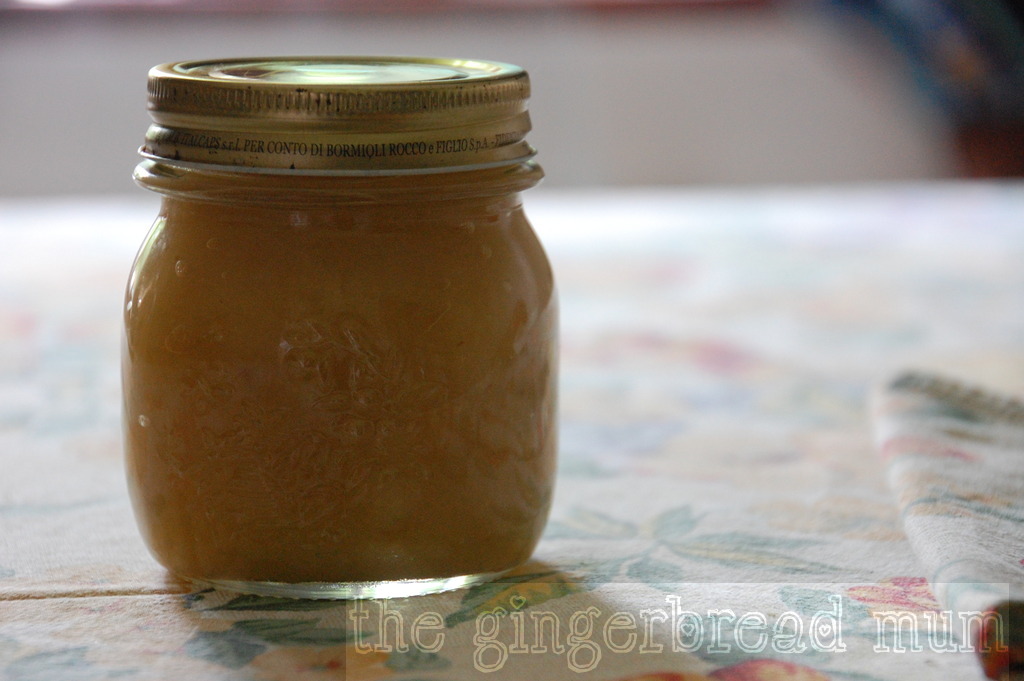
Drain the apple and discard the lemon. Puree in the pot with a hand blender.

Now I’m off to make something with my apple sauce!

Apricot chicken

When we started weaning Nicholas we tried a combination of baby-lead weaning and the more traditional purees. Looking back I was probably unnecessarily overly concerned about two things: feeding him more vegetables than fruits so he didn’t develop a sweet tooth, and wanting him to easily eat lumpy food as quickly as possible. I wouldn’t be so concerned if I could go back in time.

Breast milk is naturally sweet and formula milk replicates this. Why suddenly shake up your little one’s tastebuds when they’re also dealing with solids for the first time? There are vegetables that are naturally sweet in flavour just as there are fruits which aren’t very sweet. I realise now that gradually introducing a wide range of different fruit and vegetables is the best way to develop your munchkin’s palette.

While not initially pureeing everything to a smooth paste saved me time (I’d mash food up with a fork or finely grate it), I shouldn’t have worried so much about getting Nicholas over that first (for a new mum very high) hurdle of his food journey. He would have got there in his own time. And what’s wrong with smooth food? I hate lumps in my mashed potato and love thick pureed soups. Smooth is just one of the many different textures of food and it’s these different textures that make food interesting.

This recipe works really well as a puree and also in a chunkier form. The original recipe by Belinda Graham is a baby puree. I’ve adapted how it’s cooked to make it a bit quicker for you to make, as well as keep as many nutrients as possible from boiling away.

APRICOT CHICKEN

Prep time: 5 mins
Cook time: 10 mins
Makes 2 toddler servings
Freezable

1 chicken breast or thigh
1 medium sweet potato
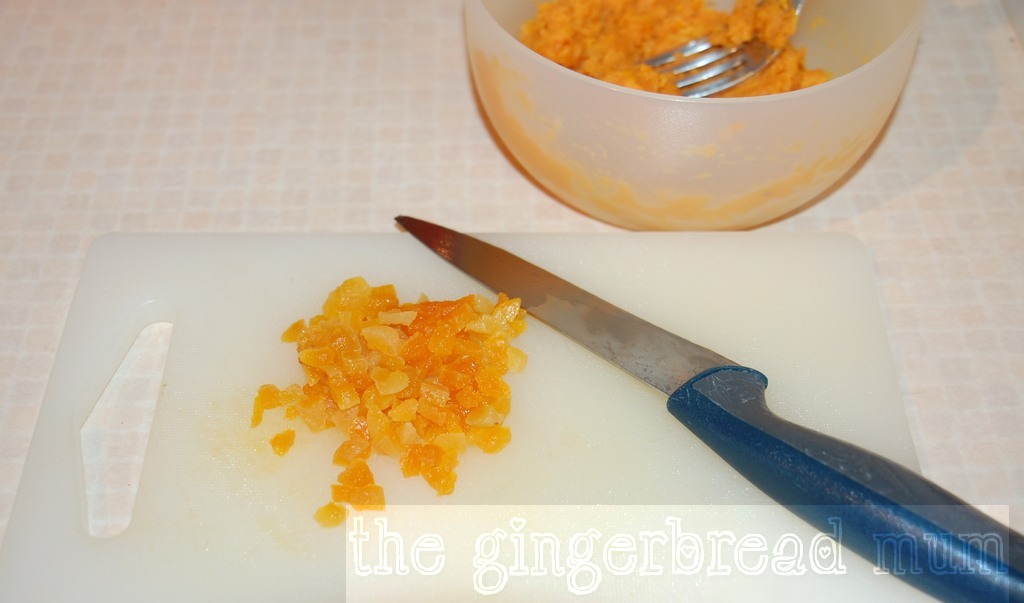
3 soft dried apricots, finely diced
3/4 cup milk
Drizzle of olive oil (optional)
Pinch of salt (optional)

Prick the sweet potato with a knife or skewer in a few places all over. Cook on high in the microwave for 4-5 minutes until it feels soft inside. Leave to cool.

Bring milk almost to the boil in a small saucepan. Turn down heat to low.

Chop chicken into small pieces and add to the milk. Simmer for a few minutes until the chicken is just cooked through. Take out the chicken but keep the milk.

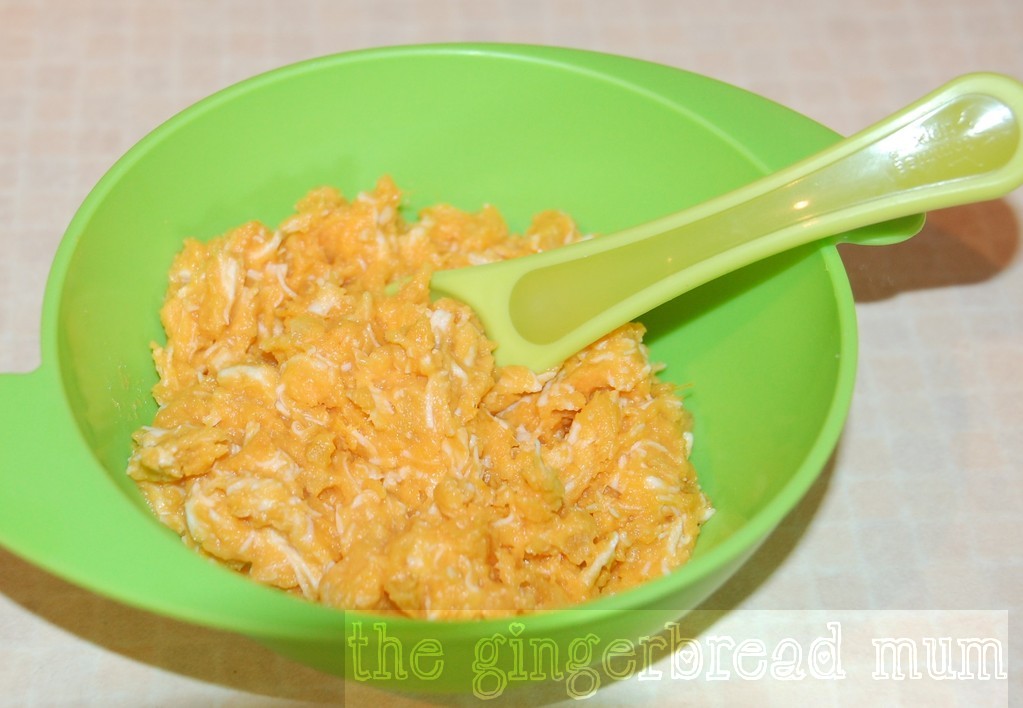
Cut the sweet potato in half and pull of the peel. Mash the flesh in a small bowl. Add apricots, and salt and oil if desired.

Break up the cooked chicken into the bowl. Add 1-2 tbsp of the poaching milk and mix to combine.

Puree the mix for a baby.