RSS Feed

Category Archives: family

Banana chips

Bananas. What baby or toddler doesn’t love them? Well I’m sure there must be some who don’t, but on the whole they’re probably one of the favourite fruits of little ones. Firm enough to hold, yet easy to eat even without teeth. The only time bananas aren’t any good is if your munchkin is constipated (but they’re great if things need firming up!).
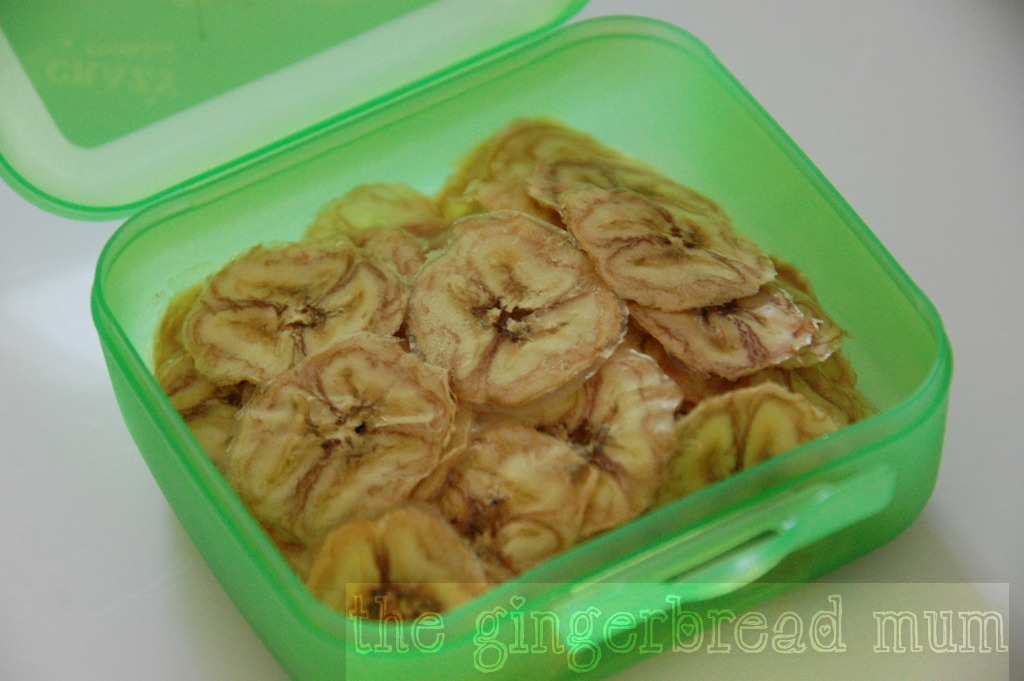
One of Nicholas’ favourite snacks are banana chips. I buy the ones that are as natural as possible, making sure they haven’t been coated in sugar or fried, but when I came across Sweet Road’s recipe, I knew I had to try making them!

This is yet another way to use up very ripe bananas (remember the riper they are, the sweeter they’ll be). And while the cooking time is long (you’re using your oven as a dehydrator), you can leave them to do their drying and go do something else.

The only issue with this recipe is that you really have to try it a few times to understand what temperature and timing your oven needs to produce your desired level of crispiness. Ovens unfortunately do differ from each other in terms of temperature. Nicholas prefers the chewy banana chips so I have been trying to achieve a nice balance of chewiness and crispness.

An important point to add: if you make your chips chewy rather than completely crisp, tear them up into pieces before giving them to your little one to avoid any possibility of choking.

The results of my first two tries:

1. Oven 80C, cooked for 1 hr 45 mins

  • I cut the banana too thin (about 3mm thick) so they were very difficult to take off the baking paper even when they were cool. I should have read Jaime’s original recipe more closely!
  • I lay the banana slices on baking paper on a baking tray.
  • The chips were too soft and sticky, the underside being softer than the top.

2. Oven 95C, cooked 1 hr 30 mins then turned each banana slice over and cooked for another 30mins

  • I cut the banana following the original recipe’s suggestion (about 5mm thick) and was much happier with the result.
  • I lay the banana slices on baking paper on a baking tray.
  • Turning them helped crisp both top and bottom, but they were still too soft for my liking, sticking too easily to each other when put in a container.

After my third try I was happy with the results, and I’ll be sticking to this method (below) from now on. A slightly higher temperature, but the main difference is that I don’t put the banana slices on a baking tray, but put the baking paper directly onto the oven’s wire shelf. The edges become crispy while the middle is chewy yet firm. The surface is drier than the previous tries and so they don’t stick to each other when stored. Looking at the last packet of chewy banana I bought at the supermarket, one of the ingredients is rice flour which I’m assuming isn’t used in the cooking stage but tossed through at the end to keep them from sticking – perhaps something else to try if they ever last that long in the container.

Perhaps I’ll experiment some more in the future using a lower temperature and a much longer cooking time, as probably my method is less dehydrating and more cooking the banana slices.

Anyway, the verdict from Nicholas? He liked all of them… a lot!

SLIGHTLY CHEWY BANANA CHIPS

Prep time: 10 mins
Cook time: 2 hrs (no need to check during this time)
Makes about 60 chips

2 ripe bananas
1/2 lemon, squeezed

Take out one of your oven’s wire shelves and lay a piece of baking paper over it. Preheat the oven to 100C.

Cut your bananas into slices about 5mm thick and lay them on the baking paper. Using a pastry brush, lightly brush the banana with the lemon juice (or you can just dip your fingers in the juice and rub the banana!).

Cook the banana for two hours (you don’t need to check or turn them or do anything else during this time).

Take them out of the oven and leave to cool on the baking paper. They’ll become firmer as they cool.

Store in an airtight container.

Spending so much time with banana slices (!) has made me appreciate their beauty. Look at their lovely pansy-like patterns!

Possibly the best brownies (adult recipe)

My hubby is a fantastic cook. For the first few years we lived together he did most of the cooking and I was very happy about that! He’s very good at coming up with great meals day after day whereas I’ve always struggled.

Our routine now is that I cook during the week and he takes over at the weekend. Usually at the weekend we catch up with friends and often eat out which suits hubby just fine! When he does cook now, unfortunately there’s not a lot of passion, rather he’s cooking for necessity.

I really miss his passionate cooking so when he asked me what I wanted to do for my birthday I requested a dinner cooked by him. And a chocolate cake! Hubby doesn’t like chocolate so I never make anything chocolately even for guests. Surprisingly it was the chocolate cake request that made him nervous and unsure – he’d never made anything chocolatey before!

Sunday dinner was fabulous. A starter of various salami and cheeses followed by langoustines flamed in whisky sauce with potato cakes, quails’ egg tempura and wilted spinach (this took him much longer to prepare than the recipe stated but it was superb!) and triple-chocolate brownies to finish with. I felt thoroughly spoilt… and full!

The brownies are full of chocolatey goodness, in fact I don’t think you could squeeze in any more chocolate. Hubby said they were very easy to make with clear and precise instructions. Maybe encourage your partner to make them for you as they’re so easy 😉

Hubby used a loaf tin instead of the square square tin (I wouldn’t have guessed) and lined not just the bottom but all the sides with baking paper so there was no chance of sticking. He also had to cook it quite a bit longer than the recipe said (about 15 minutes longer); just keep doing the wobble test!

POSSIBLY THE BEST BROWNIES

Prep and cook time: 1 hour
Makes 16 squares or 32 triangles
Keeps in an airtight container for up to two weeks
Freezable (up to a month)

185g unsalted butter, cut into smallish cubes
185g best dark chocolate (not cooking chocolate!), broken into small pieces
85g plain flour
40g cocoa powder
50g white chocolate
50g milk chocolate
3 large eggs
275g golden caster sugar

Put the butter and dark chocolate into a medium bowl. Fill a small saucepan about a quarter full with hot water, then sit the bowl on top so it rests on the rim of the pan, not touching the water. Put over a low heat until the butter and chocolate have melted, stirring occasionally to mix them. Now remove the bowl from the pan. Alternatively, you can cover the bowl loosely with cling film and put in the microwave for 2 minutes on high. Leave the melted mixture to cool to room temperature.

While the chocolate is cooling, position a shelf in the middle of your oven and turn the oven on to fan 160C/conventional 180C/gas 4. Line the bottom and sides of a shallow 20cm square tin (or similar sized loaf tin) with baking paper, leaving the paper overhanging on all sides.

Sift the flour and cocoa powder into a medium bowl, making sure you don’t have any lumps.

With a large sharp knife, chop the white chocolate and milk chocolate into chunks on a board. The slabs of chocolate will be quite hard, so the safest way to do this is to hold the knife over the chocolate and press the tip down on the board, then bring the rest of the blade down across the chocolate. Keep on doing this, moving the knife across the chocolate to chop it into pieces, then turn the board round 90 degrees and again work across the chocolate so you end up with rough squares.

Break the eggs into a large bowl and tip in the caster sugar. With an electric mixer on maximum speed, whisk the eggs and sugar until they look thick and creamy, like a milk shake. This can take 3-8 minutes, depending on how powerful your mixer is, so don’t lose heart. You’ll know it’s ready when the mixture becomes really pale and about double its original volume. Another check is to turn off the mixer, lift out the beaters and wiggle them from side to side. If the mixture that runs off the beaters leaves a trail on the surface of the mixture in the bowl for a second or two, you’re there.

Pour the cooled chocolate mixture over the eggy mousse, then gently fold together with a rubber spatula. Plunge the spatula in at one side, take it underneath and bring it up the opposite side and in again at the middle. Continue going under and over in a figure of eight, moving the bowl round after each folding so you can get at it from all sides, until the two mixtures are one and the colour is a mottled dark brown. The idea is to marry them without knocking out the air, so be as gentle and slow as you like – you don’t want to undo all the good whisking work you did before.

Hold the sieve over the bowl of eggy chocolate mixture and resift the cocoa and flour mixture, shaking the sieve from side to side, to cover the top evenly. Gently fold in this powder using the same figure of eight action as before. The mixture will look dry and dusty at first, but keep going very gently and patiently and it will end up looking gungy and fudgy. Stop just before you feel you should, as you don’t want to overdo this mixing. Finally, stir in the white and milk chocolate chunks until they’re dotted throughout. Now you can let the oven take over.

Pour the mixture into the prepared tin, scraping every bit out of the bowl with the spatula. Gently ease the mixture into the corners of the tin and paddle the spatula from side to side across the top to level it. Put in the oven and set your timer for 25 minutes. When the buzzer goes, open the oven, pull the shelf out a bit and gently shake the tin. If the brownie wobbles in the middle, it’s not quite done, so slide it back in and check again in another 5 minutes. When it’s cooked the top will have a shiny, papery crust and the sides will be just beginning to come away from the tin. Take out of the oven.

Leave it in the tin until completely cold, then lift out the brownie using the edges of baking paper. Cut into quarters, then cut each quarter into four squares and finally into triangles. Enjoy their fabulous rich chocolately goodness!

Butternut squash and chickpea cakes


While we’ve been quite adventurous letting Nicholas try some foods (at 16 months he’s already tried frog legs, mussels, veal, pink beef and, if you’re not European maybe skip the next word… horse). I have, however, been quite cautious introducing stronger spices. Herbs like basil, oregano, chives, thyme and parsley I had no problem in adding pretty much immediately; they help give flavour when you’re not adding salt. But I’ve been concerned about spices like cumin and coriander and also garlic, possibly irritating Nicholas’ tummy.

If you’re interested in reading some more about introducing spices to your little one’s food as well as the health benefits of spices, this article gives a good overview and it also has links to Indian recipes for babies (suitable from 7-8 months) and toddlers (suitable from 10-12 months).

So in my quest to start introducing some stronger spices into Nicholas’ diet I thought I’d adapt Cook Eat Live Vegetarian’s wonderful butternut squash and chickpea cakes. Have a look at Natalie’s fabulous plating of her creations and I dare you not to drool! In fact maybe just look at her photos rather than my poor efforts!

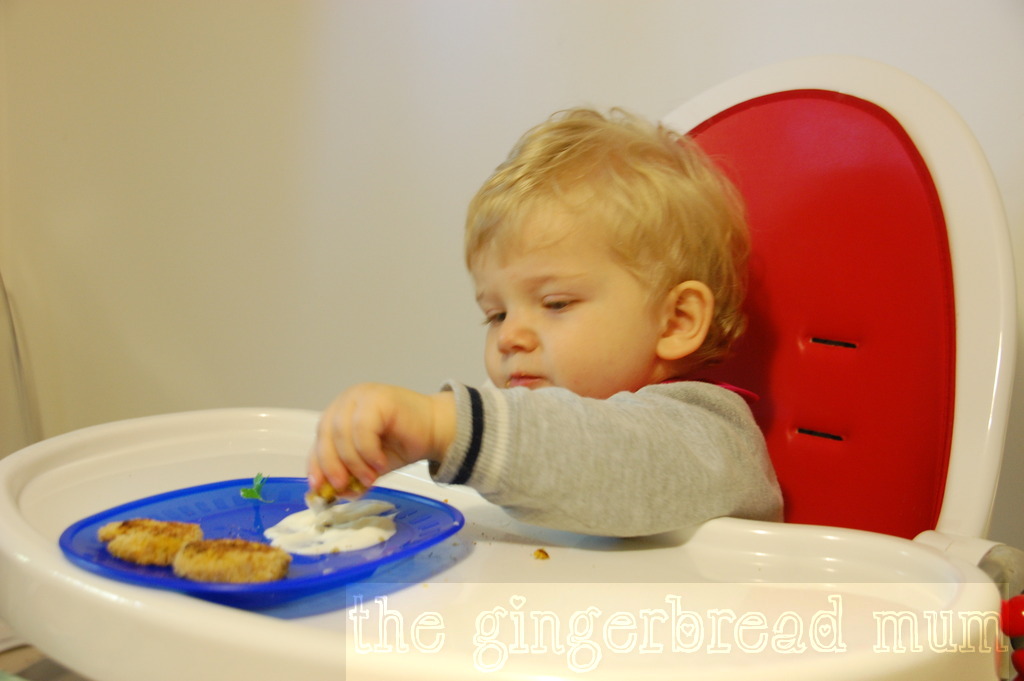
This is an easy recipe to do two ways – cakes for your toddler and cakes for the rest of the family. I make my toddler version first (eliminating some of the spices and reducing others) then add the missing spices to the remaining mixture before making the adult cakes. I serve the toddler cakes with some yogurt to dip them into (toddlers love dipping!) and the adult cakes with whatever chutney we have in the fridge (will definitely make Natalie’s red onion marmalade soon though).

I don’t peel the butternut squash… I’m lazy. If I was serving this to guests I probably would just to be sure they didn’t find any big bits of peel. I also mix my ingredients in a food processor (the original recipe mixes them by hand). Don’t be put off by the long list of ingredients as they’re actually very easy to make.

BUTTERNUT SQUASH AND CHICKPEA CAKES

Prep time: 10 mins
Cook time: 30 mins (roasting the squash) plus 15 mins (cooking the cakes)
Makes 2-3 toddler servings (about 12 mini cakes) and 2 adult servings (6 cakes)
Freezable

400g butternut squash, chopped (unpeeled) into chunks of about 4cm
1/4 tsp cinnamon
Drizzle of olive oil
1 400g tin of chickpeas, rinsed and drained
1/3 cup (40g) breadcrumbs (or polenta or cornmeal), plus extra for coating
1 tsp ground cumin
1 small clove of finely chopped garlic
1 tbsp fresh lemon juice
1 egg
a handful of fresh parsley, chopped
1/2 tsp salt
Pinch of black pepper

To add for family version:
1/2 tbsp garam masala
1/2 tsp ground cumin
1 small-medium clove of finely chopped garlic
1/2 tsp salt
1/4 tsp black pepper
1/4 tsp cayenne pepper

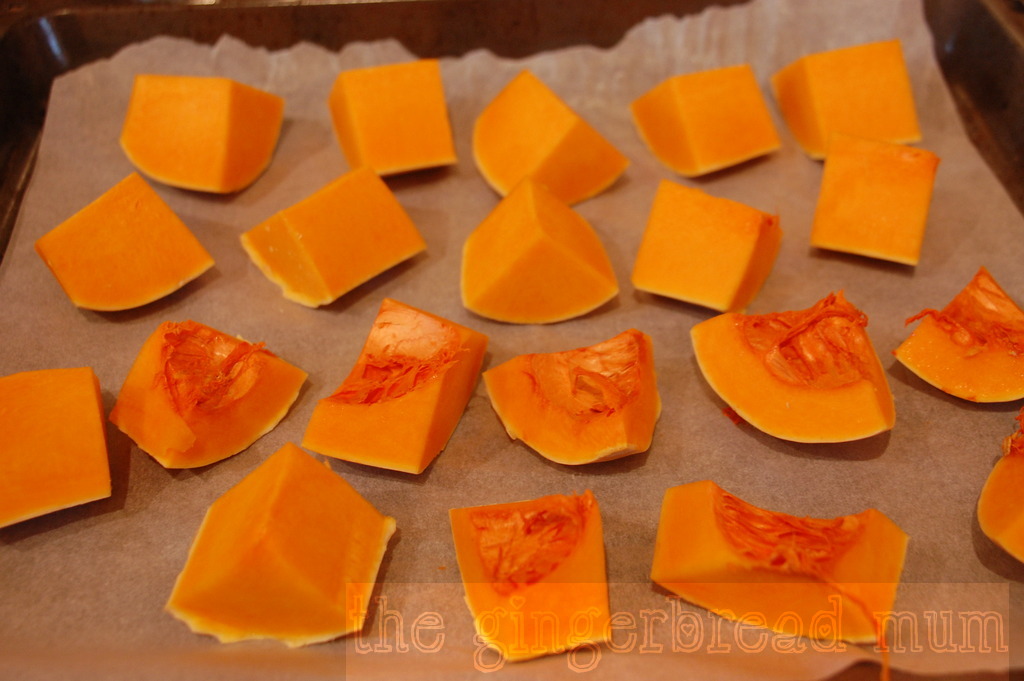
Preheat the oven to 190C. Put the butternut squash chunks on a baking tray lined with baking paper. Drizzle over the olive oil and sprinkle with the cinnamon. Roast for 20-30 minutes until golden and soft when pierced with a knife.

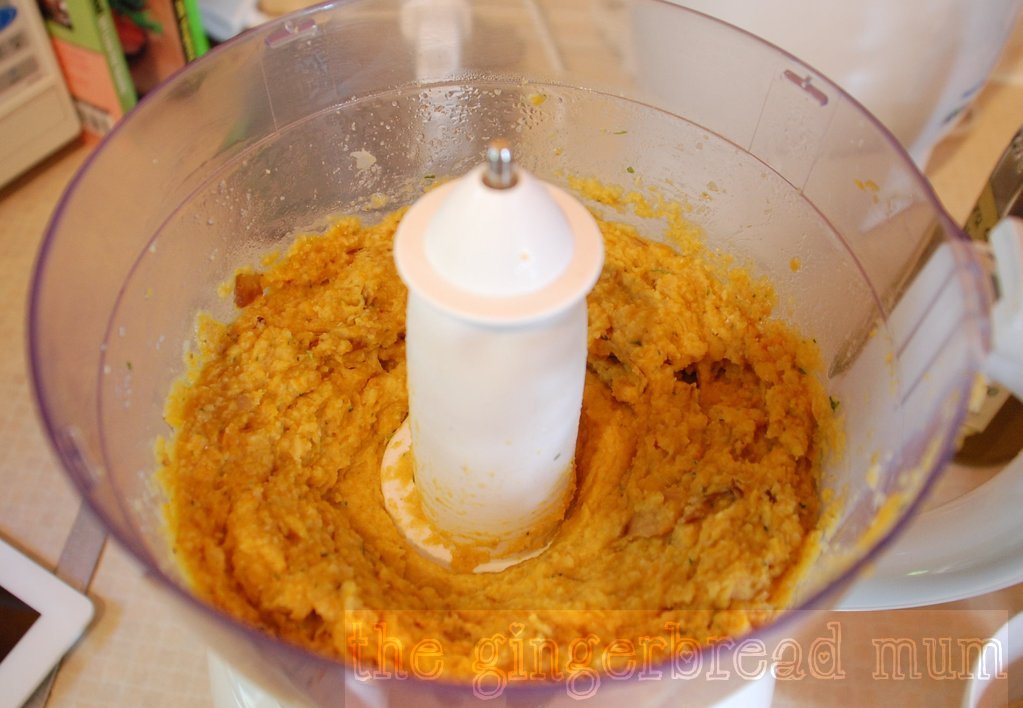
While the butternut squash is cooking, put the rest of the ingredients for the toddler version (chickpeas, breadcrumbs, cumin, garlic, lemon juice, egg, parsley, salt and pepper) into a food processor.

Once the butternut squash is cooked, you can decide whether or not to leave the skin on or peel it off. If leaving it on, you just need to blend your mixture a bit more to ensure the peel is broken up and you can always still check for big bits of skin when shaping your cakes.

Mix everything together until the butternut squash has broken up and the mixture is sticking together. If you have time, cover your bowl with cling film and put in the fridge for at least half an hour so the mixture firms up and it’s easier to shape your cakes. If not, it’s easier to drop spoonfuls of the mixture into the breadcrumbs and shape each one as you’re covering it.

Shape about half the mixture into little balls. Dip into breadcrumbs to cover completely.

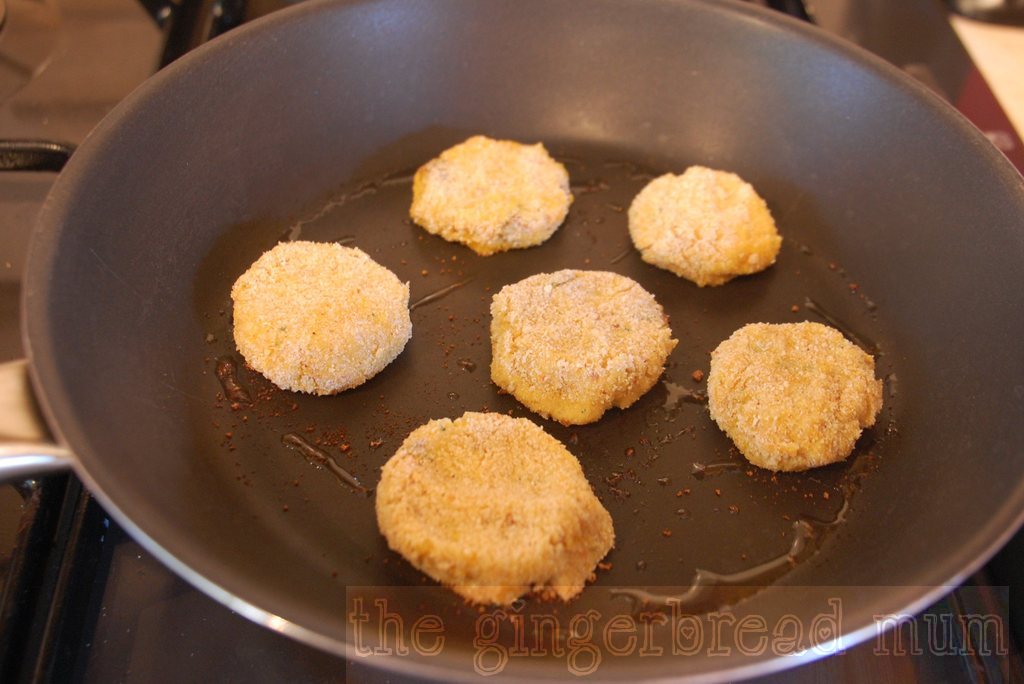
Heat a drizzle of olive oil in a medium frying pan at medium heat. Cook the balls for a couple of minutes each side, pressing them down into cake shapes, until they have a lovely golden crispy coating.

Serve with a dollop of yogurt.

For grown ups:

With the remaining mixture add the rest of the ingredients (garam masala, cumin, garlic, cayenne pepper, and extra salt and pepper) and mix well. Shape into 6 equal balls and dip into breadcrumbs to coat. Add some more olive oil to the frying pan and cook them for 4-5 minutes each side, pressing them flat.

Serve immediately with some fruit chutney and salad.

Variations:

  • the original recipe uses fresh coriander rather than parsley
  • replace the butternut squash with sweet potato

How do you feel about giving your little one strong spices?

Creme fraiche fish (adult recipe)

I’ve realised living in the UK (just gone eight years now… wow how time flies) I crave comfort food. A lot. Food has always been something I turn to when I’m sad, depressed or even bored especially during the colder months, and the regular grey skies and drizzly days here really take their mental toll on hubby and me. Since moving to the UK from Italy we’ve both gotten fatter. Not good!

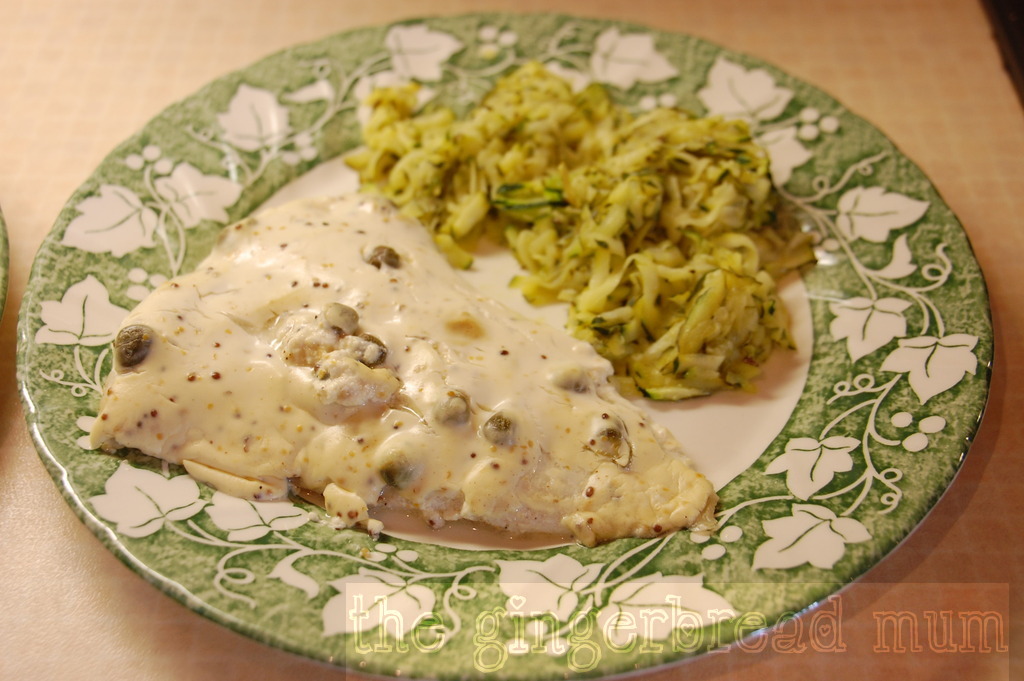
So I’ve been on the search for low-calorie but tasty dinners. And they also need to be fairly quick and easy. This fish recipe has now become a favourite and tastes great (I don’t feel deprived at all!). The ‘secret’ is replacing the creme fraiche in the original recipe by Barefoot Contessa with low-fat creme fraiche. I don’t think anyone could taste the difference.

Smothering the fish with the mustardy creme fraiche keeps the fish lovely and moist, and there’s less chance of it overcooking. It goes great with the grated courgette/zucchini from this recipe (and it’s also low in calories). A perfect midweek meal that’s quick to make and tasty.

CREME FRAICHE FISH

Prep time: 5 mins
Cook time: 10 mins
Makes 2 adult servings

2 white fish fillets (eg. haddock, cod or plaice)
4 tbsp low-fat creme fraiche
2 tsp Dijon mustard
1 tsp whole grain mustard
2 tsp capers, drained
Salt and pepper

Preheat oven to 200C. Line a baking tray or an ovenproof baking dish with baking paper.

Sprinkle the baking paper with salt and pepper to season the underside of the fish. Place the fish fillet on the paper (skin side down if it still has skin). Season the top with salt and pepper.

Put the creme fraiche in a small bowl and mix in the two mustards and the capers.

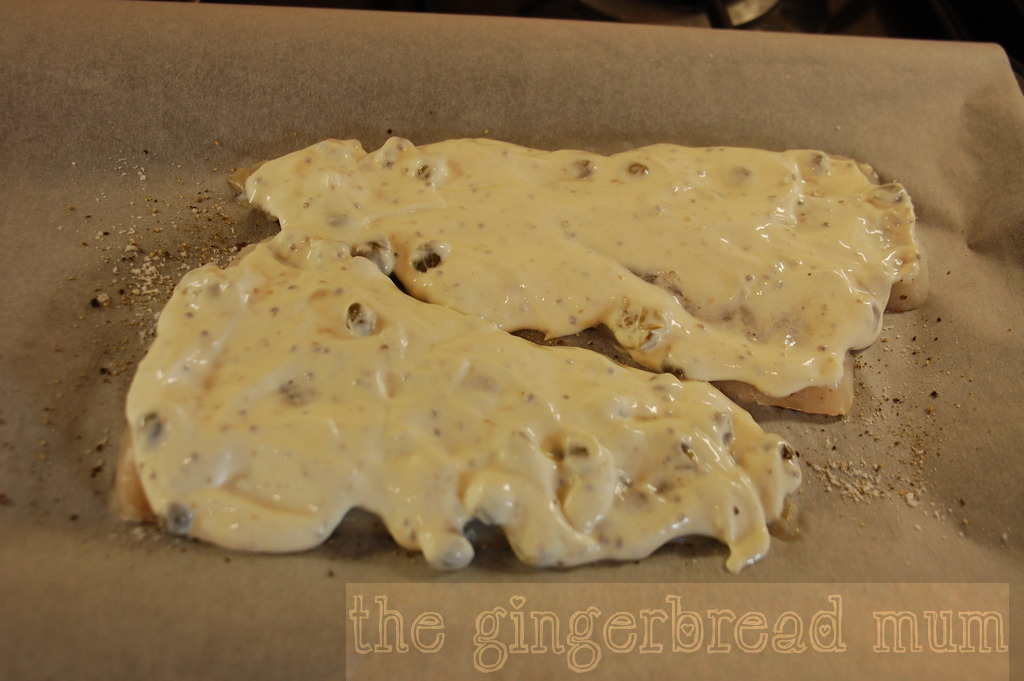
Spoon the mustardy creme fraiche evenly over the fish, making sure to completely cover it.

Bake for 10 minutes. Take it out of the oven and let sit for a couple of minutes. If you’re not sure if it’s cooked through, put a knife into a thick part and see if the flesh flakes.

Serve with a green salad or stir fried grated courgette/zucchini.

Variations:

  • the original recipe also has finely diced shallots in the sauce
  • add some fresh herbs (chives, parsley, etc) either to the sauce or sprinkle over at the end
Do you have any low-fat yummy recipes to share?

Sugar-free carrot loaf

I don’t know about you, but when 4 o’clock comes around my tummy starts feeling empty. Nicholas is usually napping and I’m ready to sit down, have a coffee and not think of mummy things for a little while. Then my mind wanders to thinking about what chocolate we have in the house!  So looking for something healthier for me that could also be a healthier sweet snack or breakfast option for Nicholas, I thought I’d try adapting this Foodista recipe for breakfast carrot muffins.

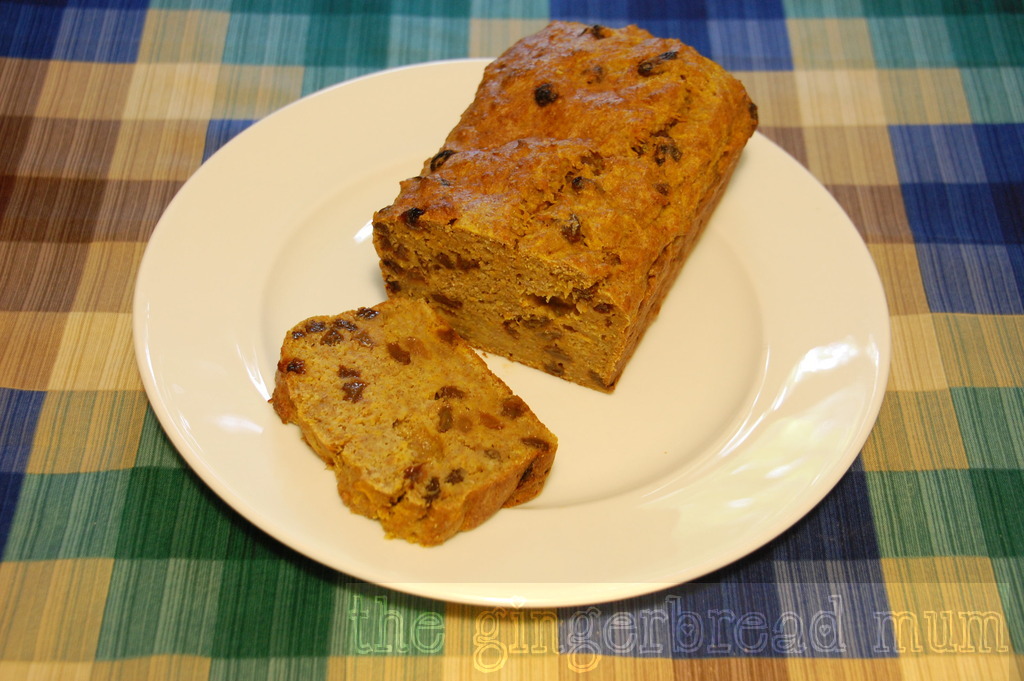
I used wholemeal flour and used my apple sauce instead of sugar to be healthier. I also substituted the butter with vegetable oil, upped the carrot, added some sultanas and vanilla for extra sweetness, and some spice (cinnamon and nutmeg). I was very happy with the result – a dense moist loaf. Next time I’ll try adding some walnut pieces for some crunch.

This recipe works well both as a loaf or as muffins. Spread with some butter to be indulgent!

SUGAR-FREE CARROT LOAF

Prep time: 15 mins
Cook time: 1 hr
Makes 1 loaf
Freezable

2 cups wholemeal flour
1 tsp baking powder
Pinch of salt
1 1/2 tsp cinnamon
1 tsp nutmeg
1 cup grated carrot (packed in as tight as you can!)
1 egg, beaten
1 cup milk
1/4 cup vegetable oil
1 tsp vanilla essence
1/4 cup raisins
1/4 cup sultanas


Preheat your oven to 180C. Line a loaf tin with baking paper.

Mix together all the dry ingredients (flour, baking powder, salt, cinnamon and nutmeg) in a medium-sized bowl.

To the grated carrot mix in the wet ingredients (apple sauce, beaten egg, milk, vegetable oil and vanilla).

Add the wet mixture to the dry and mix fairly quickly to combine. Stir through the raisins and sultanas.

Pour into the loaf tin and cook for 50-60 mins until golden on top and cooked when tested with a skewer.

Variations:

  • add some chopped walnuts
  • add some powdered ginger or cardamom for some extra warm spice
  • make as muffins

Tip: if you have a food processor, check if you have a grating attachment to make preparing the carrot faster and easier.

Sugar-free apple pikelets

I’ve now whipped up three batches of apple sauce (or applesauce as Americans seem to use). Like most things, the more times you do it the easier it gets and I now feel like I know what I’m doing!

I thought I’d try it out this time as a sweetener in my banana pikelet recipe, replacing the honey. I still have a few banana pikelets in the freezer so I made apple pikelets this time using grated apple. I also meant to add some sultanas to the batter, but my mind drifted onto other things and I forgot. Oh well, there’s always a next time!

Pikelets are small pancakes and are perfect for children to cook when they’re old enough to start doing supervised things in the kitchen. They’d also be a good way to get kids to experiment with different flavour combinations.

These pikelets, like my banana pikelets, aren’t super sweet. You could add some honey to the batter or serve them drizzled with honey or, if you’re not worried about them being sugar-free, add 1/4 cup of sugar to the batter. And don’t worry if you don’t have bicarbonate of soda, as they work just as well without.

Pop the leftovers in the freezer to have for breakfast or a snack another day.

SUGAR-FREE APPLE PIKELETS

Prep time: 10 mins
Cook time: 15 mins
Makes about 20
Freezable

1 1/2 cups self-raising flour
1/4 tsp bicarbonate of soda
1/2 tsp ground cinnamon
1 sweet apple, grated
1/2 cup unsweetened apple sauce
1 egg, beaten
1 cup milk
small piece of butter, melted, to grease the pan

Sift flour, bicarbonate and cinnamon into a medium-sized bowl. Add grated apple, apple sauce and egg, and mix to combine. Gradually add the milk until you get a fairly thick batter (you might not need to add all the milk).

Heat a large frying pan over a medium heat and brush with melted butter. Use a tablespoon to drop the mixture into the pan. Cook in batches, turning when bubbles appear on the surface (1-2 mins). Cook the other side until golden brown (about 1 min). Lift out and cover with a clean tea towel to keep warm.

Variations:

  • add sultanas or raisins to the batter
  • use other fruit instead of the grated apple (mashed banana, whole blueberries, mashed strawberries, etc.)

Tip: Wipe your pan clean with a piece of paper towel after each batch and then brush with some more melted butter.

Penne with courgettes and balsamic vinegar (adult recipe)

As promised, this is the original cold pasta recipe I adapted for my toddler-friendly herby courgette pasta salad. I don’t want to be repetitive, but it really is a great summer meal, and I love how it can be made the day before. It’s great in lunch boxes, on picnics or as an easy weekend meal. I’ve made it countless times and will make it many more times!

I’ve made very few changes to the original recipe by Ann and Franco Taruschio. I increased the eggs (each person only gets 3 small wedges in the original) and eliminated putting ice in the pasta immediately after you drain it to stop it from cooking (I don’t think you need to do it).

If you make it ahead of time, take it out of the fridge about 30 minutes before you want to eat it so it can start to come to room temperature and taste better.

PENNE WITH COURGETTES AND BALSAMIC VINEGAR

Prep time: 15 mins
Cook time: 20 mins
Serves 4
Keeps in the fridge for a day

300g courgettes, cut in half lengthways, sliced fairly thickly
4 tbsp olive oil
1-3 tbsp balsamic vinegar
Salt and freshly ground black pepper
1 bunch fresh basil, shredded
2 fresh mint sprigs, chopped, plus few leaves to garnish
3 eggs
250g penne
100g feta cheese, diced

Cook penne and drain it well (you can spread it out on tea towel to dry it if you want). Put pasta in a large bowl and dress with the remaining olive oil and a little balsamic vinegar.

Lower eggs into boiling water and cook for 10 minutes when water returns to the boil. Plunge into cold water and peel before cutting each into 6 wedges.

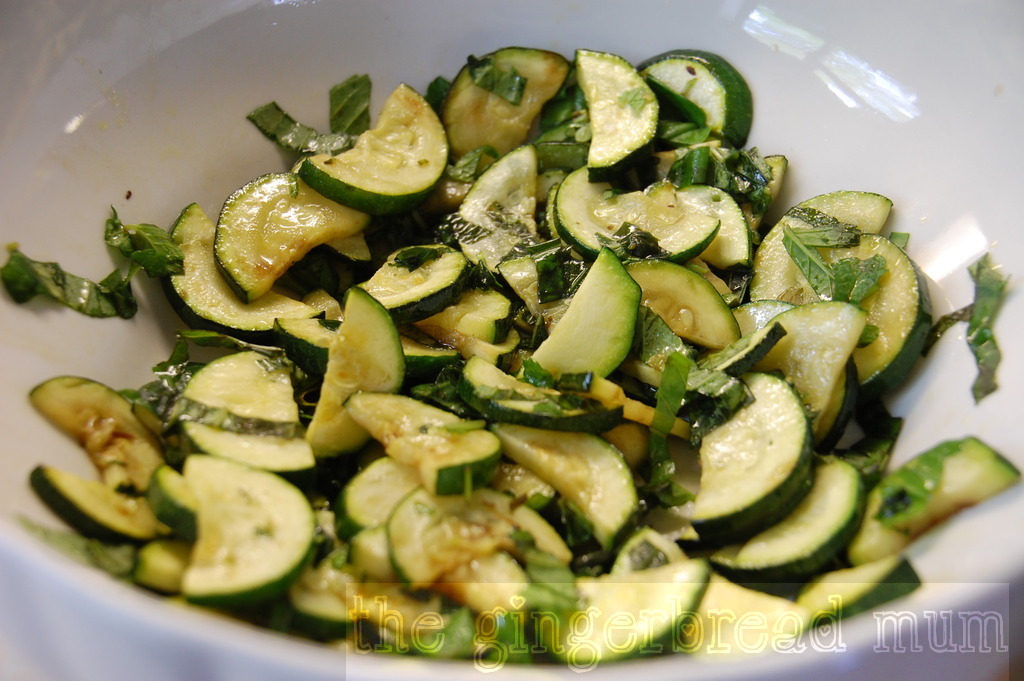
While pasta and eggs are cooking, heat 2 tbsp of the olive oil in a large non-stick frying pan and add courgettes. Season and stir fry for a few minutes. Remove from heat, splash with about 1 tbsp of balsamic vinegar, and add basil and mint. Leave to cool.

Add courgettes to the pasta, scatter over feta and mix. Garnish with the egg and the extra mint leaves. Serve cold.

Do you have any yummy cold pasta recipes to share?